
 E-Paper



No juicy returns: Fazilka kinnow growers switching to pear farming
After facing challenges in marketing and cultivation of kinnow amid dwindling availability of irrigation facilities, orchardists of the Abohar belt of Fazilka district are gradually switching to pear and other fruits

 Prefer HTon Google


BATHINDA: After facing challenges in marketing and cultivation of kinnow amid dwindling availability of irrigation facilities, orchardists of the Abohar belt of Fazilka district are gradually switching to pear and other fruits.
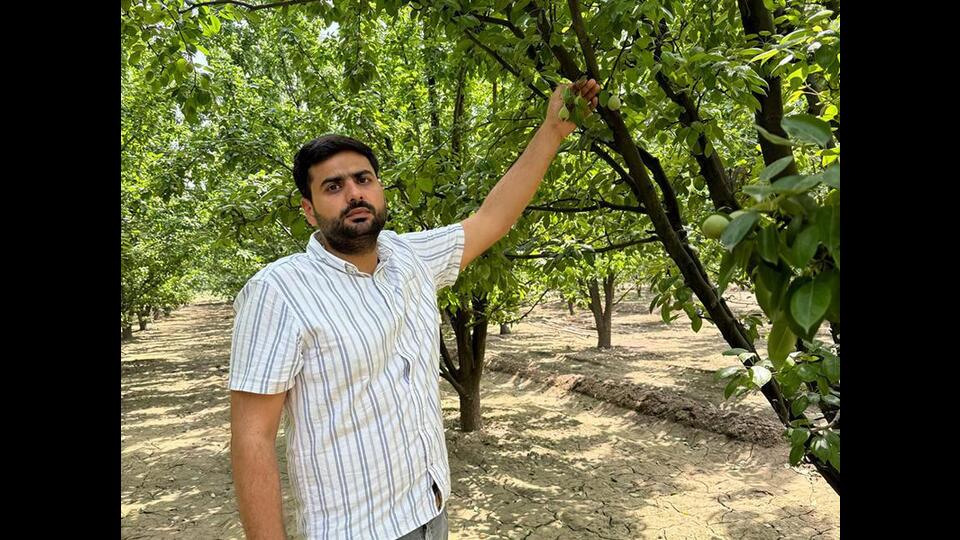
According to government data, kinnow is grown over 47,000 hectares in Punjab. Apart from Fazilka, kinnow is also grown in Hoshiarpur, Muktsar, Bathinda and a few other districts.
A leading fruit trader, Surinder Charaya, says that in the past 3-4 years, nearly 4,000 acre of kinnow area has been replaced by “patharnakh”, a pear variety recommended by the Punjab Agricultural University (PAU), which is in demand in West Bengal and the neighbouring Rajasthan.
Charaya said having a shelf life of two months, pear is a high commercial fruit and it can be kept in cold stores and marketed during the off season.
Deputy director, horticulture department, Gursharan Singh said an upward trend has been noticed in Abohar area for the last three years where kinnow growers have started switching to pear while a few are also showing interest in peach cultivation.
Earlier, pear cultivation was popular in Amritsar and Tarn Taran, but fruit diversification was needed for the semi-arid belt of Abohar that has been focusing only on the cultivation of citrus fruits, he added.
“Monoculture farming of kinnow has started posing a financial stress among the farmers. Patharnakh variety is less labour intensive and on ground, it has been observed that it can withstand semi-arid as well as waterlogged conditions. Ground input says that the PAU is unable to cater to the growing popularity of pear plants,” he said.
In the last few decades, the Abohar area grew as the hub of kinnow cultivation in the country.
In 2021 and 2022, kinnow growers faced financial losses due to poor availability of canal water for irrigation, pest attacks and unfriendly weather and it hit production.
Last year, the area experienced bumper production but climatic conditions led to poor size and extended winters shrank the demand of the fruit that crashed the demand drastically.
Rajinder Kumar, a progressive orchardist from Nihalkhera village was among the first farmers who moved from kinnow to pear and then peach in the last almost a decade, termed it a remunerative change.
“Kinnow trees take almost a full year of care whereas peach orchards require constant care for only six months thus saving a lot on labour cost input. Good care can ensure longevity of a peach tree for 50-60 years and the available pesticides are highly effective,” he added.
Another farmer Raj Kumar from Dangarkhera has dedicated two acres to pear last year and he is hoping for a good time ahead. “I was growing kinnow on 15 acres but after facing losses, I switched to pear. A sapling of patharnakh costs ₹100 and I sowed 100 plants in an acre. A pear tree starts bearing fruit after six years and as per following scientific advise, I am growing vegetables to nurture the orchard,” he said.
Another farmer Biraj Lal Saharan from Bharat Khera village said after growing kinnow for 24 years, he has finally experimented to cultivate other fruits.
On his 3 acres of family land, he started growing peach and guava. “After taking guidance from Rajinder Kumar from Nihalkhera village, I am convinced that fruit diversification is the solution to the continuous losses from kinnow farming. The market of the citrus fruit has become uncertain as its harvest time coincided with orange and in last three seasons led to losses,” he added.


