Chandigarh : Punjab Agricultural University, a premier plant research institute that played a key role during the Green Revolution to make the country surplus in foodgrains, has shifted its focus from quantity to quality and from food security to nutritional security.
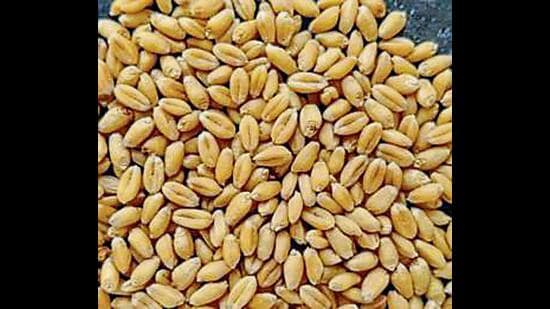
After the launch of a new wheat variety with high amylose starch content, known to reduce risks of type-2 diabetes, cardiovascular diseases and obesity, the university is now ready with variety that is rich in zinc. Vice-chancellor SS Gosal said the university will also launch iron-rich wheat variety soon.
While zinc improves immune system and regulates thyroid functioning, iron helps the anaemic population struggling with low blood count.
Gosal said PAU’s wheat breeding programme has undertaken extensive research on biofortification to enhance the micro-nutrients concentration in grains. He said while efforts have been made through exogenous application, the zinc content in wheat grains remains inadequate to meet human requirements. The Covid-19 pandemic prompted global need for zinc and vitamin C supplementation in diet to boost immunity.
“We have made remarkable progress as far as foodgrain production is concerned. Now, our focus is on quality by adding micro-nutrients in foodgrain varieties, particularly wheat, which is the staple diet of a large population,” said Gosal.
{{/usCountry}}“We have made remarkable progress as far as foodgrain production is concerned. Now, our focus is on quality by adding micro-nutrients in foodgrain varieties, particularly wheat, which is the staple diet of a large population,” said Gosal.
{{/usCountry}}The university has played a key role in increasing wheat production from 6-7 quintals per acre in the 1960s to 20-22 quintals per acre now.
“In the past 60 to 70 years, we may have managed to increase the yield three to four times, but the quality has suffered. Now, the challenge is to improve quality also,” said Gosal.
It takes 8-10 years to carry out research and launch a new variety, he said. Genes of wild varieties rich in nutrients are available with the university and these are crossed with high yielding varieties to breed quality foodgrains,” the V-C said.
The PAU has about 5,000 quintals of seeds of starch resistant wheat variety “PBW RS1” and about 200 quintals of zinc-rich “PBW Zn”. “We have asked Markfed to make arrangements for the cultivation of these varieties and marketing of nutrient-rich wheat flour in the market,” he said.
The university is entering a phase of nutritional security for which the support from governments, both state and Centre, is a must, the V-C said, adding that the new varieties will sell at premium rates.
According to director research, PAU, Ajmer Singh Dhatt similar upgrades are in the process in paddy varieties, but it will take some time to launch. Speaking on the new wheat varieties, he said popularity of these varieties will depend on the demand. “The university will also study the impact of these varieties on human body. For that, we will have to rope in experts from the medical field,” he said.