
 E-Paper



Punjab Budget 2022-23: Five key takeaways
Punjab FM says his focus will be on restoring deteriorating fiscal health and delivering on good governance promise


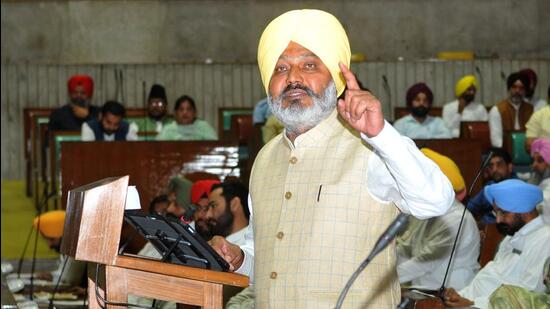
Punjab finance minister Harpal Singh Cheema presented the first budget of the Bhagwant Mann-led Aam Aadmi Party government on Monday. In his paperless budget, the two-time MLA said his focus will be on restoring the deteriorating fiscal health and delivering on the good governance promise. HT looks at five key takeaways:
PILING DEBT
Barely two days before unveiling the budgetary proposals, the government released a white paper painting the picture of a state in a “classical debt trap” and blamed previous governments. But this has not stopped it from continuing borrowing. The government has borrowed ₹8,000 in the last three months to make interest payments for old loans, said Cheema. The state’s outstanding debt is projected to increase from ₹283,756.82 to ₹305,361.44 crore in 2022-2023. However, it has contributed ₹1,000 crore in Consolidated Sinking Fund to provide for disposal of debt commitments in future.
BALLOONING SUBSIDY
Despite severe fiscal constraints, successive governments have been offering concessions and rate cuts. As domestic consumers will get 300 units of power per month for free from July 1, the power subsidy bill is set to see another rise. In the current fiscal, it has been pegged at ₹15,845 crore. Out of this, ₹6,947 crore is for free supply to agriculture sector and ₹6,530 crore for domestic category consumers. A sum of ₹2,503 crore has also been earmarked for subsidised power to industrial consumers.
COMMITTED EXPENDITURE
Payment of salaries, interest payments, pensions and retirement benefits – all committed liabilities, continue to be a worry for the state government. Of the revenue expenditureof ₹107,932 crore proposed in the budget, ₹66,440 crore, ie 61.56%, is the committed expenditure. “This is largely attributed to the implementation of the 6th Punjab Pay Commission report, legacy debt and associated interest payments,” the finance minister said. The state’s committed liabilities are among the highest in the country.
AUGMENTING REVENUE
The finance minister did not announce any new tax and is counting on an expected jump in revenue receipts and buoyancy in goods and services tax collections by plugging loopholes to fund the poll promises and new schemes. Out of the total revenue receipts of ₹95,378 crore, ₹20,550 crore are estimated to come from GST, ₹6,250 crore from VAT and ₹9,647 crore from state excise, seen by the government as a game changer. “Efforts are already on to plug loopholes in GST,” Cheema said.
CAPITAL EXPENDITURE
With bulk of the state’s borrowings going into debt servicing, capital expenditure – money spent on creation of income-generation assets, has been minuscule. During 2011-12 to 2021-22, capital expenditure ranged between 0.41% and 1.43% of the GSDP. Among the major states, Punjab has one of the lowest capital expenditures. Cheema has expressed commitment to increase capital expenditure in the future, saying capital assets have a multiplier effect on the economy. He has earmarked ₹10,981 crore for capital expenditure, a growth of 8.95% over the previous year.


