
 E-Paper



Punjab not taking adequate steps to prevent stubble burning: Centre
At an inter-ministerial meeting on the issue of crop residue burning in Delhi-NCR, Union environment minister Bhupender Yadav expressed concern that the Punjab government has not been able to take coordinated actions to contain farm fires in the state


New Delhi: The Centre on Wednesday said incidents of stubble burning have started increasing rapidly, especially in Punjab, and the state government has not taken adequate steps to prevent farm fires.
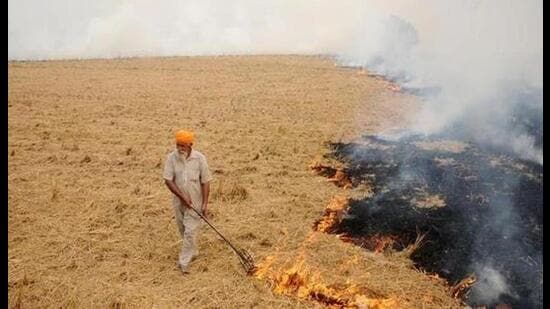
At an inter-ministerial meeting on the issue of crop residue burning in Delhi-NCR, Union environment minister Bhupender Yadav expressed concern that the Punjab government has not been able to take coordinated actions to contain farm fires in the state.
Paddy straw burning in adjoining states is a major reason behind the alarming spike in air pollution levels in the national capital in October and November. Farmers set their fields on fire to quickly clear off the crop residue before cultivating wheat and vegetables.
Union agriculture and farmers welfare minister Narendra Singh Tomar mentioned that the status of paddy straw management in Haryana is “significantly better than that in Punjab”, the environment ministry said in a statement.
“Till October 15, the trend of fire events was less as compared to last year but now it has started growing rapidly, especially in Punjab,” the statement read.
The ministers noted that the Pusa bio-decomposer --- a microbial solution which turns stubble into manure in 15-20 days --- was being sprayed in a lesser area in Punjab and its application needs to be promoted and enhanced.
M M Kutty, the chairman of the Commission for Air Quality Management (CAQM), said Punjab has taken “inadequate” steps in spite of several meetings and efforts by the statutory panel.
The Punjab chief secretary was asked to control the increasing rate of fire events in Amritsar and to ensure a 50% reduction in cases of farm fires in the state in comparison to last year.
It was mentioned in the meeting that one of the main concerns is the delayed delivery of crop residue management machines in Punjab and Haryana.
Government data shows Punjab and Haryana generate around 27 million tonnes of paddy straw a year, of which around 6.4 million tonnes is not managed.
According to the Indian Agricultural Research Institute, Punjab reported 71,304 farm fires between September 15 and November 30 last year and 83,002 farm fires in the corresponding period in 2020.
Last year, the share of farm fires in Delhi’s PM 2.5 pollution peaked to 48% on November 7.
Conduct raids to check farm fires: CS to officials
Chandigarh: Punjab chief secretary VK Janjua on Wednesday asked all top officials of the state to conduct regular inspections in all districts to check stubble burning incidents.
Punjab has to face embarrassment at the national level as the Supreme Court, Commission for Air Quality Monitoring and the National Green Tribunal have expressed displeasure over increasing cases of farm fires in the state, he said.
“It is crucial to access the ground situation of stubble burning incidents, therefore the senior IAS officers must visit the districts for random checking,” he said, adding that the state government has appointed 23 senior IAS officers in all districts of the state.
Officers are made in charge of districts who would supervise the procurement process of the paddy and implementation of welfare schemes in their respective districts, he said.
He also asked the deputy commissioners to honour farmers who do not burn paddy stubble.


