
 E-Paper



Punjab opts out of PM’s school upgrade scheme
The Bhagwant Mann-led Aam Aadmi Party government in Punjab has opted out of the PM Schools for Rising India (PM SHRI) Scheme announced by Prime Minister Narendra Modi last year


The Bhagwant Mann-led Aam Aadmi Party (AAP) government in Punjab has opted out of the PM Schools for Rising India (PM SHRI) Scheme announced by Prime Minister Narendra Modi last year.
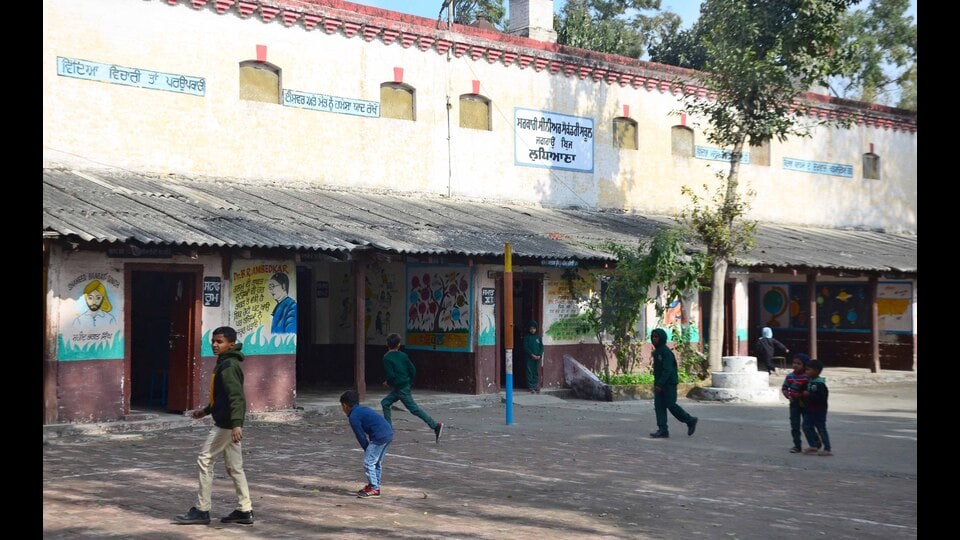
The decision to pull out of the centrally sponsored scheme was conveyed by the state authorities to the central government in writing before the meeting of the PM SHRI project approval board (PAB), headed by Union secretary, school education and languages, Sanjay Kumar, on July 18, said two people privy to the development. They said the state had initially signed the Memorandum of Understanding (MoU) with the Union ministry of education (MoE) for the centrally-sponsored scheme. The scheme aims to upgrade schools as model institutes and encapsulate the spirit of the National Education Policy, 2020.
The central ministry had selected 241 government secondary schools of Punjab for the project by using a “transparent challenge method” wherein schools applied on the online portal, but no funds have been recommended for the state schools under this scheme after the state government decided not to participate in the programme. “The state of Punjab has sent a letter showing unwillingness to join the PM SHRI Scheme,” according to the minutes of the July 18 meeting circulated by the Union ministry of education to half-a-dozen central ministries and all the state governments on July 21.
Punjab’s school education department officers were tight-lipped about the reasons for opting out of the scheme. Director general of school education (DGSE)-cum-special secretary, school education, Vinay Bublani did not respond to calls or messages sent to him in this regard. However, one of the people quoted above said the Punjab government cited multiple programmes already being implemented in the state for the upgrade of schools as the reason for not joining the scheme. The state government has recently started its ‘Schools of Eminence’ programme in the state.
By pulling out of the scheme, the AAP government has joined several non-Bharatiya Janata Party-ruled states that are not participating in the scheme. As on April 1 this year, six states and Union territories, including West Bengal, Kerala, Delhi, Odisha, Bihar and Tamil Nadu were still to sign the MoU with the central ministry. In its July 18 meeting, the PAB recommended a budget of ₹3,395 crore for 6,207 government schools in 27 states and union territories, Kendriya Vidyalayas and Navodaya Vidyalaas for the financial year 2023-24. The schools selected in the first round include 863 primary, 1,533 elementary, and 3,811 secondary ones.
Under the scheme, 233 schools from Jammu and Kashmir, 124 schools from Haryana, 14 from Ladakh and one from Chandigarh have been selected in the first phase. The Himachal Pradesh government signed the MoU with the Centre in March this year. “We will apply when slots are available in the next round,” said education secretary Dr Abhishek Jain. The central and state governments will jointly fund the scheme in the ratio of 60:40.
Box
What is PM SHRI Scheme
*The scheme was announced by Prime Minister Narendra Modi on September 5, 2022, for the upgrade of 14,500 schools over the next five years. The Union cabinet approved a budget of ₹27,360 crore, which includes a central share of ₹18,128 crore.
*The scheme is estimated to benefit 1.8 million students. These schools will have a modern, transformational and holistic method of imparting education. They will not only focus on cognitive development, but also creating holistic and well-rounded individuals, according to the project objectives listed by the central ministry.
*These schools will be equipped with a modern infrastructure including labs, smart classrooms, libraries, sports equipment, etc, and pedagogy and assessment will be more experimental, holistic and competency based. It said the duration of the scheme is from 2022-23 to 2026-27after which it will be the responsibility of the states and UTs to maintain the benchmarks achieved by these schools.


