
 E-Paper



Roundabout: Of this Punjab and that Punjab with binding echoes of music
The great divide, the brutal parting, bitter wars but the bonds of a shared culture are not easy to break and music remains a strong connect across the borders


It is a ride through the dark night in the Toba Tek Singh district of Pakistan that translates itself into words, this weekend.
The very mention of Toba Tek Singh sets the literary memory ablaze. The name was to become the title of the last story penned by Saadat Hasan Manto, the Urdu writer who is recalled as the chronicler of the Partition. The protagonist of Manto’s “Toba Tek Singh” is Bishan Singh, an inmate of the mental asylum in Lahore who became the synonym for collective pain of displacement wrought by the Partition. Forced to migrate in the exchange of lunatics on the basis of religion. Unwilling to migrate to an unknown land leaving his dear Toba Tek Singh behind, Bishna gives up his life on the no-man’s land between the two countries.
For journalist and social media blogger Gurdarshan Singh Sandhu of Ferozepur a surprise of sorts awaited him as he was driving down Faisalabad road through the Toba Tek Singh district at night on a recent trip to Pakistan. No, it was not the soul of Bishna hovering around his village or beckoning them to visit his home for a glass of warm milk. It was something else.
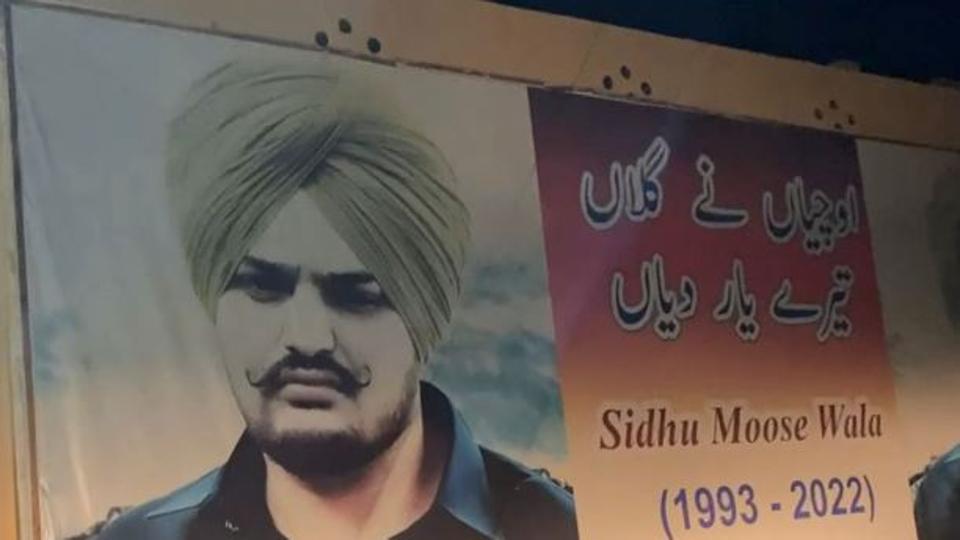
As his car moved through the dark, what caught his eye was a tall lit wall with a huge hoarding and a gunman guarding it. Curiosity made him stop and he smelt news. The hoarding with huge pictures of Moose Wala (1993-2022) had a slogan in Urdu “Uchian ne gallan saade yaar dian” (Great are the words of our friend).
On Sandhu’s request, the guard phoned the owner of the land and the buildings coming up on it. Soon the owner, Ali Raza, reached the spot with his younger brother Arfan and the mystery unfolded: “I was a great admirer of Moose Wala and when he was brutally killed, I wouldn’t stop weeping and did not eat anything for four days. My brother then consoled me, saying let’s name the wayside restaurant and swimming pool project after the late singer. I then put my heart and soul into it.”
Raza said he had posted a guard there to avoid vandalism by miscreants, adding that every day people driving past their project stop and photograph themselves with their families by the hoarding.
Sandhu says, “The fans of Moose Wala in Pakistan’s Punjab seem to outnumber those here.” He revealed that on seeing him turbaned, Pakistani children would come running and shouting: “Moose Wala aa gaya!”
Songs of the nightingale
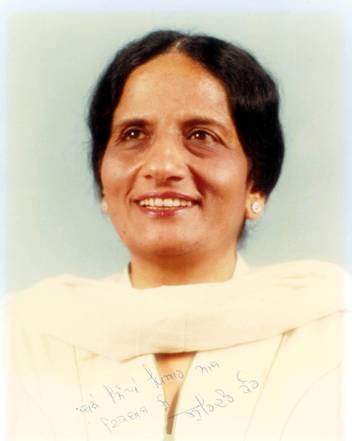
Surinder Kaur, along with her elder sister Parkash Kaur, formed the iconic singing duo of Lahore that was loved by Punjabis — for it was to their credit, bringing folk songs sung by women at home into the public sphere. Surinder outlived her older sister and enjoyed great adulation on both sides of the border.
Of course, the journey constituted migrating from Lahore to Delhi via Mumbai at the time of Partition. Her latter years were spent in the tricity. A living legend of her times, Surinder Kaur’s legacy has been taken forward by daughter Dolly Guleria and grand-daughter Sunaini Sharma. It was Sunaini who kept the students of the Panjab University enthralled, singing the legend’s songs at an event on the “Composite Culture of Punjab” organised by the department of English.
Speaking on the occasion, she said the composite culture of Punjab had received many blows over time and the Punjabis had borne the brunt, but rose from the ashes as it was. “Music indeed has the power to connect and heal.”
One of the interesting anecdotes she relates of her granny is: “When naani went to Lahore in the ‘90s as an honoured guest by the then Prime Minister of Pakistan, Nawaz Sharif, the fanfare was amazing and the Khaleej Times carried a feature on her with the headline: ‘Surinder Kaur Peke Aayi hai!’.”
“Another touching episode of the 90s again was when the Nightingale was giving a concert at Pittsburgh in the US, a doctor of Pakistani origin sought her audience after the show. He had brought her a gift and that was a family album of photographs that her family had left behind when fleeing Lahore in 1947,” she further added. Such are the stories of love and loss that Punjabis have borne on their souls in the politics of divisive forces.
This remains the pain of the ordinary folk as the Moose Wala fan Arif Raza says: “Our elders died weeping for their Sikh friends!”


