In a first, a commemorative programme dedicated to human rights activist Jaswant Singh Khalra was organised by the Shiromani Gurdwara Parbandhak Committee (SGPC), under the patronage of Akal Takht, at Gurdwara Shaheed Baba Gurbaksh Singh in the Golden Temple complex here on Saturday.
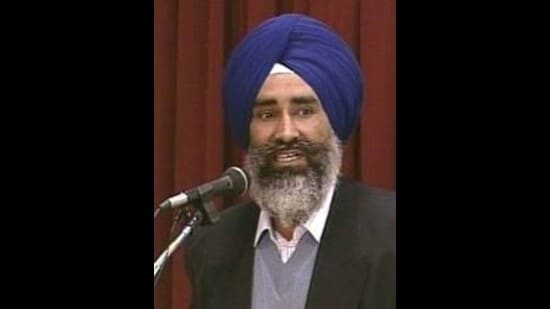
A number of Sikh organisations and devotees participated in the programme, which was attended by Akal Takht acting jathedar Giani Kuldeep Singh Gargaj, Takht Damdama Sahib jathedar Giani Tek Singh, SGPC president Harjinder Singh Dhami, Golden Temple granthi Giani Rajdeep Singh, Khalra’s sister Balbir Kaur and Kawaljit Kaur, wife of late Kuldeep Singh Bachhre, a witness in Khalra’s abduction case.
Speaking on the occasion, Giani Kuldeep Singh Gargaj said Khalra lived by the teachings of Guru Tegh Bahadur Sahib, neither fearing anyone nor frightening anyone, and attained the status of a Gurmukh (devout Sikh) and “martyr” through his commitment to truth and justice.
He announced that work would soon begin on establishing a memorial at Harike Pattan and documenting the details of victims of the 1982 to 1994 period. The project, he said, would be undertaken by the SGPC under the patronage of the Akal Takht.
SGPC president Harjinder Singh Dhami described Khalra as a “great national personality” who dedicated his life to human rights, truth and justice.
{{/usCountry}}SGPC president Harjinder Singh Dhami described Khalra as a “great national personality” who dedicated his life to human rights, truth and justice.
{{/usCountry}}Dhami said the SGPC had constituted a sub-committee to identify suitable land at Harike for a memorial to Khalra, and efforts were underway to acquire the site so that construction could begin soon.
Khalra, an Amritsar-based human rights activist, became internationally known for documenting and investigating the extrajudicial killings of thousands of people in Punjab in the 1990s. The activist had claimed that Punjab Police had killed 25,000 people across the state in the guise of fighting insurgency.
On September 6, 1995, Khalra was abducted by Punjab Police officers outside his home in Amritsar’s Kabir Park.
According to the prosecution, he was taken to the Jhabal police station in Tarn Taran, illegally confined, tortured and subsequently murdered in police custody. His body was never recovered.
A Patiala court convicted several police officers in the case in 2005, sentencing them to life imprisonment.
The convictions and sentences were subsequently upheld by the Punjab and Haryana high court in 2007 and by the Supreme Court in 2011. The case returned to the spotlight in July this year with the removal of the film “Satluj”, based on Khalra’s life, from an OTT platform.