A strong opening to Haryana’s basmati season has put farmers of Pusa basmati 1509 in an unusually advantageous position, with the short-duration variety touching the highest level of ₹4,350 per quintal and several major mandis recording modal prices of around ₹4,000 or more.
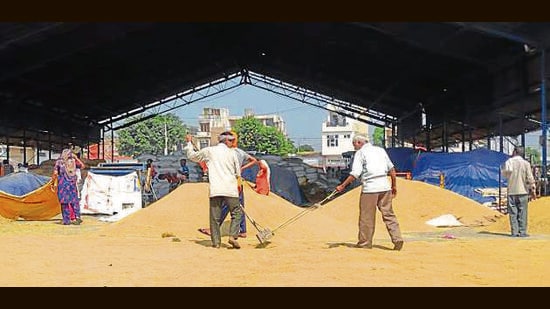
According to the reports gathered from various mandis of Haryana the prices of Pusa 1509 have remained around ₹4,100 to ₹4,300 per quintal in the past couple of days. with the arrival of this early maturing variety reached the peak.
The mandi reports show the variety trading well above those levels in several parts of Haryana. At Pundri in Kaithal, it has recently touched ₹4,350, while Panipat and other major markets have also reported prices above ₹4,000. For farmers in Haryana’s major basmati-growing districts–Karnal, Kurukshetra, Kaithal, Panipat, Ambala, Yamunanagar, Jind, Fatehabad and Sirsa– Pusa 1,509 is important not just because of its current price, but also because of the returns and crop cycle it offers.
According to the farmers the peak rate a farmer harvesting 21-22 quintals of 1509 an acre can gross roughly ₹91,000- ₹96,000, while a 22-quintal yield at ₹4,350 works out to nearly ₹1 lakh an acre. More importantly, the crop is harvested weeks ahead of traditional basmati varieties, allowing farmers to prepare their fields for wheat without losing the crucial October sowing window.
“I harvested Pusa 1509 paddy from 10 acres and sold it at around ₹4,100 per quintal, earning an average return of nearly ₹90,000 per acre. I have already sown mustard on the fields, and after harvesting the mustard, I will sow maize. This way, I will be able to grow three crops in a year,” said Ishwar Singh, a tenant farmer from Yamunanagar’s Radaur.
{{/usCountry}}“I harvested Pusa 1509 paddy from 10 acres and sold it at around ₹4,100 per quintal, earning an average return of nearly ₹90,000 per acre. I have already sown mustard on the fields, and after harvesting the mustard, I will sow maize. This way, I will be able to grow three crops in a year,” said Ishwar Singh, a tenant farmer from Yamunanagar’s Radaur.
{{/usCountry}}According to the traders, the price surge is particularly significant because Pusa 1509 was selling largely in the ₹2,700 to ₹3,500 range during the past several years. “This is for the first time in my memories that the prices of this variety have crossed ₹4,000 mark”, said a basmati trader, Rishi Pal, in Fatehabad grain market.
Following unprecedented rise in basmati prices, traders suggest that the prices of the premium varieties like Pusa 1121, Pusa 1718, Moochal and traditional basmati may open around ₹5,500 to ₹6,000 per acre against the ₹4,000 to ₹5000 of the previous year. Rice traders also attributed the rise in basmati prices to the steady growth in India’s basmati rice exports.
According to data from the Agricultural and Processed Food Products Export Development Authority (APEDA), India exported 65.2 lakh metric ton (MT) of basmati rice worth ₹50,138 crore in 2025-26, up from 60.6 lakh MT in 2024-25 and 52.4 lakh MT in 2023-24.