War of words sparked between allopathic doctors and AYUSH medical practitioners after the state decided to allow Ayurveda doctors to prescribe allopathic medicines during emergencies, HT has learnt.
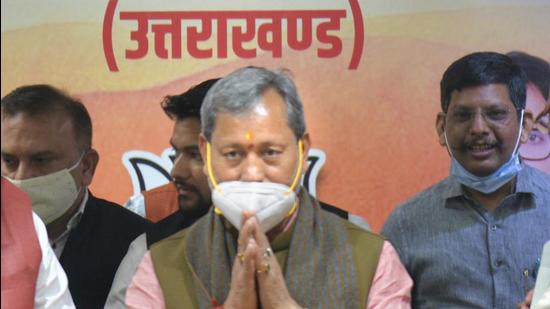
Uttarakhand AYUSH minister Harak Singh Rawat on Monday announced that the state government has decided to allow Ayurveda doctors to prescribe allopathic medicines in the state during emergencies. Rawat made this announcement while talking to the media after attending the function organised on the occasion of the International Yoga Day in Dehradun.
Dr DD Choudhary, senior member of the Indian Medical Association (IMA) Uttarakhand said this is an unprecedented development. “Can allopathic doctors be allowed to practice Ayurvedic medicine? No. Then how can they be allowed to prescribe allopathic medicines? This is ridiculous,” he said
Dr Choudhary said that if the government issues an order in this regard, then the IMA will convene a meeting and discuss the future course of action in the matter.
Dr Ajay Khanna, secretary Indian Medical Association (IMA) Uttarakhand chapter said perhaps the AYUSH minister is not aware that he cannot do such a thing. “It is like asking a pilot to operate a train as well. Who will be responsible if something happens to a patient who is given allopathic medicines? There is a Supreme Court order which already prohibits allowing of such mixopathy”, he said.
Dr Khanna said if the state government issues order in this regard, under which norms or legal process can they take such a decision?
{{/usCountry}}Dr Khanna said if the state government issues order in this regard, under which norms or legal process can they take such a decision?
{{/usCountry}}Dr Hardev Rawat, general secretary, Association of Ayurveda and Unani doctors in Uttarakhand, said if states like Himachal Pradesh have done the same, why can’t Uttarakhand also follow suit? “Allopathic doctors have economic interests in serving in urban areas. Most of their hospitals and clinics are in urban areas. Now, if this decision can help people in rural areas, why are they opposing it? We want to thank the AYUSH minister for taking this decision,” he said.
Dr JN Nautiyal, senior Ayurveda doctor in the state said the proposed decision by the state government will bring relief to the 80% of people living in rural and remote areas of the state. “In such areas, you won’t find many allopathic doctors as they are mostly concentrated in urban areas. But Ayurveda doctors are already serving in the remote and rural areas of the state and can now help people in case of an emergency,” he said.
Dr Nautiyal said the IMA has a habit of opposing any issue when it comes to Ayurveda doctors. “They will not go and serve in rural or remote areas and will not allow us also to provide some relief to the people in distress or during emergencies,” he said.
Dr IS Grewal, secretary, state chapter of National Integrated Medical Association, said many states in India have already allowed this practice. “The Supreme Court has also left this upon state governments decide on this. When allopathic doctors are not available in rural areas, why is there an opposition to Ayurveda doctors saving people’s lives? The Apex court has allowed this and Ayurveda doctors have to go for a one-year bridge course for this. I think there should be no opposition to this decision as it will benefit people in remote areas,” he said.
Uttarakhand AYUSH minister Harak Singh Rawat said opposition by the IMA in this matter is not right as the decision has been taken to ensure that people in rural and remote areas, where there are no allopathic doctors, get healthcare in case of emergencies. “If the government in Himachal Pradesh can allow this, why can’t we do the same here? We have around 800 Ayurveda doctors in the state and around 2,700 sanctioned posts for allopathic doctors. So had to take a such a decision to ensure people get proper treatment during emergencies,” he said.