
 E-Paper



Delhi govt extends EV policy till December 31
Launched on October 22, 2020, the Delhi Electric Vehicle Policy was aimed at fighting high levels of air pollution

 Prefer HTon Google


The Delhi government on Saturday approved the extension of the Delhi Electric Vehicles (EV) Policy till December 31, 2023, transport minister Kailash Gahlot said.
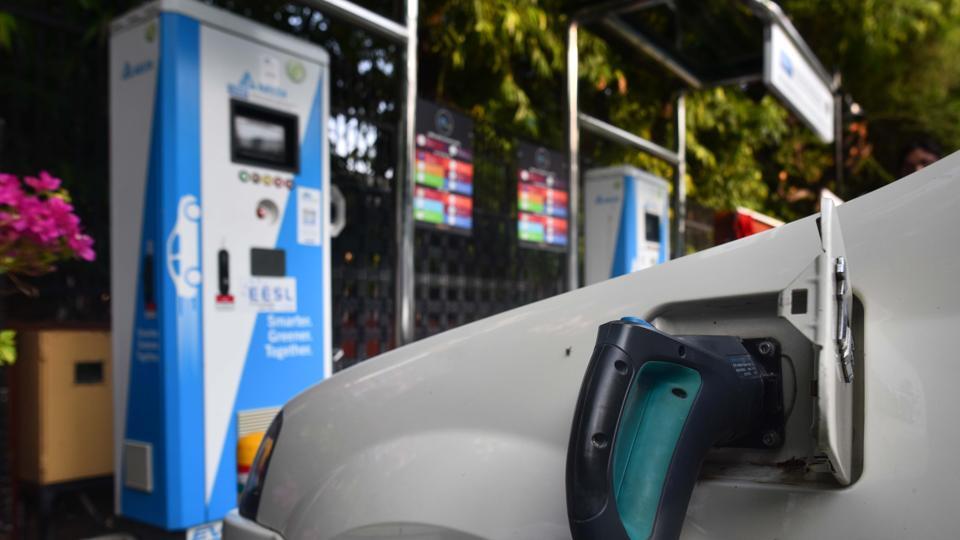
Gahlot said the Delhi cabinet led by chief minister Arvind Kejriwal has given its approval to extend the policy till December 31 or till Delhi EV policy 2.0 is notified, whichever is earlier. “All incentives and subsidies given under the existing policy will continue. Delhi EV policy 2.0 is in final stages and after necessary approvals will be notified soon,” said Gahlot.
READ | Achieved most of key EV policy targets: Delhi govt
Delhi EV Policy, implemented in August 2020, expired on August 7, 2023, leading to a brief vacuum during which the registration of all categories of EVs was halted for two days in the Capital, forcing the government to extend the provisions of the policy till further orders.
Launched on October 22, 2020, the Delhi Electric Vehicle Policy—one of the flagship plans of Delhi’s Aam Aadmi Party (AAP) government—was aimed at fighting high levels of air pollution in the city by cutting vehicular emissions. The policy sought to achieve this objective by bringing about a paradigm shift in the Capital’s transport sector by introducing two key changes. One, the state government embarked on a major switch from Compressed Natural Gas (CNG)-run public buses to electric buses. Of the total 3,700 buses run by the Delhi Transport Corporation (DTC), the Capital now has 800 electric buses. And, the government has committed to buy only electric buses to replace the CNG ones that will be retired from the fleet.
The second major change was encouraging residents to switch to electric vehicles by providing subsidies. The policy has set a target of 25% of all new vehicles registered in Delhi to be electric by 2025.
READ | Delhi aims to double its EV adoption this financial year
Under the Delhi government EV policy, two-wheelers are entitled to a subsidy of ₹5,000 per kWh of battery capacity (maximum ₹30,000). Three-wheelers can get a subsidy of ₹30,000 per vehicle, irrespective of the total cost and battery capacity. The subsidy for four-wheelers is not applicable anymore as it was offered only for the first 1,000 e-cars that would get registered under the scheme. For four wheelers, Delhi government had allowed subsidy of ₹10,000 per kWh battery capacity, subject to a maximum of ₹1.5 lakh.
Between August 2020 and June 2023, a total of 129,000 EVs were purchased in the capital. Currently, Delhi has more than 4,500 charging points and 250 battery swapping stations, many of which were set up on the public-private-partnership model.


