E-Paper



Delhi govt revisits solar power plan as previous targets fall behind
Discoms said there is enough awareness about solar rooftops but blamed Covid-19 for the slowdown in installations

 Prefer HTon Google


Despite substantial subsidies and other incentives by the Delhi government, solar power installations at homes have failed to generate much interest among home owners, with the city only managing to add 220 mega watts (MW) of power through this medium, less than 1/10th the target of generating 2,762MW by the end of this year.
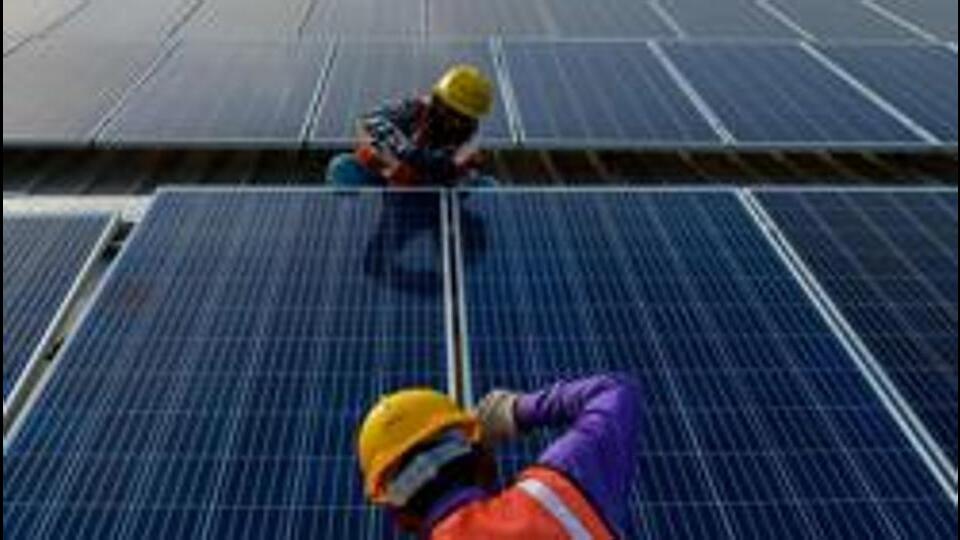
The solar power generated through rooftop installations stood at 184MW last February. With the heat arriving early this year, discoms expect Delhi’s peak power demand to cross 8,000MW for the very first time this summer, putting a substantial load on the city’s existing power infrastructure.
Discoms said there is enough awareness about solar rooftops but blamed Covid-19 for the slowdown in installations.
“The pandemic has had an impact on rooftop installations in Delhi. Over the past two years, many group housing societies were reluctant to let solar vendors enter their societies or areas. With infections receding, interest is picking up again,” said a discom official who asked not to be named.
Experts, however, attributed the lack of interest among the public to the lengthy installation and commissioning process for solar rooftops.

“Obtaining an NOC (no-objection certificate) from the discom and then filing an online application and ensuing paperwork has been found to be labour-intensive and time consuming. Delhi, which is urbanised and high income, was only able to install around 20% of the subsidised solar rooftop panels allocated to it, so its clear that even subsidy benefits are not being utilised. People are still finding the upfront cost of installation to be a hurdle,” said Binit Das, deputy programme manager, renewable energy, Centre for Science and Environment (CSE).
In addition to reduced bills and refunds for surplus electricity generated, the Delhi government also offers discounts up to 20% for installing solar panels on rooftops of residences and commercial spaces. According to discoms, Delhi is already offering a better rate for surplus solar power — most states across the country have capped it at ₹2 per unit, even as Delhi offers an average power procurement cost for surplus energy at ₹5 per unit.
The 2,762MW solar power target by 2022 was set under the National Solar Mission in June 2015.
With the policy failing to attract enough consumers, a number of fresh incentives and changes are now expected in a new solar policy being devised by the Delhi government, which was announced by Delhi deputy chief minister Manish Sisodia during his Budget speech last month. Under it, the Delhi government has set a goal of creating 2,500MW of solar capacity in the next five years.
“This is expected to contribute to 10% of Delhi’s annual energy demand,” Sisodia said during his Budget speech last month, adding that 40,000 new jobs are also expected to be created through the solar policy for construction workers, electricians, technicians, and engineers.
A government official said the new solar policy aims to add more solar panels over Delhi roofs while creating more jobs. “Lessons from the last few years will be incorporated in the new solar policy. Delhi has been giving a strong push towards electric vehicles and renewable energy over the last couple of years,” said a government official, asking not to be named.
Officials from BSES, which covers areas like Saket, Vasant Kunj, Dwarka, Chattarpur, Sainik Farms, Karkardooma, Mayur Vihar, Patparganj and Rohini, among others, said the discom has so far seen over 4,000 solar rooftop installations under it, with a combined load of more than 125MW.
“Our Solar City initiative has been well-received... The initiative is a win-win for consumers and the discom. The solar outreach programme is also educating consumers about the benefits of solar energy while ensuring strict quality compliance of the systems being installed. It also facilitates various finance options for consumers,” a BSES official said.
Among the initial success stories of the solar outreach was in Dwarka where the discoms began installation from 2018 onwards as part of a “Solarise Dwarka” scheme.
KR Anand, a resident of Shiv Bhole CGHS in Dwarka Sector 7, said the society has a solar capacity of over 100KW, which results in savings of over 100,000 units across 60 households every year. “In summers, the savings are substantial. Nearby societies began installing solar panels soon after seeing a significant reduction in our bills,” he said.
In Sector 6 nearby, the Kalka CGHS society similarly saw reduced electricity bills over the last three years. With a combined installed capacity of over 50KW, residents say they are producing excess electricity each year, which results in discoms paying money to the society at the end of the year.
“For each excess unit produced, we receive ₹5... So not only are the electricity bills less, but excess production provides additional benefits at the end of each financial year,” said SS Rawat, a resident of the society.
Each kilowatt (KW) of solar rooftops can generate around 100–120 units of electricity each month, with experts saying that the cost of installation is generally recovered within 3.5 to 4 years. Solar panels required to generate a KW of power will cost around ₹60,000- ₹1 lakh.
"Solar rooftop is gaining popularity in Delhi, especially in the domestic (residential) segment. This surge can be attributed to the subsidy scheme. However, subsidies alone are not enough since there is a major space constraint in residential areas with respect to the roof size due to which the adoption is a little slower than expected," said Dwijadas Basak, Chief-Commercial, Consumer Experience & Social Impact Group at Tata Power Delhi Distribution Limited, stating areas such as Rohini, Pitampura and Moti Nagar were slowly seeing more demand for solar installation.
Several hurdles
Neeraj Kuldeep, programme lead, Council on Energy, Environment and Water (CEEW), said meeting the ambitious solar power targets set by states will require a strong strategic push.
“To strengthen the uptake of rooftop solar systems, the Delhi government must reconsider the electricity subsidy offered to the residential sector. Secondly, the authorities should promote innovative business models, such as the Solar Partners model, which utilises excess spaces on the roof for solar power systems, and offers clean electricity to consumers under virtual net-metering regulations,” said Kuldeep.
He added that a green tariff – a utility-approved electricity rate that allows consumers to source 100% of their electricity from renewable sources -- could also provide a much-needed impetus to rooftop solar installations.
“Finally, the government could also explore other emerging opportunities, such as floating solar panels along with the rejuvenation of lakes,” he said.