E-Paper



Woman’s right to prove adultery trumps spousal privacy, says Delhi HC
The court affirmed a family court’s decision to summon call records and hotel reservation details of a man believed to be involved in an extra-marital relationship


A woman’s right to prove adultery will prevail over the privacy rights of her husband, the Delhi high court ruled on Wednesday, affirming a family court’s decision to summon call records and hotel reservation details of a man believed to be involved in an extra-marital relationship.
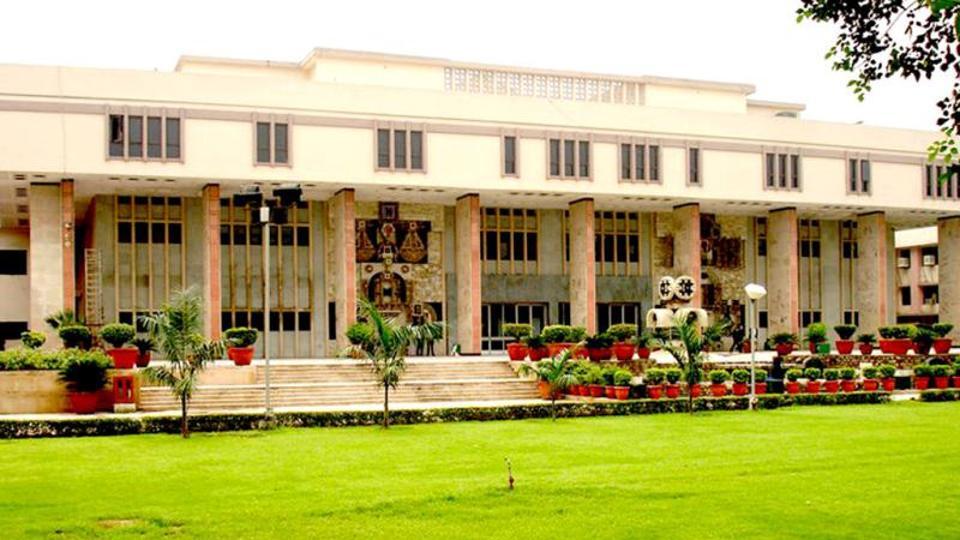
Justice Rekha Palli delivered the ruling as the high court junked the husband’s challenge to orders of the family court allowing call detail records and records of a hotel room in Jaipur where he allegedly stayed with a female friend. The wife sought these details in a pending divorce petition.
The woman moved the trial court under section 14 of the Family Court Act which mandates that a family court may receive as evidence any report, statement, documents, information or matter that may, in its opinion, assist it to deal effectually with a dispute, whether or not the same would be otherwise relevant or admissible under the Indian Evidence Act, 1872.
Before the high court, the husband, while assailing the orders of the Family Court, contended that the wife had not been able to prove her charges and said that allowing access to such details would be a violation of not only his privacy but also the privacy of the woman involved and her daughter who have nothing to do with his marital dispute. He further contended that the directions would also cast aspersions on the legitimacy of the minor child.
Advocate Prabhjit Jauhar, representing the wife, submitted that not only are the reservation details and call records are essential to determine the case, but that the right to fair trial and public interest cannot be made to suffer citing the right to privacy. Jauhar emphasised that privacy rights must give way to the cause of public justice and legitimate public interest which have wider ramifications.
The high court, in its judgment, held that the wife’s prayer for seeking the details is based not only on morality but also on specific rights granted under the Hindu Marriage Act and the Family Courts Act.
“Having given my thoughtful consideration as to whose right should prevail in the facts of the present case, I am inclined to accept the respondent (wife’s) plea. The petitioner’s (husband’s) claim is based solely on the right to privacy which, as held in KS Puttaswamy (supra) and Joseph Shine (supra) is not an absolute right; on the other hand, the respondent wife’s prayer is based not only on morality but also on specific rights granted under the Hindu Marriage Act and the Family Courts Act.”
“I, therefore, have no hesitation in holding that the respondent’s right must prevail and therefore, find no reason to interfere with the impugned orders. The Family Court by way of the impugned orders has sought records which pertain only to the respondent’s husband and not to his friend or her daughter. There is, therefore, no question of their right of privacy being violated in any manner,” the judge said in a 35-page judgment.
Saying that direct evidence of adultery can rarely be available, the court held that the information sought by the wife would be relevant to prove the charge of adultery.
“The payment and reservations details along with the ID proofs of the occupants of the room will surely throw light on this crucial issue as to whether the petitioner (husband) was indeed staying with a lady other than his wife in the same room. Similarly, the call details will surely be indicative of the fact as to whether the conversations of the petitioner with the lady were of such duration and frequency as is not expected between colleagues”.
“The wife is seeking to prove the charge of adultery against the husband and therefore, it cannot be said that this information would not be relevant,” the judge said in her judgment.
Justice Palli also noted that the wife has admittedly not sought any details regarding the husband’s friend or her daughter.
The court further noted that the wife has not onlyprovided a number of photographs showing the petitioner in close proximity with his lady friend but also details of the room and the dates on which according to her, her legally wedded husband was staying with the lady.
“…the petitioner (husband) has taken contradictory stands regarding the presence of his lady friend in the hotel. While in his written statement he has stated that he was on an official trip to Jaipur, along with his female colleague and therefore, two rooms were booked for them in Hotel Fairmont, in response to the application he has claimed that he met the lady friend by chance in the hotel as she was also co-incidentally staying there. The respondent is the estranged wife of the petitioner who obviously does not have any direct evidence of her husband indulging in acts of adultery,” the court said.