Around four in every 10 households in Delhi, most of them in unauthorised colonies and slum clusters, are still not connected to the city’s sewage network, according to Delhi Jal Board (DJB) estimates. Officials said that this the gap remains perhaps the biggest challenge to the government’s target of cleaning the Yamuna within the next three years.
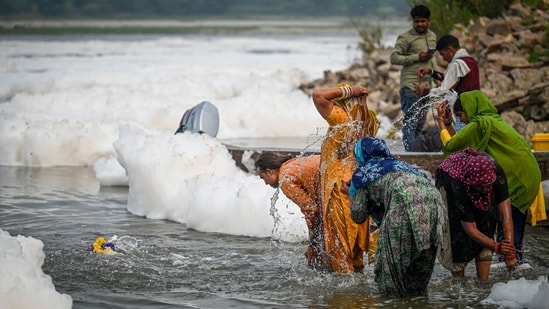
Even as the Yamuna clean-up has become a key priority for the Delhi government, with efforts focused on expanding wastewater treatment capacity, data submitted by DJB to the National Green Tribunal (NGT) showed that more than 1.65 million – 41.3%– households are not connected to the sewage network. Sewage from the remaining 2.35 million households is currently being carried through the network.
The water utility has set a target of connecting all four million households in the Capital by 2028, according to a report dated September 16. DJB’s sewage system comprises local and trunk sewer lines connected to 37 sewage treatment plants (STPs), with a combined installed treatment capacity of 3,702 million litres per day (MLD). There are 22 drains that directly discharge into the Yamuna in Delhi, with their combined flow estimated at 5,196.44 MLD.
Monthly analysis reports by the Delhi Pollution Control Committee (DPCC) show high faecal coliform levels in the river. Faecal coliform is an indicator of the presence of untreated sewage.
{{/usCountry}}Monthly analysis reports by the Delhi Pollution Control Committee (DPCC) show high faecal coliform levels in the river. Faecal coliform is an indicator of the presence of untreated sewage.
{{/usCountry}}Also Read I Delhi residents flag gaps in waste management amid new rules, user fee levy
Challenges to expanding sewage network
A DJB official said unauthorised colonies and slum clusters in floodplains and forest areas posed the biggest challenge to expanding the sewage network.
“There are 1,799 unplanned settlements, out of which sewage network work has been completed in 1,317 colonies while work is in progress in around 100 colonies. We have set a target of connecting all these colonies over the next two years, but the unauthorised settlements in Yamuna’s O-Zone and forest areas cannot be covered with the sewage network as we don’t get permission to carry out any work from the respective agencies as per prevailing rules,” the official said.
The Yamuna O-Zone, or Zone O, is a protected 9,700-hectare floodplain stretching along the 22-km urban corridor of the river from Wazirabad to Okhla. The plan to expand the sewage network has reached the tendering stage in 191 colonies. DJB has not received NOCs to develop sewage infrastructure in 88 colonies, while another 82 are located in the O-Zone.
A second DJB official said septage-cleaning machines had been empanelled to clean septic tanks in such areas, but only a small fraction of the sewage generated was being covered.
“We are working on a project to provide free septage-cleaning services in such areas so that coverage can be increased. Illegal private operators invariably dump the waste in drains and similar channels,” the official said. For areas dependent on septic tanks, the Delhi government notified the Water Board Septage Management Regulation 2018, which provides for a ₹50,000 penalty for unauthorised disposal of septage. The government has authorised 137 private vendors to collect septage and dispose of it at STPs and 86 sewage pumping stations.
Also Read I AQI rises to 151, but Delhi govt's winter pollution measures still not on ground
DJB officials said around 19 million to 23 million litres of wastewater is dumped monthly at these collection points, but actual waste generation remains several times higher. The 22-km stretch of the Yamuna from Wazirabad to Okhla in Delhi is only 2% of the river’s length but contributes 76% overall pollution load. The amicus curiae appointed in the case has recommended that DJB focus on closing the 249 MLD treatment gap.
“The connections to the residual 16,50,000 households may be provided, with annual, verifiable interim milestones,” the recommendation stated.
Frequently Asked Questions
How many households in Delhi are not connected to the sewage network?
What is the target year for connecting all households to the sewage network?
What are the main challenges in expanding the sewage network?
What penalties exist for unauthorised disposal of septage?
Stay updated with all top Cities including, Bengaluru, Delhi, Mumbai and more across India. Stay informed on the latest happenings in World News along with Delhi Election 2025 and Delhi Election Result 2025 Live, New Delhi Election Result Live, Kalkaji Election Result Live at Hindustan Times.
Stay updated with all top Cities including, Bengaluru, Delhi, Mumbai and more across India. Stay informed on the latest happenings in World News along with Delhi Election 2025 and Delhi Election Result 2025 Live, New Delhi Election Result Live, Kalkaji Election Result Live at Hindustan Times.