E-Paper



AQI rises to 151, but Delhi govt's winter pollution measures still not on ground
On Wednesday, Safdarjung recorded a minimum temperature of 24.8°C and the previous-day maximum of 36.1°C with rainfall likely throughout the day

 Prefer HTon Google


Delhi’s air quality has begun to deteriorate amid withdrawal of monsoon rains with the AQI reading of 151 (moderate) recorded on Wednesday morning.
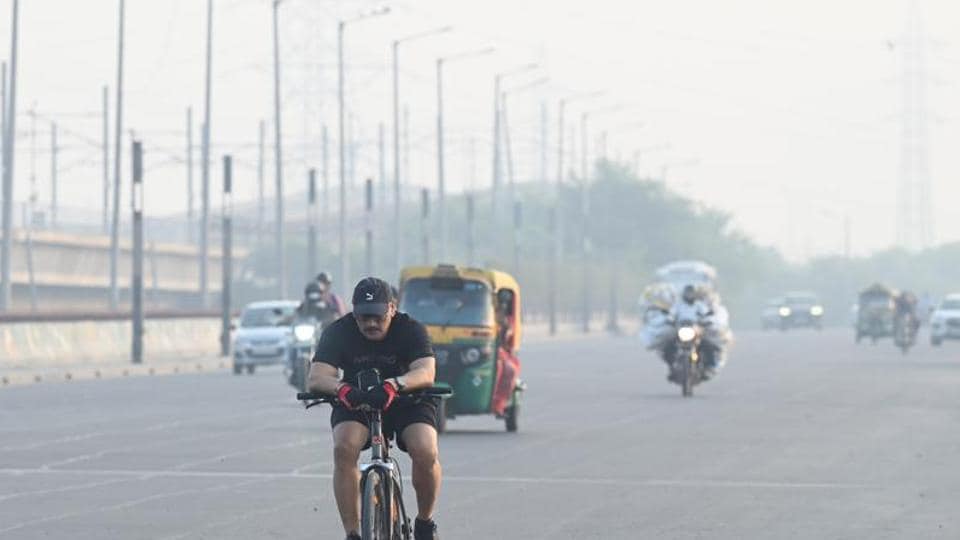
The city’s AQI, which was 118 on September 19, rose to 160 on September 20, 169 on September 21 and 178 on September 22, according to the 24-hour average at the Delhi Pollution Control Committee’s monitoring system.
The latest reading puts Delhi in the “moderate” category, but the trend has been accompanied by hot and humid conditions.
On Wednesday, Safdarjung recorded a minimum temperature of 24.8°C and the previous-day maximum of 36.1°C with rainfall likely throughout the day.
The data from the past few days shows a daily rise in pollution levels. With rainfall becoming less frequent and the transition towards the post-monsoon period underway, officials are preparing for the seasonal deterioration in dispersion conditions making the air more polluted.
The Delhi government has already notified a permanent winter pollution framework, under which restrictions will automatically apply from November 1 to February 28. These include restrictions on construction and demolition, 50% attendance in government and private offices, doubled parking charges and a year-round requirement for vehicles to possess a valid PUC certificate before being supplied fuel.
However, despite the plan, implementation still falls short on ground.
“The objective is to ensure that departments do not wait for pollution levels to deteriorate before starting enforcement. The measures have been given fixed timelines so that preparatory work can begin in advance,” a senior government official said.
Also Read: Delhi breathes ‘good’ air after nearly three years
The government has approved ₹100 crore for over 300 truck-mounted anti-smog guns over three years, but procurement has only just begun.
Road infrastructure work is another area where timelines extend into the pollution season.
The Public Works Department (PWD) has set November 30 as the deadline for resurfacing and renovating 600km of roads. Though the department has planned end-to-end paving of roads, not a single such model stretch is visible in the city. CAQM inspections earlier this year also found that seven of 48 PWD road stretches inspected lacked complete end-to-end paving, while several pathways and central verges remained unfinished.
CAQM has repeatedly stressed that exposed soil and incomplete paving contribute to recurring road-dust emissions and has called for sustained paving and greening rather than one-time dust removal.
Meanwhile, Delhi’s barrier-free tolling system at major commercial entry points is also yet to be fully implemented. MCD had planned to make 20 major entry points barrier-free by October, but approvals and installation work at several NHAI-linked locations remain pending.
The government’s winter strategy consequently combines enforcement measures such as vehicle restrictions and work-from-home rules with dust suppression through water sprinkling and anti-smog guns. The extent to which the longer-term road, dust and traffic-management measures are completed before winter will determine how much of the announced framework is operational when pollution levels begin their seasonal rise.