Delhi plans to develop a new piped conveyance system to carry raw water from Munak in Haryana to Haiderpur in the Capital, with mechanical pumping stations proposed along the nearly 100km route, senior Delhi Jal Board (DJB) officials said.
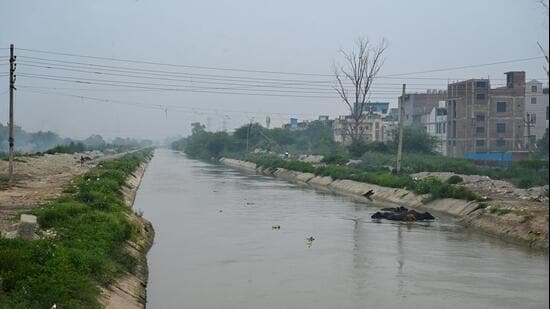
The proposed system, which will run parallel to the existing Munak canal network, will have a design capacity of 1,050 cusecs. IIT-Roorkee has been engaged to prepare the feasibility study, hydraulic design and route plan for the project, said officials.
IIT-Roorkee proposes two solutions
A senior DJB official said IIT-Roorkee has proposed two options to the government - a gravity-flow system estimated to cost around ₹13,000 crore, and a pressure-flow system using pumping stations, estimated to cost ₹7,240 crore.
“The planning wing has recommended the pressure-flow conveyance system as it is more suitable and economically feasible and IIT-Roorkee has been asked to proceed further with that option,” the official said.
{{/usCountry}}“The planning wing has recommended the pressure-flow conveyance system as it is more suitable and economically feasible and IIT-Roorkee has been asked to proceed further with that option,” the official said.
{{/usCountry}}Official said the parallel conveyance system is being planned in view of three upcoming dam storage projects being developed upstream on Yamuna tributaries of Lakhwar, Renukaji and Kishau.
The projects are expected to augment Delhi’s water supply once completed.
“Even if additional water becomes available after the dams are completed, Delhi will not be able to benefit unless there is adequate conveyance capacity. The Munak canal system is already carrying water close to its design capacity,” the official said.
Alternative to existing canal network
The proposed pipeline could also serve as an alternative to the existing canal network and help reduce transmission losses, officials said, even if water from the three dam projects takes longer to become available.
Built between 2003 and 2012 as part of the Western Yamuna Canal system, the Munak canal carries more than 1,000 cusecs of Yamuna water to Delhi through two channels — the Carrier Lined Channel (CLC) and the Delhi Sub Branch (DSB). The system begins at the Munak regulator in Karnal, Haryana, and runs south through Khubru and Mandora before reaching Delhi near Haiderpur.
Also Read I Delhi records 17-yr low in September temperature second time this month
Delhi and Haryana had signed an initial memorandum of understanding for the project in 1996, but disputes between the two states delayed the lining of the canal, which was eventually completed in 2012.
Officials said solar-powered pumping is also being examined to reduce electricity costs.
IIT-Roorkee has now been asked to prepare the financial proposal, finalise the hydraulic design and drawings, and prepare route maps for the proposed pipeline. It is expected to submit its report by November.
Stay updated with all top Cities including, Bengaluru, Delhi, Mumbai and more across India. Stay informed on the latest happenings in World News along with Delhi Election 2025 and Delhi Election Result 2025 Live, New Delhi Election Result Live, Kalkaji Election Result Live at Hindustan Times.
Stay updated with all top Cities including, Bengaluru, Delhi, Mumbai and more across India. Stay informed on the latest happenings in World News along with Delhi Election 2025 and Delhi Election Result 2025 Live, New Delhi Election Result Live, Kalkaji Election Result Live at Hindustan Times.