
 E-Paper



Delhi sees over 1 mn transactions using ration cards issued from other states
The One Nation, One Ration Card programme is a national platform that digitises ration cards, details of beneficiaries, monthly quota of ration under the National Food Security Act (NFSA), 2013, and allows withdrawals through electronic point of sale machines.

 Prefer HTon Google


Delhi has seen over a million ration transactions under the Centre’s One Nation One Ration Card scheme that was implemented by the Delhi government in July 2021, according to official data.
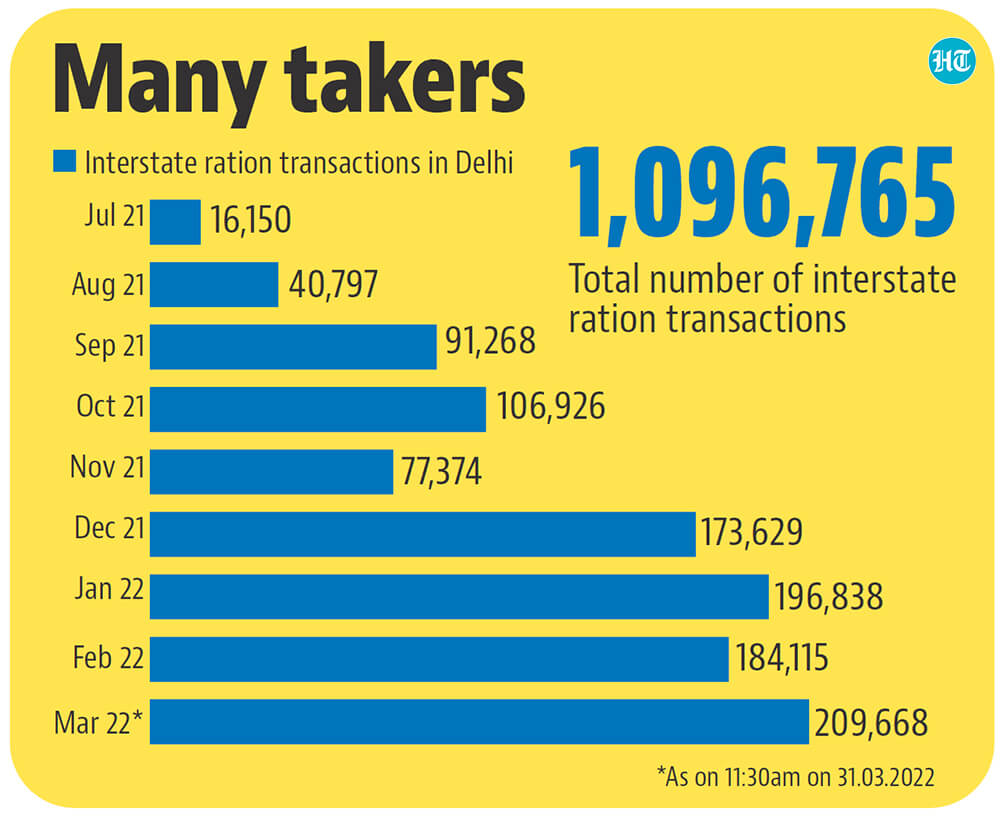
Data shows that the number of transactions have grown from 16,150 in July 2021 to 209,668 in March 2022, with the total entitlements of 1.09 million.
The One Nation, One Ration Card programme is a national platform that digitises ration cards, details of beneficiaries, monthly quota of ration under the National Food Security Act (NFSA), 2013, and allows withdrawals through electronic point of sale machines.
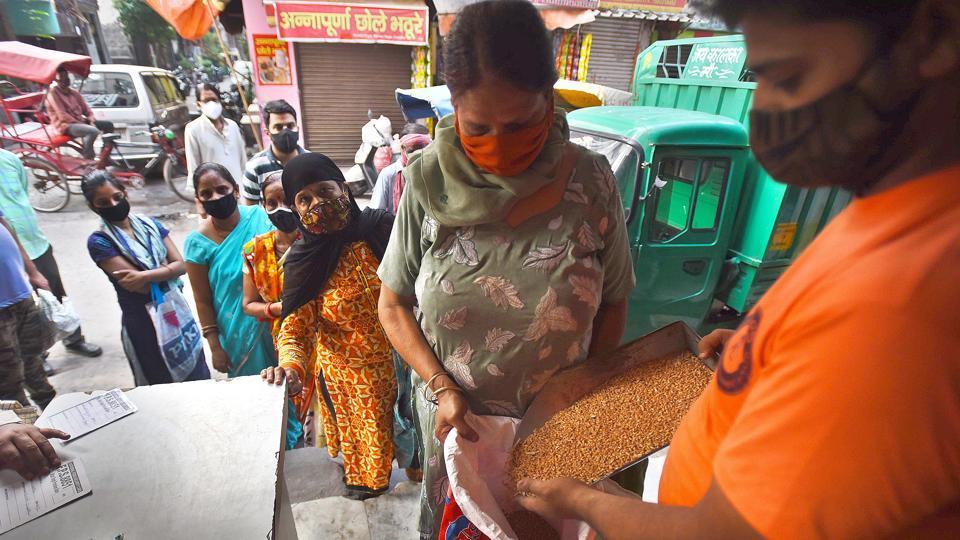
“It is common to see new faces at the fair price shops since ONORC has been implemented. People who were till now deprived of ration, are getting it now under the new scheme,” said Saurabh Gupta, secretary of Delhi Sarkari Ration Dealers Sangh. Gupta runs fair price shop in Vasant Vihar.
A food department official said that people who face difficulties in biometric authentication due to erosion of fingerprints, etc. have been given the option of nominating someone else on their behalf for obtaining ration. “The number of people obtaining ration under the scheme dramatically grew since more and more people got to know about the rollout of the scheme in Delhi. The large number of transactions also underline how important the subsidies ration is for the underprivileged families,” the official said.
Baidhnath Kumar, a migrant from Jamui district of Bihar, said he has been working at a cloth store in Chandni Chowk for the last three years but never got ration despite having a ration card issued to his family in Jamui. “Now the same ration card has become a source of food for us. Our four-member family gets 40kg ration every month,” said Kumar.
In the Capital, PDS beneficiaries are provided 5kg of foodgrains (4kg wheat and 1kg rice) every month under regular National Food Security Act entitlement, and an additional ration quota is provided under Pradhan Mantri Garib Kalyan Anna Yojana. Then, under the Antyodaya Anna Yojana scheme, regular entitlement is 25kg wheat per household per month, 10kg rice, and 1kg sugar.
Delhi has 1.75 million ration card holders who are beneficiaries of the ration under NFSA, 2013, and about 68,730 “poorest of poor” AAY (Antyodaya Anna Yojana) families, comprising slightly over 200,000 individuals.
Shailendra Kumar, president of Public Distribution System Welfare Association, an association of PDS dealers, said the beneficiaries’ biometric details are verified through e-PoS machines before they are given the ration. The Delhi government has deployed 2,005 e-PoS devices across the capital for distribution of ration under ONORC scheme.
Anjali Bharadwaj, member of the Right to Food campaign, said the concept of portability of ration entitlements across the country is important given the nature of migration of labour. “However, the ONORC scheme is limited to only those who possess ration cards, which often leaves out the most vulnerable who are unable to furnish necessary documents for a card. There are many economically vulnerable persons including migrant workers who are unable to obtain a ration card on account of either the ration card quota under the National Food Security Act (NFSA) being exhausted in their state or due to inability to furnish the numerous documents required for applying for a ration card including proof of address, Aadhaar, electricity bill, etc.” Bharadwaj said.
Bharadwaj further said that the Supreme Court in its June 29 judgment in the migrant workers case directed the central government to re-determine the total number of persons to be covered in rural and urban areas in states for issuance of ration cards. “If the population projections of 2021 were to be used, an additional 10.2 crore people would be eligible for ration cards. The failure of the government to comply is leading to mass exclusion from the food security net. The scale of the problem can be gauged by the fact that when the Delhi government during the first lockdown in 2020 announced a scheme for providing 5 kgs of ration to people in need but who did not possess ration cards nearly 70 lakh people registered and were provided food security,” said Bharadwaj.


