
 E-Paper



Delhi to revive around 50 drying water bodies under drainage master plan
The initiative aims to turn Delhi’s barely functional lakes and ponds into natural sponges that can store excess rainwater, reduce flooding, and replenish the city’s fast-depleting groundwater.

 Prefer HTon Google


The Delhi government has launched an ambitious plan to revive more than 50 natural water bodies across the city by linking them directly to stormwater drains, officials said on Friday. The initiative aims to turn Delhi’s barely functional lakes and ponds into natural sponges that can store excess rainwater, reduce flooding, and replenish the city’s fast-depleting groundwater.
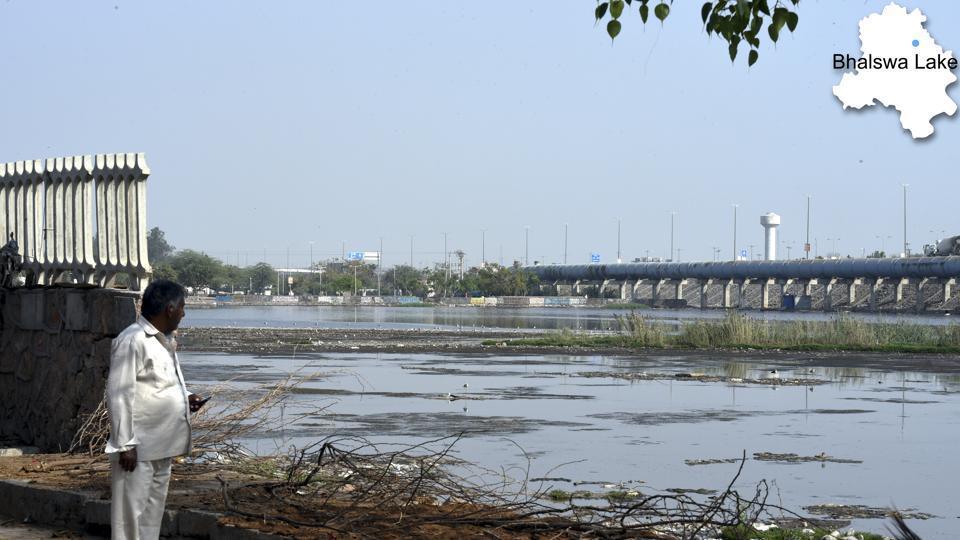
Officials from the Public Works Department (PWD), which is spearheading the project, said the revival plan forms a key part of Delhi’s newly released Drainage Master Plan – the first major update to the city’s drainage system in over four decades. Most of the targeted water bodies, officials aware of the plan said, have either dried up or degraded over time, largely due to urbanisation, encroachment, and disconnection from natural drainage channels.
“The idea is to turn these abandoned or dying lakes into buffers that hold rainwater during heavy downpours and release it gradually into the aquifers,” said a senior PWD official. “This will not only help control waterlogging but also recharge the groundwater that Delhi increasingly relies on.”
Water minister Parvesh Verma has said the master plan represents a shift from the city’s decades-old approach to drainage. The new strategy integrates nature-based solutions such as wetlands, bioswales, and retention ponds with modern, automation systems to better manage stormwater during the monsoon.
Under the plan, Delhi has been divided into three major catchment basins – Najafgarh, Barapullah, and Trans-Yamuna – to streamline stormwater flow. The Najafgarh basin will see the most extensive work, with nearly 25 rejuvenated water bodies forming a connected hydrological network. The remaining projects will be spread across the Trans-Yamuna and Barapullah basins.
Some of the key sites identified for revival include Bhalswa Lake and the Bawana water body in north Delhi, Tihar and Mayapuri lakes in the west, and Basai Darapur in central Delhi, along with smaller ponds near Dasghara, Zardakpur, and Ajit Vihar. A few sites near Narela forest and Tikri Khurd drain have also been earmarked.
Delhi currently has about 1,000 recorded water bodies, but only a small fraction remain ecologically active, officials said. The rest have been filled up, built over, or severed from their natural catchments.
Bhalswa Lake – one of the city’s largest – has been chosen as the model pilot for the project, where rejuvenation work has already begun. The plan involves desilting, stabilising embankments, building peripheral walkways and parks, and installing aeration systems to improve water quality. Once restored, the 40-hectare lake will have a depth of 3.5 metres and a storage capacity of 1.4 million cubic metres.
Fencing will be erected to prevent encroachments, and a natural treatment system will handle inflows from nearby drains. The design also includes recharge pits, zones for biogas generation from cow dung, and the development of 25 green parks with retention tanks to capture rainwater. “Bhalswa’s revival will serve as a blueprint for other sites. The aim is not beautification – it’s restoring hydrological balance. Every lake must become part of Delhi’s stormwater system,” the official said.
The broader drainage plan also introduces real-time monitoring. Silt traps will be installed in major drains to prevent clogging, and all pumping stations will be automated and linked via GPS to a central control room that tracks water levels and pump performance. This, officials said, will allow the city to respond swiftly to heavy rainfall and flooding.
“Earlier, the approach was simply to build more drains,” said another PWD officer. “Now we’re rethinking it — reconnecting natural systems, reviving existing water bodies, and managing everything through intelligent monitoring.”
While the Najafgarh basin offers enough open areas for lake revival, officials acknowledged that the Trans-Yamuna and Barapullah basins pose greater challenges. The Trans-Yamuna region has very few surviving natural lakes, while the Barapullah basin -- which includes much of central and Lutyens’ Delhi -- is so densely built that large open reservoirs are impractical.
“In highly built-up areas, the focus will shift to underground retention tanks, green roofs and artificial recharge pits instead of large open lakes,” the official said.
Overall, across all three basins in the city, a total of over 50 lakes and water bodies are set for revival in the next couple of years, most of which are in the Najafgarh basin area.


Stay updated with all top Cities including, Bengaluru, Delhi, Mumbai and more across India. Stay informed on the latest happenings in World News along with Delhi Election 2025 and Delhi Election Result 2025 Live, New Delhi Election Result Live, Kalkaji Election Result Live at Hindustan Times.


