E-Paper



Elevated taxiway, new runway part of Delhi airport upgrade
Delhi's Indira Gandhi International Airport will inaugurate its new dual-elevated Eastern Cross Taxiway (ECT) on July 13


The new dual-elevated Eastern Cross Taxiway (ECT) will be inaugurated and become operational at Delhi’s Indira Gandhi International (IGI) Airport on July 13, the airport operator Delhi International Airport Limited (DIAL) said on Friday. The inauguration will be done by Union minister for civil aviation Jyotiraditya Scindia, who will also inaugurate the airport’s fourth runway on the same day, officials said.
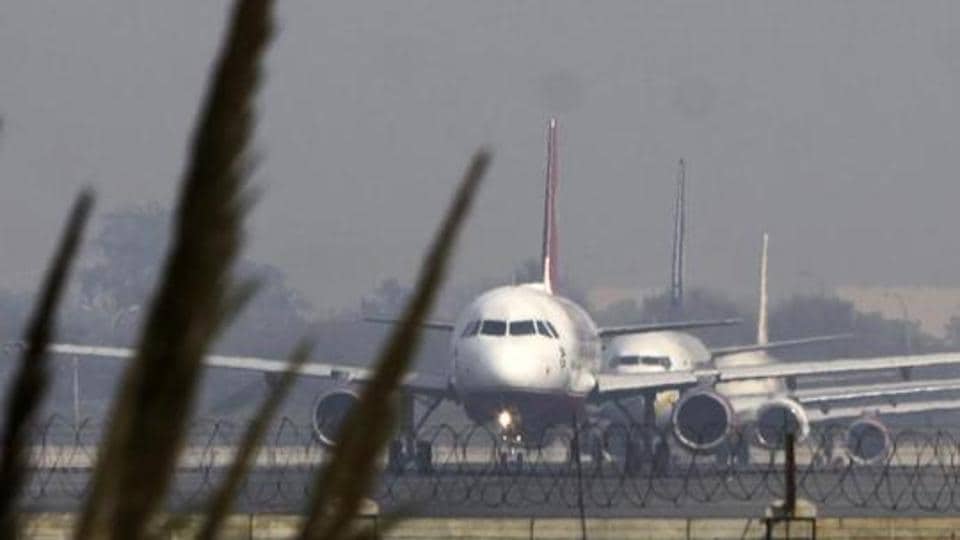
Officials said that ECT – the first-of-its-kind structure for India — will give passengers heading to the airport through the central spine road or the Radisson road a view of the aircraft taxiing above them, which is similar to Singapore’s Changi International airport. DIAL says the 2.1km-long ECT – capable of handling two aircrafts simultaneously — will reduce the time a passenger spends in the aircraft by almost half, bringing it down from 20 to 25 minutes earlier to 10-12 minutes.

“The distance the aircraft would earlier take to go from runway 29/11 to 28/10 and towards T1 or vice versa was around 9 km. This will come down to 2km as the ECT gives a shorter path. This will mean passengers also have to spend less time waiting in the aircraft and it will allow for better operational efficiency,” said I Prabhakara Rao, deputy managing director, GMR Group, adding that on an annual basis, the ECT is estimated to reduce CO2 emissions from aircrafts by approximately 55,000 tonnes — a move that is part of the long-term goal of the airport to achieve “net zero emissions” by 2030.
Rai also said the ECT is a code F taxiway, meaning it can handle the largest, wide-body aircrafts, including the Airbus A380, Boeing 777, and Boeing 747-8.
“It has two 44-m-wide lanes with a gap of 47m between them to allow safe and simultaneous passage of two large aircrafts. The total width would be 202m taking into account the space beyond the runway limits. The taxiway has a total of 590 girders, each weighing 90 metric tonnes, which was built without disrupting the existing airport traffic,” he added.
Meanwhile, the new fourth runway has a length of around 4,400m and a width of 75m. Officials said that it is slightly smaller than the third runway, which is parallel to it. After its launch, the IGI airport will also become the country’s only airport to have four runways.
DIAL says the IGI airport is currently handling over 1,500 air traffic movements (ATMs) every day and with the addition of the new runway and the ECT, this figure is set to rise significantly. However, an exact figure is yet to be ascertained. “We will see a rise in the ATMs. The exact numbers will only be known once we see these two new additions being operationalised. The number of movements on the ECT will also depend on the wind direction and on which runway a flight lands,” Rao added.
Officials said that the ECT will connect runways 28/10 with the existing third runway, 29L/11R, and the new fourth runway, 29R/11L. Flights landing on runway 27/09 can approach either T1 or T3 directly, not requiring them to head towards the ECT, instead getting a much shorter route through an existing taxiway on the western side of the airport.
Officials added that the Radisson road — from the Gurugram Circle to Centaur Hotel — will pass underneath the ECT like an underpass. The central spine road, which connects Mahipalpur and T3, will also pass underneath a segment of this ECT.