E-Paper



Delhi’s temperature hits 40°C, rise unlikely to cease this week
While some parts of Delhi were recording what could classify as heatwave conditions for the last two weeks, the temperature at Safdarjung touched 40°C only on Thursday, making it the first official heatwave in the Capital in 2022

 Prefer HTon Google


The maximum temperature hit 40 degrees Celsius (°C) in Delhi on Thursday, making it the hottest day so far this year, even as mercury crossed the 42-degree mark in several parts of the Capital and the India Meteorological Department (IMD) maintained its advisory on “heatwave” and “severe heatwave” conditions across Delhi.
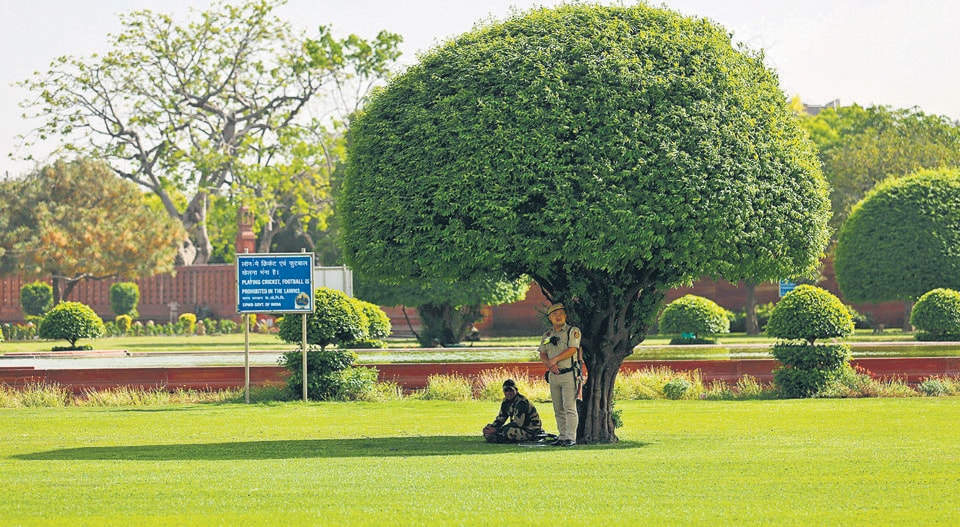
The temperature recorded at the Safdarjung observatory, considered Delhi’s official base weather station, was five degrees above normal and 0.7 degrees higher than a day ago. Prior to this, the highest maximum recorded at Safdarjung was 39.6°C on March 30. IMD has already declared a “yellow alert” -- issued to warn the public of a weather event taking place -- in the city till April 13.
A heatwave is when the maximum temperature is over 40°C and 4.5 degrees above normal, and a severe heatwave is when the temperature is above 40°C and 6.5 degrees above normal. While some parts of Delhi were recording what could classify as heatwave conditions for the last two weeks, the temperature at Safdarjung touched 40°C only on Thursday, making it the first official heatwave in the Capital in 2022.
According to IMD, the mercury shot to 42.8°C at the Yamuna Sports Complex station in east Delhi, and is forecast to rise by another 1-2 degrees across the city by Saturday.
“Temperatures are gradually rising, and Safdarjung saw its first 40°C maximum this year. It is likely to rise further and touch close to 41°C by Friday and around 42°C by Saturday, with other parts likely to reach 43°C or 44°C,” said IMD scientist RK Jenamani.
He said that with no rain in sight, a respite from the heat is unlikely at the moment. “Delhi has seen no rain since the end of February and we are also witnessing clear skies at the moment. To further raise mercury, hot westerly winds are blowing towards Delhi,” Jenamani said.
Last year, the highest maximum temperature recorded in April was 42.2°C on April 29. In 2020, the highest was 42.1°C on April 16, and in 2019, the mercury hit 42.1°C on April 26.
Since 2011, the highest maximum for April is 43.2°C on April 21, 2017; and the all-time record for April is 45.6°C recorded on April 29, 1941.
In terms of the minimum temperature, Delhi recorded a low of 19.4°C on Thursday, which is around normal for this time of the year.