E-Paper



Dip in UP rainfall since 2001 may hit farm sector: Report
Instances of the monsoon rain in the state being below normal have increased after the 1990s, the paper adds.

 Prefer HTon Google


New Delhi: Monsoon rainfall over Uttar Pradesh, country’s most populous state is declining, data from 2001 to 2020 shows. This could have major repercussions for the agriculture sector in the state which is partly rain-fed , a paper published in India Meteorological Department’s Mausam journal this month has flagged.
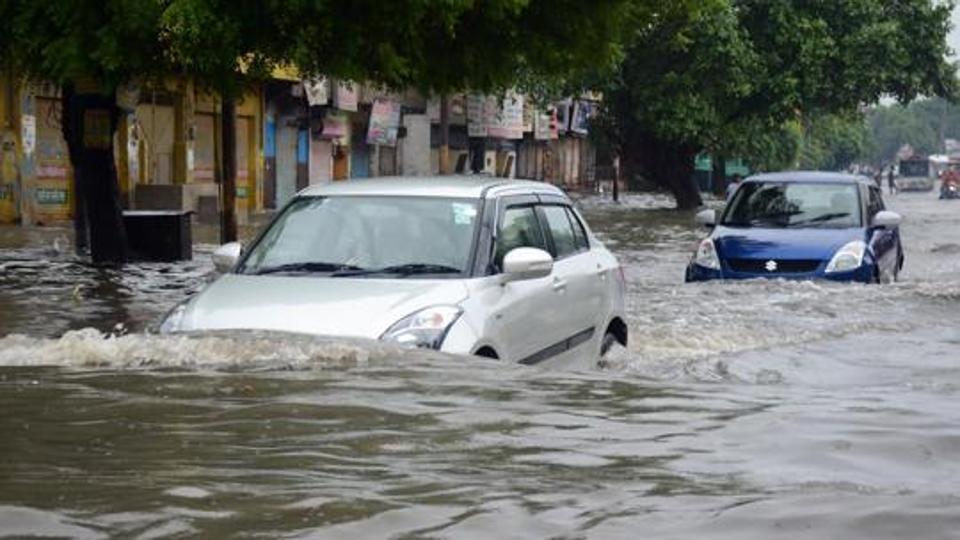
Despite being located in the fertile zone of the Ganga-Yamuna river basins, monsoon rainfall has been below normal in Uttar Pradesh (UP) for the 20-year period except during 2003 (24% excess) and 2008 (12% excess) with the highest negative departure recorded in 2014 (-47%).
The analysis in the paper, “Study of southwest monsoon rainfall over Uttar Pradesh during last two decades (2001-2020)”, shows that east UP experienced below normal rainfall in the period except in 2003 (20%), 2008 (17%) and 2019 (02%) with the highest negative departure (-47%) in 2015. West UP also experienced below normal rainfall in all years except 2003 (32%), 2008 (03%), 2010 (0%) and 2018 (01%) with the highest negative departure in 2014 (-56%).
Instances of the monsoon rain in the state being below normal have increased after the 1990s, the paper adds. And much like in the rest of the country, monsoon rains in UP have become increasingly patchy. On average, in a three-month long monsoon season, there were 66 rainy days in East UP, 59 in West UP, 68 days for the state as a whole. The rainfall intensity on average was 11.5 mm/day, 10.2 mm/day and 10.2 mm/day .
It is difficult to say why the rainfall in the state has declined, said M Mohapatra, director general, IMD. “ It may be climate change but we need to conduct attribution studies first to correlate how the rise in greenhouse gas emissions can lead to a change in rainfall patterns over the region. So, Uttar Pradesh particularly east Uttar Pradesh, Bihar, Jharkhand and north-eastern states are seeing a decline in rainfall in the past 20 years while the Western states such as Saurashtra, Kutch, Rajasthan are recording an increase in rainfall. The number of rainy days is also declining for UP but this also depends on where a state is located and when monsoon reaches the state. For example, Rajasthan will have fewer rainy days because monsoon reaches there late and withdrawal also begins from northwest India. “
But UP’s declining rainfall is worrying because it could hurt agriculture in parts of the state that do not have irrigation networks. “The trend of declining rainfall in eastern states definitely has concerns for rainfed agriculture. In Uttar Pradesh, western parts have irrigation sources but the eastern side is mostly rainfed,” added Mohapatra.
In 2003, when Uttar Pradesh reported excess rainfall, the onset of the monsoon happened over the state on July 5 and withdrawal on September 10. In the most deficient years-- 2014 and 2015, the advance was early and withdrawal was delayed as compared to the excess monsoon years. “Therefore, it is inferred that advance and withdrawal dates are not directly related with the performance of monsoon rainfall over the state ,” the paper concluded.
The monsoon rains, which first hits Kerala around 1 June, are crucial for summer crops and bring about 70% of India’s annual rainfall. Although agriculture accounts for just 15% of India’s gross domestic product, it remains the primary source of livelihood for nearly 60% of its population.
Ahead of monsoon season last year, IMD said monsoon in India is heading towards a wet epoch with above normal rains. “Presently, the southwest monsoon is passing through a dry epoch, which started in the decade of 1971-80. The decadal average of all-India southwest monsoon rainfall for the decade 2011-20 is 3.8% of the long-term average. The current decade (2021-30) is expected to come closer to neutral and southwest monsoon would enter the wet in the 2031-40 decade,” the weather office said on April 15, 2022.
Uttar Pradesh along with other eastern states received deficient rain last year. Between June 1 and September 30, 2022 India received 92.5 cm rain against the Long Period Average of 87.0 cm based on the rainfall data for 1971-2020. So total monsoon rainfall was above normal at 106% of LPA. But out of Out of 36 subdivisions, six which received deficient rainfall included both West Uttar Pradesh and East Uttar Pradesh.