E-Paper



How polluted is the Yamuna? No data to tell
No data on Yamuna water quality has been available since February, raising concerns about river pollution levels and impact on aquatic life.

 Prefer HTon Google


New Delhi No data has been made available on the water quality of the Yamuna or the major drains that bring sewage and effluents into it since February, which was the last time the Delhi Pollution Control Committee (DPCC) uploaded a monthly report on its website with parameters such as biological oxygen (BOD), dissolved oxygen (DO) and faecal coliform.
Though mandated by the National Green Tribunal (NGT) to collect water samples from the Yamuna and all major drains emptying into the river, analysing it, and uploading detailed reports on its website, this has not been done for the last four months. Experts said the data is needed to analyse both the short- and long-term quality of the river water.
There was no response to queries sent by HT to the Delhi government, DPCC or the principal secretary (environment & forest) on why the data was no longer being uploaded, or whether the body had stopped collecting samples altogether. In 2019, NGT gave directions that monthly data be made available on the DPCC website, with a report available for every month since January 2013 for the Yamuna, and since July 2019 for Delhi’s drains
DPCC also uploads reports on Delhi’s sewage treatment plants (STPs) and common effluent treatment plants (CETPs), for which the latest reports are available till May this year.
Water samples are collected manually from the Yamuna at eight locations – Palla (where the river enters Delhi), Wazirabad, ISBT Kashmere Gate, ITO bridge, Nizamuddin bridge, Okhla barrage, Agra canal, and finally Asgarpur (where the river exits Delhi). This includes parameters such as BOD, DO, chemical oxygen demand (COD), pH and faecal coliform. Similar testing is done for over 25 drains in Delhi.
BOD indicates amount of oxygen required by aquatic life and organisms in the river in order to survive. The higher the BOD, the more difficult it is for aquatic life to survive. The BOD level in a river should be 3mg/l or less, but the last report from February shows BOD was less than this standard only at Palla (1.3 mg/l), before rising to 6.7 mg/l at Wazirabad and 41 mg/l by the time the river reaches ISBT Kashmere Gate. It touched as high as 54 mg/l at Asgarpur.
The monthly reports also measure faecal coliform -- bacteria living in the intestines of warm-blooded mammals, including humans, thus indicating the presence of sewage and human waste in the river. This ranged from 2,000 parts per million (PPM) at Palla to 250,000 PPM when it exits Delhi at Asgarpur in the February report. The acceptable limit for faecal coliform is 2,200 PPM.
n the same month, DPCC released its last monthly report on 28 drains of Delhi, showing that seven of these had “no flow”, which means that there was no sewage or stormwater flowing through the drain, at the time of collection of samples. Of the remaining 21, none of the drains met the 30 mg/l BOD standard for drains. The highest value of 65 mg/l was recorded at the Sonia Vihar drain.
“The absence of data means it is difficult to tell whether there is an improvement in the Yamuna, or if the situation has worsened,” said Bhim Singh Rawat, a Yamuna activist and member of the South Asia Network on Dams, Rivers and People (SANDRP).
DPCC had in May floated a tender to procure 22 online monitoring stations (OLMS) by the end of this year, which will be installed along the Yamuna to get real-time data on water quality.
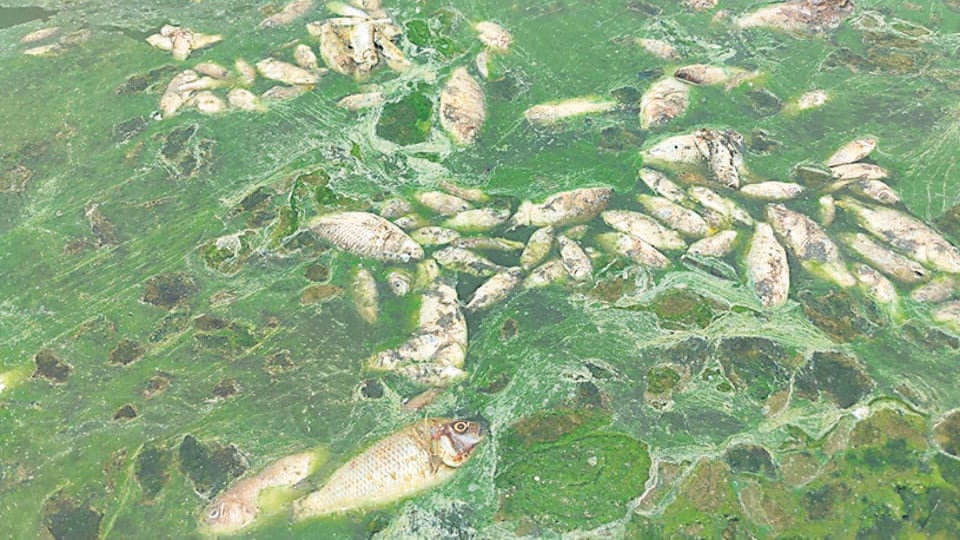
Dead fish in the Yamuna Images of dead fish floating in the Yamuna have also surfaced in the last few days – an indicator of low BOD and DO, but with missing data, it is hard to ascertain the exact reason behind the deaths, experts said. Locals said dead fish began showing up along the river floodplain about a fortnight ago, with the situation improving in the last few days, after rains.
“Till a fortnight back, we were getting several kilograms of dead fish washing up on the side of the river. At the time, the Yamuna’s water quality appeared to be much worse than what it is now and the flow of the river was not as strong. Now, following rains, more water is being released from the Haryana side too and the river is visibily cleaner,” said Ram Sahni, a fisherman who looks for his daily catch north of Palla.
Trilochan Singh, a resident of Sabhapur village near Sonia Vihar, said cases of dead fish showing up on the banks of the Yamuna is a common sight when the water levels are low and a high quantity of effluents are released into the river.
“We last heard about dead fish ending up on the floodplains around 10 days ago. No deaths have been reported since it began raining in Delhi, as the water level has increased. In a lot of cases, we also see tanneries in Haryana release a lot of chemicals directly into the river, which turns a bright shade of red in parts. We often see dead fish when this happens,” said Singh.
Faiyaz Khudsar, scientist in-charge of DDA’s biodiversity parks programme, said a drop in oxygen in the river generally occurs when the river is receiving a large quantity of sewage and effluents.
“For the dissolved oxygen to improve, a lot of water needs to be released from Hathanikund barrage, which washes away the pollutants. After rains began last week, it appears the DO has started improving gradually,” said Khudsar, saying that he last received images of dead fish along the river on June 30. “This is most likely before the rains,” he said.
But, in the inexplicable absence of data, no one really knows.