The pollution-induced closure of schools and the subsequent switch to the online mode of classes has hit learning in government schools in the city as administrators claim attendance has gone down and students are demonstrating lesser engagement in the virtual sessions. Several school officials also said that scheduling classes was also challenging since many teachers were occupied with examination duties.
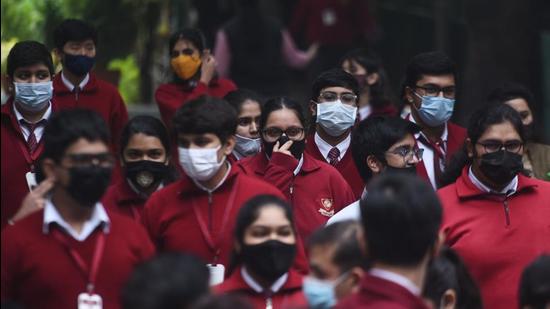
Last week, the Delhi government had announced closure of schools indefinitely on account of pollution. The closure came barely four days after schools reopened after a two-week-long pollution-induced closure last month.
Sukhbir Singh Yadav, president of Vice and Principals’ Association of Delhi, and the head of a government school in Rohini, said that attendance in online classes has gone down in comparison to the turnout during in-person classes.
“I have been joining virtual sessions of classes 6 to 8. The attendance never goes beyond 40% in online classes whereas it was much better during in-person classes. Nearly all students were turning up for in-person classes within a matter of days,” said Yadav.
He added that online attendance was much better for senior students, such as in Class 11, where nearly 60% students logged in.
Yadav said that constant closures had adversely impacted the school schedule as well as the mindset of children who are reportedly demonstrating a waning interest in classes. He said that managing online classes is also tough as staff are fully engaged with exam work.
{{/usCountry}}Yadav said that constant closures had adversely impacted the school schedule as well as the mindset of children who are reportedly demonstrating a waning interest in classes. He said that managing online classes is also tough as staff are fully engaged with exam work.
{{/usCountry}}“Staff is busy with board examination, board paper evaluation and the uploading of marks. Simultaneously, mid-term exams for students in classes 9 and 11 are also taking place simultaneously. In such a situation, only primary teachers are able to take class comfortably,” said Yadav.
Anju Kumar Ahlawat, the west district secretary of Government School Teacher’s Association and a physical education at the Government Co-ed Secondary School Bindapur, said that the suspension of in-person classes has impacted students in junior classes more than the others. “Senior students are able to understand concepts and are attending classes regularly. However, students in classes 6 and above are facing various challenges. Some students are unable to pay attention and are demonstrating dwindling interest in classes. In many families, parents are going out for work or have a single mobile phone due to which students end up skipping classes,” said Ahlawat.
Hesaid that online classes were more challenging since students did not readily ask questions or raise doubts, even if they did not understand the subject, and teachers were also unable to gauge the level of understanding among their students. “When schools had reopened for in-person classes, we saw a greater level of participation from them. They were fully interested in classes but the same level of engagement is missing from online classes,” said Ahlawat.
Some school heads, however, said that students had become familiar with online classes over the past year even as they confirmed that in-person classes are the preferred choice. “Children and teachers have adopted technology now. Initially, challenges were more but now we are not facing a lot of difficulties in switching back to online classes. Attendance can vary on days but students are mostly attending classes,” said M Shariq, principal of the School of Specialized Excellence in Kalkaji.