Reports of possibly thousands of dead fish along the Yamuna near Burari in north Delhi since Wednesday night have raised concerns among activists and independent experts about the health of the river’s aquatic ecosystem. The deaths have been reported in a stretch generally considered relatively cleaner than other parts of the river in Delhi and from where the Capital draws water for drinking.
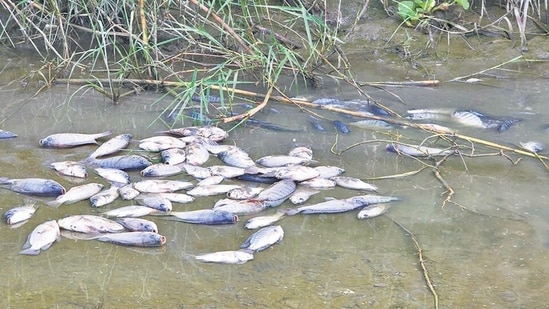
A similar incident was reported near Burari in May 2025, when thousands of dead fish were seen floating in the river. Locals then alleged that chemical waste discharged from Haryana through canals had contributed to the deaths.
Environmentalists flag drinking water concerns
Wildlife enthusiast and conservationist Hemant Garg, who spotted the dead fish on Wednesday night, said thousands had been seen upstream, extending to Shank numbers 10, 11 and 12.
“We regularly go in Yamuna to wildlife conservation, bird census and tracking wildlife. The fish were observed last night and thousands of dead fish have been seen way upstream,” he said, adding that the water in this stretch is usually clean. “We should be wary as drinking water is also sourced from this part of river.”
Boatman Ranjan Mukhia said the water had developed a strong smell and the deaths were not confined to one stretch. Other boatmen upstream had also reported dead fish, he said, adding that carcasses had to be removed to prevent further deterioration in water quality.
{{/usCountry}}Boatman Ranjan Mukhia said the water had developed a strong smell and the deaths were not confined to one stretch. Other boatmen upstream had also reported dead fish, he said, adding that carcasses had to be removed to prevent further deterioration in water quality.
{{/usCountry}}Bhim Singh Rawat, a Yamuna activist and member of the South Asia Network on Dams, Rivers and People, said mass fish deaths are usually reported in summer, when high temperatures reduce dissolved oxygen in water. “I can’t recall the last such episode in winter months. The possibility in this case could be untreated industrial effluents,” Rawat said, pointing to Drain 2 from Panipat, Drain 8 and a drain in Burari as possible sources of industrial discharge. He also said raw water flow in the river had remained low despite the monsoon.
Yamuna activist Pankaj Kumar said he had written to the Delhi Pollution Control Committee, seeking urgent intervention. Mass fish mortality is a critical indicator of ecological stress, he said, citing low dissolved oxygen, high biochemical oxygen demand (BOD) and toxic industrial effluents as possible causes. If toxic substances are present in quantities sufficient to kill fish, the water being drawn downstream at Wazirabad for drinking could pose a public health risk, Kumar said.
Also Read I Gurugram pollution HSPCB tells RWAs to restrict use of non-compliant diesel generator sets
The New Delhi Nature Society said in a post on X said the cause had not been established, while noting local allegations of chemical waste discharged from Haryana and asking whether the deaths could be linked to acid rain on October 12. Delhi has witnessed several similar incidents in April and May this year.
Stay updated with all top Cities including, Bengaluru, Delhi, Mumbai and more across India. Stay informed on the latest happenings in World News along with Delhi Election 2025 and Delhi Election Result 2025 Live, New Delhi Election Result Live, Kalkaji Election Result Live at Hindustan Times.
Stay updated with all top Cities including, Bengaluru, Delhi, Mumbai and more across India. Stay informed on the latest happenings in World News along with Delhi Election 2025 and Delhi Election Result 2025 Live, New Delhi Election Result Live, Kalkaji Election Result Live at Hindustan Times.