
 E-Paper



Gurugram pollution HSPCB tells RWAs to restrict use of non-compliant diesel generator sets
HSPCB has directed Gurugram RWAs to restrict non-compliant diesel generator sets, enforce GRAP curbs and ensure sewage treatment plants run round the clock.

 Prefer HTon Google


The Haryana State Pollution Control Board (HSPCB) on Thursday directed resident welfare associations (RWAs) and facility management agencies in Gurugram to restrict the use of non-compliant diesel generator (DG) sets, enforce Graded Response Action Plan (GRAP) measures and ensure sewage treatment plants (STPs) operate round the clock to curb pollution.
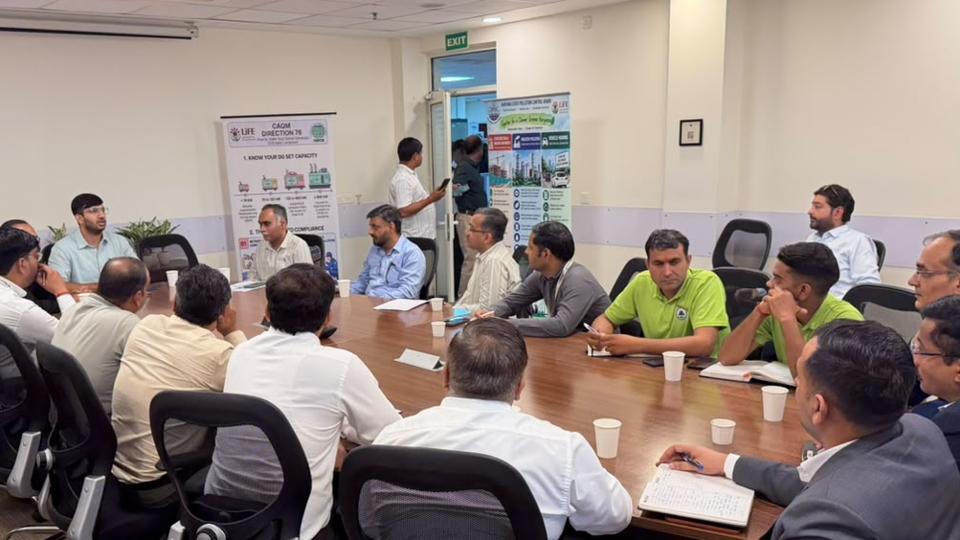
At a meeting with RWA representatives and facility managers on Wednesday, HSPCB officials asserted that non-compliant DG sets cannot be used to meet routine domestic or commercial power demand during outages.
The pollution board also instructed operators to retrofit generators with Central Pollution Control Board (CPCB)-approved retrofit emission control devices (RECDs) or convert them to dual-fuel systems, as applicable under prescribed capacity norms.
The meeting was presided over by Assistant Executive Engineer Kamesh (single name).
The board also reiterated that DG sets must be restricted to emergency services, including lifts and emergency water pumps, in accordance with the applicable directions of the Commission for Air Quality Management (CAQM). This comes at a time when multiple builders in Gurugram have been taken to the National Green Tribunal (NGT) over non-compliance with DG set norms.
The meeting also focused on implementing GRAP measures within residential and commercial premises, including dust control, prevention of open waste burning and proper management of construction and demolition waste.
HSPCB officials also directed facility operators to keep on-site STPs running continuously and ensure untreated wastewater does not flow into public drains. Treated wastewater should be reused for non-potable purposes, including horticulture and toilet flushing, instead of relying on fresh water for these needs.
The meeting comes amid heightened scrutiny of pollution-control measures in the National Capital Region (NCR), where compliance with restrictions on emission sources, dust and waste management is a key part of efforts to curb air pollution.

Stay updated with all the Breaking News and Latest News from Mumbai. Click here for comprehensive coverage of top Cities including Bengaluru, Delhi, Hyderabad, and more across India along with Stay informed on the latest happenings in World News.


