Around 70 villages on Delhi’s periphery are likely to be opened up to regulated commercial and institutional development under a new “Green Development Area (GDA) framework” which is part of the Delhi Development Authority’s (DDA) Master Plan for Delhi-2047, HT has learnt.
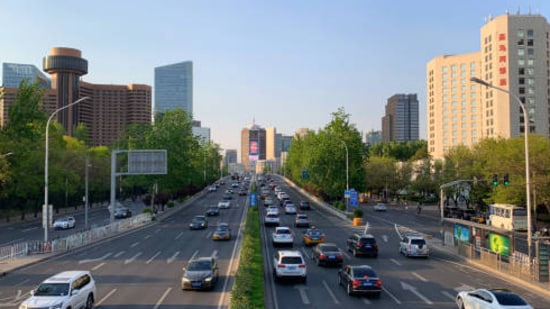
The GDA framework, first proposed in the draft Master Plan for Delhi-2041 to bring around 70 villages in the green belt and low-density residential area (LDRA) under a common planning framework, has now been retained in the final document, officials aware of the matter said on Wednesday.
Its inclusion, officials cited above explained, is expected to pave the way for commercial development in villages along Delhi’s periphery, including vertical development and higher Floor Area Ratio (FAR), potentially allowing forms of development currently seen in neighbouring satellite towns of Gurugram and Noida.
The move assumes significance as 47 peripheral villages have so far been governed by restrictions on new residential and commercial construction under the existing planning framework, while another 23 villages fall under the LDRA policy. Together, the 70 villages are proposed to be brought under the GDA framework.
The draft MPD-2041 had proposed allowing a wider range of activities in these areas, including educational institutions, commercial establishments, healthcare facilities, sports and recreation, while retaining requirements for substantial green and landscaped areas.
{{/usCountry}}The draft MPD-2041 had proposed allowing a wider range of activities in these areas, including educational institutions, commercial establishments, healthcare facilities, sports and recreation, while retaining requirements for substantial green and landscaped areas.
{{/usCountry}}Officials said the framework will “regulate development”, rather than simply open the villages to unrestricted construction. “The emphasis on vertical development is linked to the limited availability of land in the already urbanised parts of Delhi. Instead of continued horizontal expansion, redevelopment can allow existing plots and built-up areas to accommodate more housing, commercial activity and other uses through higher-density forms of development, subject to infrastructure and development-control norms,” an official said.
The draft MPD described the GDA policy as an integrated framework for development in the green belt and LDRA. It defined the green belt as agricultural land along Delhi’s border extending, wherever possible, up to the depth of one peripheral revenue village boundary. The LDRA, meanwhile, covered 23 identified villages in urban extensions where farmhouses were concentrated.
The policy’s stated objectives include encouraging green development through prescribed FAR and “large wooded and landscaped areas”, creating hubs for green living and recreation, generating green jobs, promoting food and natural produce, and creating an environmental buffer against air and noise pollution and urban heating.
A senior DDA official said, “The policy will encourage green development and will ensure seamless development of infrastructure and road network within and around GDA. For these areas, minimum 12m, 18m and 30m roads are being considered.”
HT has learnt that under the framework, land parcels would be divided into three categories based on their size. The draft policy prescribed minimum plot sizes of 600 square metres, 4,000 square metres and 10,000 square metres for the three categories. Permitted activities and “development intensity would increase” with the size of the parcel, the people said.
The smallest category would primarily accommodate agricultural, horticultural and similar green activities. Larger plots could be used for farmhouses, open markets and sports facilities. The largest parcels could accommodate higher education institutions, non-polluting work centres, research and development facilities, agricultural processing and packaging units, convention and exhibition centres and other institutional or recreational uses.
Officials said 25%-35% of the area would be required to be maintained as green space.
Experts involved in drafting the policy said its implementation would determine whether the framework achieves its stated objectives. “The changes in the plan are aimed at creating over 20 lakh jobs and generating over ₹30 lakh crore in investments. Its success depends on fast implementation and effective regulation on ground. Locals have waited for over 18 years for a new plan and increased circle rates and it is important to ensure that the interests of farmers and compensation to them be increased to make way for better implementation of the plans,” said Bhupendra Bajad, chairman of the Dilli Dehat Vikas Manch (DDVM).
Stay updated with all top Cities including, Bengaluru, Delhi, Mumbai and more across India. Stay informed on the latest happenings in World News along with Delhi Election 2025 and Delhi Election Result 2025 Live, New Delhi Election Result Live, Kalkaji Election Result Live at Hindustan Times.
Stay updated with all top Cities including, Bengaluru, Delhi, Mumbai and more across India. Stay informed on the latest happenings in World News along with Delhi Election 2025 and Delhi Election Result 2025 Live, New Delhi Election Result Live, Kalkaji Election Result Live at Hindustan Times.