New Delhi: The National Green Tribunal (NGT) has directed Delhi and neighboring states to urgently restore native fish populations and curb exotic species in the Yamuna.
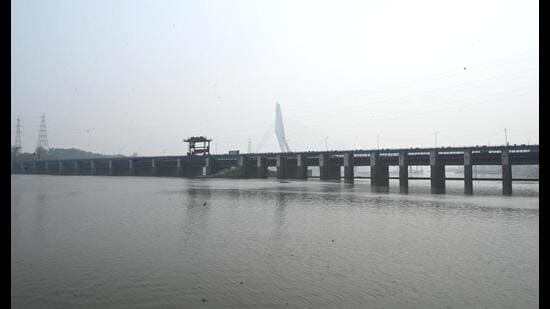
NGT directed Delhi, Uttarakhand, Himachal Pradesh, Haryana, and Uttar Pradesh to implement and consider the recommendations submitted by the Indian Council of Agricultural Research-Central Inland Fisheries Research Institute (ICAR-CIFRI) to control non-native species in the river.
The order was issued on January 29 after NGT took cognisance of a news report highlighting the issue. The report was based on a survey conducted by ICAR-CIFRI, Prayagraj (2020–2024), which recorded 126 fish species along the Yamuna from Yamunotri to Prayagraj.
The survey stated that the populations of native fish species, such as Catla, Rohu, Mahseer, and Eel, were declining, while exotic species like Common Carp, Nile Tilapia, and Thai Mangur had increased, especially in polluted stretches of the river.
“One of the main reasons for the decline of fish, especially native, in the Yamuna is the pollution in the river,” the bench headed by NGT chairperson Justice Prakash Shrivastava noted, calling for construction of fish ladders at major barrages to help native fish migrate.
The recommendations also include banning juvenile fishing and illegal gear, such as mosquito drag nets, strengthening monitoring during fishing ban periods, and maintaining proper records of fish catch data.
{{/usCountry}}The recommendations also include banning juvenile fishing and illegal gear, such as mosquito drag nets, strengthening monitoring during fishing ban periods, and maintaining proper records of fish catch data.
{{/usCountry}}The institute also suggested strategic ranching of native species Mahseer in upper stretches, Indian Major Carps and other commercially important species in middle and lower stretches, and air-breathing fish in designated sections of the Delhi stretch.
According to the institute, other measures include improving water quality, continuous monitoring, maintaining a minimum e-flow, and regulation of sand mining. Further, invasive species and their breeding needed to be strictly prohibited, it stated.
HT had on July 21, 2025, flagged the issue at Wazirabad, the last fishing point in the Yamuna in Delhi.
Local fishermen had informed that local species like Rohu, Singhara, Catla, and Malli were nowhere to be seen, while the few fish that survived were mostly invasive species, like Thai Mangur and Tilapia, which had adapted to the changing ecosystem.
Sixty-two-year-old Tirmal Singh, a fisherman from the Mallah community, who has been fishing in the Yamuna his entire life, had said that the local species and their count had changed rapidly over the last two decades.
“Until the early 2000s, we could still catch Rohu or Singhara here. Now, they’ve completely vanished.”
Stay updated with all top Cities including, Bengaluru, Delhi, Mumbai and more across India. Stay informed on the latest happenings in World News along with Delhi Election 2025 and Delhi Election Result 2025 Live, New Delhi Election Result Live, Kalkaji Election Result Live at Hindustan Times.
Stay updated with all top Cities including, Bengaluru, Delhi, Mumbai and more across India. Stay informed on the latest happenings in World News along with Delhi Election 2025 and Delhi Election Result 2025 Live, New Delhi Election Result Live, Kalkaji Election Result Live at Hindustan Times.