E-Paper



No monkey business: Delhi Cantonment asks people to refrain from feeding simians
The Delhi Cantonment Board (DCB) issued an order recently stating that people feeding monkeys near human habitation will be fined

 Prefer HTon Google


The Delhi Cantonment Board (DCB) issued an order recently stating that people feeding monkeys near human habitation will be fined. The warning added that the incidents of man-monkey conflict are on the rise in various parts of Delhi.
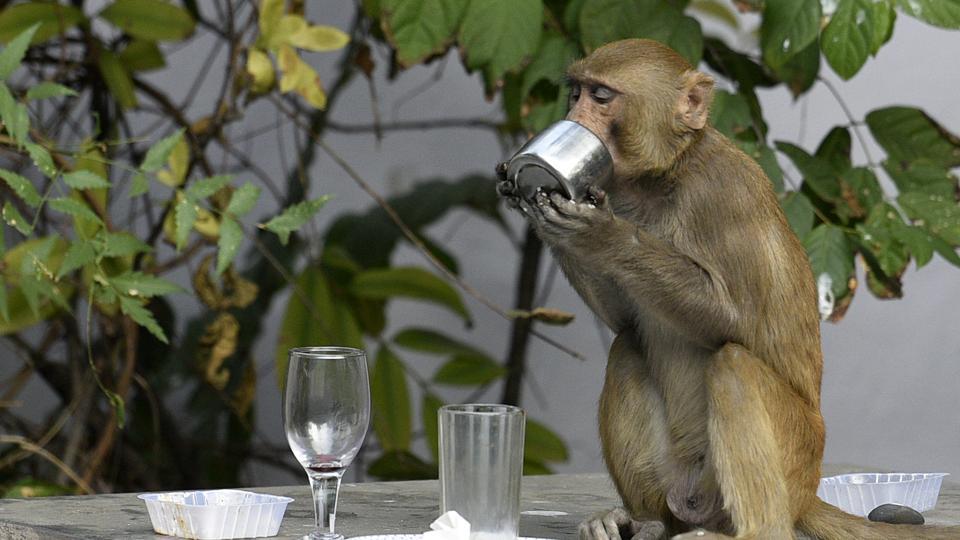
“The public is hereby warned not to feed monkeys in human habitation, particularly in residential colonies, and in the vicinity of religious places. Anyone found feeding the monkeys in human habitation will be challaned or fined in accordance with existing municipal laws,” the order issued by officer-in-charge (OIC), sanitation, Delhi Cantonment Board Gyanendra Singh said.
Till now, none of the Capital’s other four local bodies have imposed a restriction on feeding monkeys. On Thursday, Singh confirmed to HT that fines up to ₹5,000 can be issued if anyone is found violating the order. “We are empowered to issue fines up to ₹5,000 as per the Cantonment regulations 2006,” he added.
The Cantonment comprises an area of approximately 10,521 acres. It also covers residential areas and markets, such as Sadar Bazar, Shastri Bazar, Nangal Raya, Mehram Nagar, and Naraina village, besides ridge areas.
Officials from the veterinary departments of the municipal corporations said that they have not issued any such order so far either.However, a senior forest official, part of a meeting held recently between the corporations and the Delhi Cantonment Board, said the forest department asked the corporations to look at penalising people who fed monkeys at spots which could be dangerous or increase their numbers. “There are provisions under the Municipal Corporation Act to prohibit the feeding of strays and monkeys. The officials have been asked to explore deterrents,” the official said, requesting anonymity.
Despite relocating more than 21,000 monkeys to Asola Bhatti Wildlife Sanctuary over the last decade, Delhi still does not have any official count of monkeys in open areas or sanctuaries. The SDMC official said that the project has only led to an increase in the man-monkey conflict in South Delhi areas, as monkeys from all over Delhi are relocated to Asola Bhatti, which has no natural food source or boundary to prevent the entry of monkeys into residential areas.
Ved Pal, councillor from Aya Nagar ward, situated next to the relocation area, said that the whole region has been facing an increasing number of monkey attacks over the last 10 years. “There is no natural food source in the sanctuary so monkeys enter kitchens. There have been complaints from several schools about attacks during lunchtime. Water tankers on several houses have been damaged. There are groups of hundreds of monkeys on roads along Asola,” he added.
The region where there is increased conflict includes Aya Nagar, Tughlaqabad extension, Jaunapur, Fatehpur Beri, Asola, Dera Mandi and Bhati.
The relocation of captured monkeys to the Bhati mines area started in 2007 after a Delhi high court order. Earlier that year, deputy mayor SS Bajwa died of head injuries after falling from the terrace of his house, following an attack by monkeys.
The official relocation data for 2021 presented by municipal commissioners in November showed that the East Delhi Municipal Corporation managed to catch and relocate 45 monkeys to Asola Bhatti while the North MCD relocated 58 monkeys and the SDMC shifted 336 monkeys last year.
An SDMC veterinary department official said that around 50-60% simians were caught from areas around the Radha Soami Satsang Beas ashram when a Covid treatment centre was being operated at the site. The civic body offers compensation of ₹2,400 per monkey to monkey catchers for this job.
“Despite providing the highest rates in the country, monkey catchers have been reluctant to work in Delhi due to fear of legal cases being filed against them. The pandemic has further worsened the situation. There are only three monkey catchers currently working with us,” the official said, requesting anonymity.
Meanwhile, the forest department (under the Delhi government) and the municipal corporation’s veterinary department continue fighting regarding jurisdiction over the matter.
“Several communications from the ministry of environment forest and climate change (animal welfare division) clearly state that monkeys are not stray animals, and catching, trapping or controlling the population of monkeys can only be done by the forest department. If we catch monkeys, we will be breaking the law,” a senior official of the veterinary department said.
A senior official from the forest department, however, said the Delhi high court order of 2019 makes it clear the responsibility to capture monkeys lies with the corporations, not the forest department. “We have been asked to take care of the animals being shifted to Asola Bhatti Wildlife Sanctuary, and, each month, we spend over ₹8 lakh on their food. The high court made it clear corporations will be the ones transporting the monkeys there,” he said.
During May-June earlier this year, several cut-outs of langoors were placed in the Covid centre at Radha Soami Satsang Beas ashram to scare away the rhesus monkeys. This temporary solution also exposed the administrative failure in tackling Delhi’s simian menace.
Ved Pal argued that the money spent on feeding monkeys could have been used to create a zone with natural fruit trees. “The area would be able to naturally sustain the monkey population and the annual expenditure on feeding may be saved,” he added.