The Supreme Court has put a final judicial seal on the liability of doctors and hospitals under consumer protection law, as it dismissed a curative petition challenging its landmark 1995 ruling that had brought medical services within the ambit of the Consumer Protection Act (CPA).
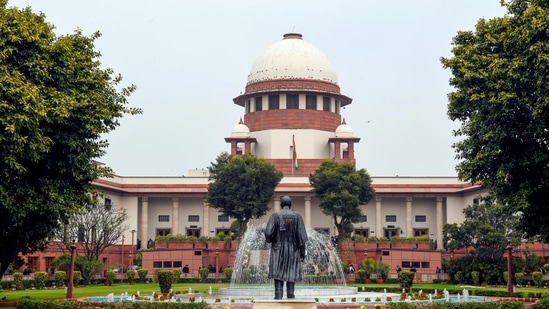
A five-judge bench of justices Vikram Nath, BV Nagarathna, MM Sundresh, Prashant Kumar Mishra and KV Viswanathan dismissed the curative petition filed by Dr Rajeev D Joshi of the Medico Legal Society of India, holding that no case was made out within the parameters laid down for entertaining a curative petition.
Also Read: SC reaffirms doctors’ accountability under Consumer Protection Act
The brief order, passed on September 9, effectively closes the latest challenge to the 1995 judgment in Indian Medical Association Vs VP Shantha, under which patients can approach consumer forums against doctors and hospitals for deficiency in medical services.
“We have gone through the curative petition and the relevant documents. In our opinion, no case is made out within the parameters indicated” in the Supreme Court’s 2002 judgment in Rupa Ashok Hurra Vs Ashok Hurra, the bench said, dismissing the plea.
The development comes after the apex court had declined in November 2024 to reconsider the Shantha ruling, in a reference triggered by its judgment excluding lawyers from the CPA’s purview.
{{/usCountry}}The development comes after the apex court had declined in November 2024 to reconsider the Shantha ruling, in a reference triggered by its judgment excluding lawyers from the CPA’s purview.
{{/usCountry}}The issue had arisen after a three-judge bench was asked to examine whether the 1995 ruling required reconsideration in light of the court’s decision that legal professionals could not be proceeded against under consumer law for deficiency in service.
The bench, however, held that the reference itself was unnecessary. It pointed out that the earlier judgment on lawyers had specifically dealt with the legal profession and that the exclusion of lawyers from the CPA did not, by itself, warrant reopening the law governing medical professionals.
Also Read: Can’t sue lawyers for poor services: Supreme Court
“The question as to whether the other professionals excluding legal profession could be covered under the Act can be considered in appropriate cases, having a factual foundation,” the bench had said in 2024.
The court also underlined the distinct nature of the relationship between medical professionals and patients while declining to disturb the Shantha judgment. The 1995 ruling had held that medical services rendered for consideration constituted “service” under the consumer law, making doctors and hospitals answerable before consumer fora for deficiencies.
The 2024 controversy arose from a May 2024 judgment by a two-judge bench, which held that advocates could not be sued before consumer courts for alleged deficiency in service. The court reasoned that the legal profession had a unique role in the administration of justice and that legal services could not be equated with commercial services rendered by businessmen or traders.
In the same judgment, the bench had observed that the Shantha ruling “deserves to be revisited”, prompting the subsequent reference.
That opening for reconsideration has now been firmly shut since the curative petition was the latest attempt to unsettle the legal position that has governed medical consumer litigation for more than three decades.
Also Read: If doctors can be sued over poor service, why not lawyers, asks SC
With the five-judge bench finding no ground to invoke the narrowly defined curative jurisdiction, the Shantha framework remains intact — patients can continue to seek redress under consumer protection law against doctors and hospitals for deficiency in medical services.
To be sure, the Bolam Test — a standard that has long been recognised in medical negligence cases — has been consistently reaffirmed by the Supreme Court. Originating from the 1957 English case Bolam Vs Friern Hospital Management Committee, this test states that a doctor is not negligent if they act in accordance with a practice accepted by a responsible body of medical professionals.
In the Indian context, the Supreme Court endorsed the Bolam Test in the case of Jacob Mathews Vs State of Punjab (2005), holding that only if a doctor lacks requisite skills or fails to exercise reasonable competence should liability be imposed.
Stay updated with all top Cities including, Bengaluru, Delhi, Mumbai and more across India. Stay informed on the latest happenings in World News along with Delhi Election 2025 and Delhi Election Result 2025 Live, New Delhi Election Result Live, Kalkaji Election Result Live at Hindustan Times.
Stay updated with all top Cities including, Bengaluru, Delhi, Mumbai and more across India. Stay informed on the latest happenings in World News along with Delhi Election 2025 and Delhi Election Result 2025 Live, New Delhi Election Result Live, Kalkaji Election Result Live at Hindustan Times.