Aam Aadmi Party leader and vice chairperson of Delhi Jal Board Raghav Chadha on Sunday informed that parts of the national capital are likely to face inadequate water supply as a fallout of the glacier burst in Uttarakhand that led to flash floods in the hill state’s Chamoli district.
In a series of tweets, Chadha urged residents to use water judiciously as two of the city’s water treatment plants were not operating at their full capacity following the disruptions due to Uttarakhand calamity.
“In the aftermath of #UttarakhandDisaster, turbidity in raw water fetched by Delhi from Upper Ganga Canal has increased to unprecedented levels (8000 NTU). As a result, @DelhiJalBoard's Sonia Vihar & Bhagirathi Water Treatment Plants currently operating at reduced capacity,” the DLB vice chairperson tweeted.
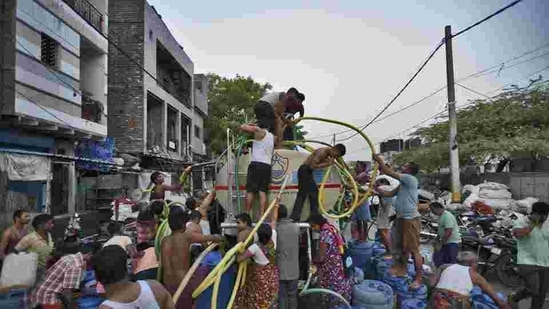
Chadha informed about the areas that were likely to face water shortage and assured that arrangement will be made to assist them. “Water supply in parts of South, East and North East Delhi is likely to be affected. We urge citizens to use water judiciously. Water tankers etc. in adequate numbers are being deployed and all possible efforts being made to reduce turbidity,” he wrote in another post on the microblogging site.
What is turbidity?
{{/usCountry}}What is turbidity?
{{/usCountry}}Chadha also explained what is meant by turbidity. “Turbidity is the measure of relative clarity of a liquid. Turbidity is measured in Nephelometric Turbidity Units (NTU). High turbidity can be caused by debris, silt, mud, algae, plant pieces, melting glaciers, sawdust, wood ashes or chemicals in the water,” he tweeted.
Uttarakhand glacial burst
A glacier broke in the Tapovan-Reni area of Chamoli district last Sunday, which led to massive flooding in Dhauliganga and Alaknanda rivers and damaged houses and the nearby Rishiganga power project.
The rescue and search operations were briefly halted at NTPC’s Tapovan hydel project on Thursday afternoon after police in Uttarakhand issued an alert over rising water levels in the Alaknanda river and its tributary Dhauliganga, officials said. As rescue operations continued for the ninth day at Tapovan Tunnel in Chamoli’s Joshimath, so far 53 bodies have been retrieved, the State Disaster Response Force was quoted as saying by ANI.
The Uttarakhand Police has said the Alaknanda river at Srinagar in Pauri Garhwal is now flowing at a normal level and no alert has been issued by the district administration in this regard, according to ANI.
Stay updated with all top Cities including, Bengaluru, Delhi, Mumbai and more across India. Stay informed on the latest happenings in World News along with Delhi Election 2025 and Delhi Election Result 2025 Live, New Delhi Election Result Live, Kalkaji Election Result Live at Hindustan Times.
Stay updated with all top Cities including, Bengaluru, Delhi, Mumbai and more across India. Stay informed on the latest happenings in World News along with Delhi Election 2025 and Delhi Election Result 2025 Live, New Delhi Election Result Live, Kalkaji Election Result Live at Hindustan Times.