E-Paper



Weather forecasts in Delhi to get sharper with third doppler radar
Though the upcoming doppler radar at Ayanagar has the smallest area of influence among the three, covering a radius of around 100 kilometres, it is also the most precise.

 Prefer HTon Google


Forecasts of rain and thunderstorms in Delhi are set to become more accurate, with the India Meteorological Department (IMD) installing a third doppler weather radar (DWR) system for the capital at Ayanagar last week. Two such radars are already functioning at Palam (2010) and Lodhi road (2012). While the Ayanagar DWR has the smallest area of influence among the three, covering a radius of around 100 kilometres, it is also the most precise and will now be used in combination with the DWR at Lodhi road, which was being utilised to predict rain and thunderstorms in Delhi.
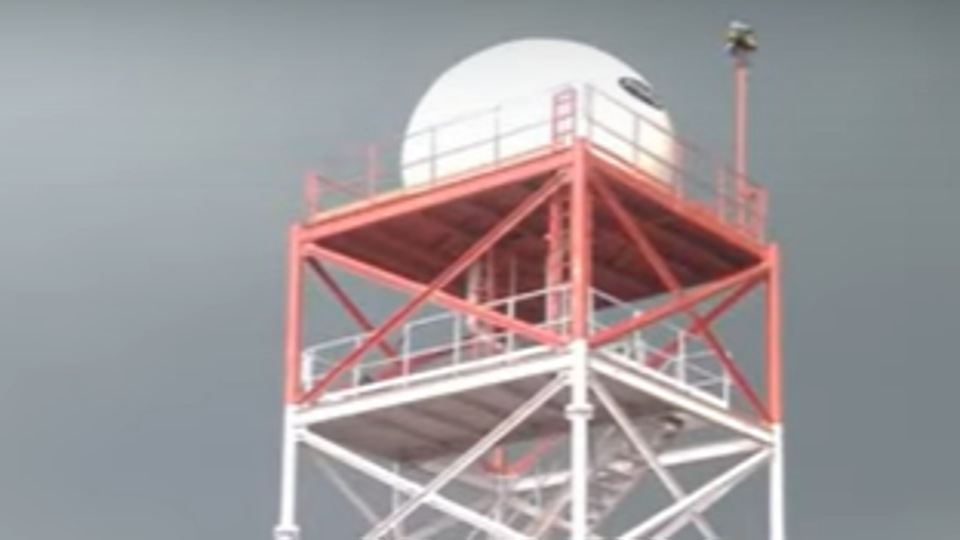
DWRs operate within the S, C and X bands of the microwave spectrum, allowing wavelengths ranging from 2.4 to 15 cm to be sent out to detect different weather systems. While the Ayanagar’s DWR has an X-band radar, the Lodhi road one uses a C-band, and the Palam radar, S band.
_1642543540592.jpg "Ayanagar station gets an upgrade")
Met officials say each radar fulfills a different function, with the one at Palam having the longest wavelength (7.5-15 cms) and the biggest radius of around 400 kilometres, allowing IMD to track severe weather events occurring further away from Delhi NCR, but which could potentially impact flights into and out of the capital. These also track wind shear, cumulonimbus clouds (CB) and thunderstorms and dust storms farther away.
In comparison, the DWR at Lodhi road has a shorter wavelength of 3.8cms to 7.5 cms, allowing IMD to identify weather events within a 250 km radius, including intensity of winds and the type of precipitation -- whether it is rain or hail.
R.K Jenamani, scientist at IMD told HT that the Ayanagar DWR, which has the shortest wavelength, ranging from 2.4 to 3.8 cms, will now be used in combination with the Lodhi road DWR to give rain and risk-based warnings at the ward and street level.
“This is the most precise out of the three and is aimed at giving precise warnings for rainfall, thunderstorm, squall or hail activity within Delhi. While having a smaller radius, the data from this radar will be able to capture thunderstorm and heavy rainfall activity at a higher resolution and will help in identifying areas and the depth of inundation in real-time and for each location,” added Jenamani.
IMD uses its nowcast feature to issue a weather warning related to rain or hail that could occur in a region within the next two or three hours. Jenamani says the Ayanagar DWR will make these warnings more precise. “Earlier, the forecast would state which parts of Delhi will be impacted by rain, but through this, exact areas at the street level can also be mentioned. It is possible only a few wards receive heavy rainfall in Delhi and we will be able to forecast that.”
Navdeep Dahiya, an amateur weather who runs ‘Live Weather of India’ and analyses weather across northern India, says that a radar with a smaller 100-km radius can display specific parts of Delhi and allow for sharper forecasts. “Earlier, the radar (being used( was much wider and covering a larger area, so forecasting for a small area like Delhi and its districts was extremely difficult. The forecasts made were valid for a larger area such as entire south Delhi, but with this, forecasts, such as chances of rain at Connaught Place will be possible.”
The Ayanagar DWR’s installation was announced as part of the IMD’s 147th foundation day on Friday. The same day, similar radars were also commissioned in Leh, Mumbai and Chennai. These radars have been designed and developed indigenously by IMD and the Indian Space Research Organisation (ISRO). While the doppler radar at Mumbai, the city’s second, is a C-band radar, the one installed in Chennai is an X-band radar similar to Delhi and is the southern city’s third, covering an area in a 150-km radius. The doppler installed at Leh is at the highest altitude anywhere across the country. With this, India now has 33 operational DWRs.