
 E-Paper



Brace for the El Niño disruption
India has done well to pre-emptively build its food stocks, but must watch out for rural distress

 Prefer HTon Google


That the monsoon rainfall was going to be low this year was almost a given because of El Niño, a climatic condition which develops in the Pacific Ocean but is known to interfere with rainfall across the world. We are now in the last one-and-half months of the four-month long monsoon season in India. This year’s monsoon’s rainfall, as a share of the 1971-2020 average which is taken as the Long Period Average, is showing a deficit of 13% as of now.
On Monday, private forecaster Skymet projected a 15% shortfall from LPA this season. Reading Skymet’s projections with the monsoon rain so far suggests that September is going to have a bigger deficit than July and August although a smaller one than June. The forecaster has projected a 20% shortfall in rains in the month of September. Last time India had a more than 15% deficit in monsoon rainfall was in 2009-10 when monsoon rainfall was 78.6% of the LPA. This was followed by two consecutive years of more than 10% rainfall deficit in 2014-15 and 2015-16 when rainfall was 88.1% and 86.3% of LPA. The short point is it has been a long time since such a rainfall deficit.
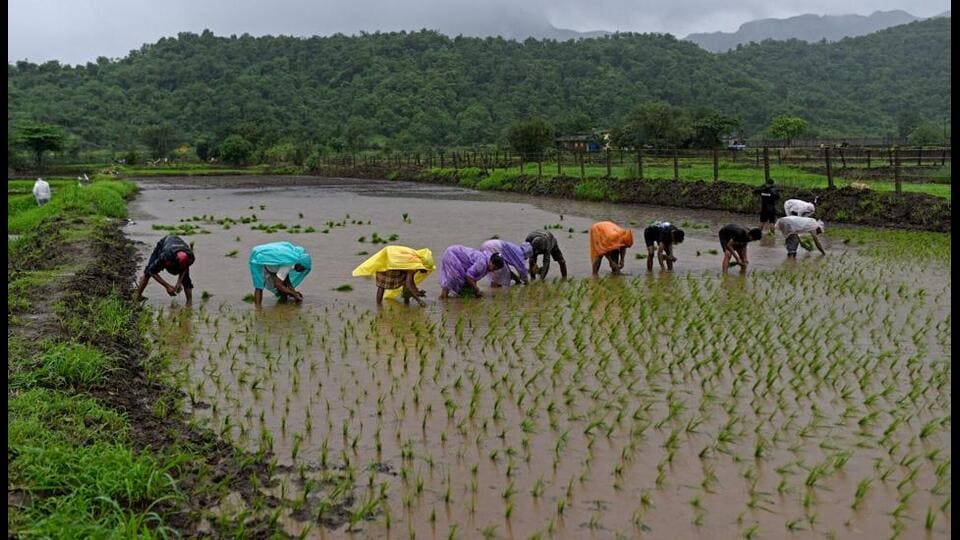
How will this impact the economy and livelihoods? Numerous data analysis pieces in HT have shown that headline monsoon rainfall numbers need not tell us the entire story as far as the link between rains and farming is concerned. This is because rainfall can be significantly skewed temporally, in intensity and geographically for the similar headline number. However, this does not make the headline monsoon rainfall completely useless too. Another analysis had shown that more than 10% shortfall in monsoon rainfall can bring down paddy output below past averages.
What makes monsoon rainfall, and its El Niño connection more critical is the fact that this can generate headwinds for agricultural production beyond the kharif (summer) cropping season too. Low reservoir levels and soil salinity tend to persist unless replenished by a good monsoon rainfall. That this climate shock to agricultural production comes in a year of geopolitical disruption to essential supplies, both energy and food (thanks to the intensifying of the Russia-Ukraine war), will make it worse.
India has done well to build its food stocks to pre-empt a large spike in food inflation. But it should watch out for rural distress. Coincidentally, this is also the first year when the rural employment guarantee programme has been changed significantly.


