For more than six months, I have been following a story that has increasingly felt less like a routine environmental report and more like a record of how a protected stretch of the Aravallis was allowed to deteriorate over a decade.
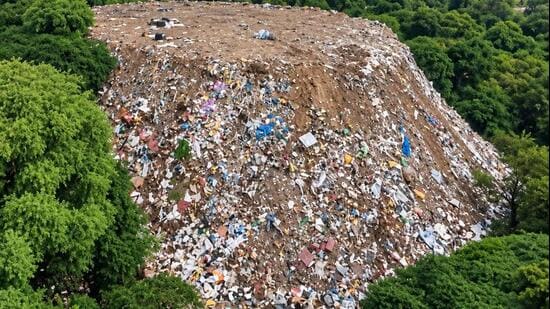
In the eco-sensitive zone of the Aravallis in DLF Phase 3, I found illegal dumping, encroachments and a string of environmental violations. Heaps of construction and demolition (C&D) waste that were once scattered across the area have grown into what residents now describe as “Bandhwari 2.0”.
The larger question, however, is not simply how the waste got there, but who was supposed to stop it, take action and ensure accountability.
The first time I went there for a spotcheck, I was struck by the steady flow of dumpers and tractor-trollies carrying and dumping waste. It almost appeared like a system: one vehicle entering as another exited. Watching vehicles dump waste inside a protected area of the Aravallis, I could not help but wonder at the sheer fearlessness with which environmental rules were being flouted.
There are two ways to enter the area, one through the Municipal Corporation of Gurugram (MCG) land and the other through Block V, which was supposed to be gated. Residents usually take the latter. The former, however, appeared to have become the preferred route for dumpers, many of them without number plates.
{{/usCountry}}There are two ways to enter the area, one through the Municipal Corporation of Gurugram (MCG) land and the other through Block V, which was supposed to be gated. Residents usually take the latter. The former, however, appeared to have become the preferred route for dumpers, many of them without number plates.
{{/usCountry}}The encroachments begin almost immediately. As I entered through the narrow path, I saw parked rickshaws and cabs, illegal borewells, electricity poles and a mix of makeshift and semi-permanent structures.
With the help of residents, I ventured deeper. The further I went, the more the structures multiplied, and so did the heaps of waste. One massive dumping ground had already begun taking the shape of a mountain inside what was meant to be a protected stretch of the Aravallis.
Residents have raised concerns repeatedly, but many now appear to have lost faith after years of complaints and little visible change. Some who spoke about the dumping in its early days have stopped speaking about it altogether. It does not necessarily mean they have accepted what happened. It may simply reflect a loss of hope in enforcement and the local administration.
This is also a story about Gurugram’s waste-management system: how C&D waste is tracked, monitored and enforced, and how civic agencies’ claims can fall short on the ground.
It took a decade for this protected stretch of the Aravallis to reach this point. Some stories stay with you after the notebook is closed and the copy filed. This story is one of them. I will be ready with my keyboard to write about it again. But I hope that when I return, there is something different to report.
Mihika is a correspondent with HT Gurugram, covering civic issues, residents’ grievances, environment, education, art and culture.
Stay updated with all the Breaking News and Latest News from Mumbai. Click here for comprehensive coverage of top Cities including Bengaluru, Delhi, Hyderabad, and more across India along with Stay informed on the latest happenings in World News.
Stay updated with all the Breaking News and Latest News from Mumbai. Click here for comprehensive coverage of top Cities including Bengaluru, Delhi, Hyderabad, and more across India along with Stay informed on the latest happenings in World News.