
 E-Paper



Bearing brunt of rain, farmers in coastal Bengal stare at uncertain future
The extremely heavy and erratic spells of rainfall this monsoon in July and September killed all the salt-tolerant paddy crops

 Prefer HTon Google


In May, after a very severe cyclone Yaas ravaged the coastal districts of West Bengal, 48-year-old Abani Mondol saw a glimmer of hope. Even though saline water from the rivers had gushed into his farmlands, the state government came to his help providing some varieties of paddy which were salt tolerant. Four months down the line, Mondol is again staring at an uncertain future.
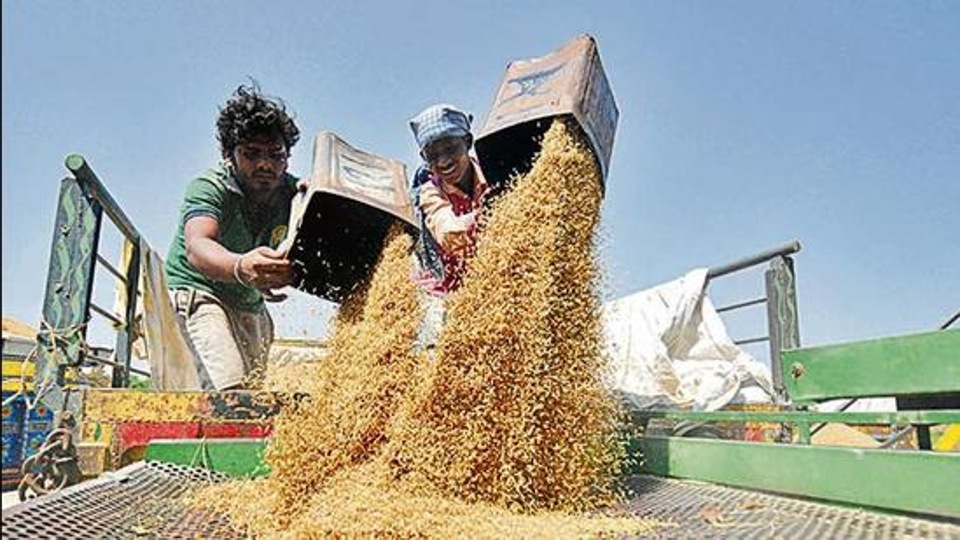
The extremely heavy and erratic spells of rainfall this monsoon in July and September killed all the salt-tolerant paddy crops which he was banking upon.
“I had sowed salt-tolerant paddy in around seven bighas of land. The seeds were provided by the state government. But because of the extremely heavy spells of rain, the crops were lost. It rained so heavily that the fields remained waterlogged for at least two weeks. This was not just once. It happened multiple times this monsoon,” said Mondol, a resident of Sandeshkhali-II block in North 24 Parganas.
After Yaas, around 1200 MT of salt-tolerant paddy seeds were distributed in the three coastal districts – East Midnapore, South 24 Parganas and North 24 Parganas. More than 38,000 farmers would have befitted from the seeds had they yielded paddy.
“Each farmer was given a kit comprising six kilos of seeds along with seed-treating chemicals. Six varieties of paddy seeds – CSR-10, CSR036, CSR-43, Luna Swarna, Luna Sampad, Lunishree and Dudeshwar were distributed. Luna Swarna was distributed for the first time,” said Omkar Singh Meena, secretary of the state agriculture department.
But most of the crops got damaged, even before they could be transplanted, as heavy rains battered the districts of south Bengal in July-end, resulting in floods in some districts.
“The seedbeds, which were prepared with salt-tolerant paddy, remained submerged under waist-deep water for nearly two weeks killing all the crops. Later, some of the farmers sowed the conventional varieties but even that got damaged in the extremely heavy rainfall that hit the coastal districts again in September-end. In Sandeshkahli-II block, Aman paddy is cultivated across 9800 hectares. But only 2% – 3% crop coverage of salt-tolerant paddy now exists as most of the crops died,” said Chowdhury Monirul Haque, assistant director of agriculture, Sandeshkhali-II
In Gosaba, a block in South 24 Parganas where paddy is grown in around 6000 hectares, nearly 90% of the salt-tolerant crops got damaged.
“As the farmers could grow nothing after that failure, nearly 25% of the farmlands in Gosaba have been reported as fallow land,” said Ritesh Kundu, assistant director of agriculture, Gosaba.
“With the help of the state government, we had prepared community seedbeds and sowed salt tolerant paddy in over 15 bighas of land. But the extremely heavy spells of rain in July and September damaged around 10 bighas,” said Gunadhar Patra, another villager from Gosaba.
With their crops gone, farmers like Mondol and Patra are now mostly dependent on government schemes such as Pradhan Mantri Garib Kalyan Anna Yojna and the state government’s Krishak Bandhu scheme.
“We get free rice and wheat from the state and central schemes. This apart we also get financial assistance from the state government under the Krishak Bandhu scheme. This is enough to sustain my family,” said Ananda Das, a villager from Sandeshkhali-II.


