
 E-Paper



A date with the fruit of Ramzan
Myriad varieties of dates are displayed on shelves of bakeries, malls and standalone stores, with some malls running special festivals for dates during this time. “Dates are a significant fruit for us, as breaking fast with dates is considered ‘sunnah’,” said Saman Iqbal.

 Prefer HTon Google


LUCKNOW: Come Ramzan and the markets are inundated with delicious dates from various parts of the world, keeping the cash registers of shopkeepers ringing with brisk sales.
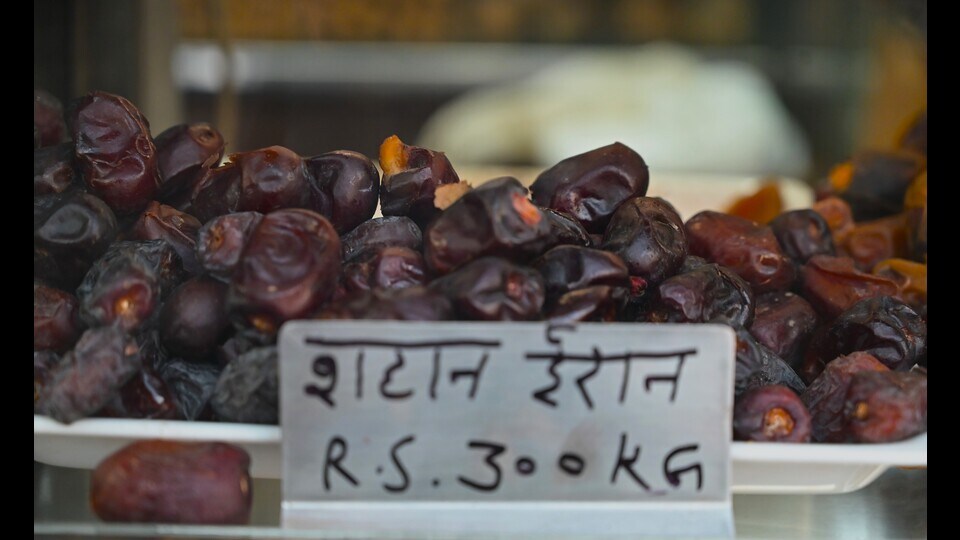
Owing to delicious taste and numerous health and nutrition benefits, dates are an integral part of almost every rozedar’s ‘iftar’ and nearly every date shop is a picture of booming business, during the month of Ramzan . Many of these dates come from Saudi Arabia, Iraq and even Egypt.
Myriad varieties of dates are displayed on shelves of bakeries, malls and standalone stores, with some malls running special festivals for dates during this time. “Dates are a significant fruit for us, as breaking fast with dates is considered ‘sunnah’,” said Saman Iqbal.
Her family is stocking up on dates every week, kalmi dates for the family and gift packages of ajwa dates for family and friends. Most of the dates are sourced from various countries in West Asia and Africa, including Saudia Arabia, Iran and Iraq. At the time of Ramzan , neither the demand nor the supply of dates ever runs dry.
Dates of varying sizes can be spotted on shelves, starting from the regular kind to deseeded ones, some as large as 3 inches, to those which have been modified into sweets. Not only do dates have health benefits which are favourable for breaking an extended period of fasting, but they also hold religious significance.
Ajwa dates are available for much higher prices than the more affordable varieties like Kimia and Kalmi dates. They are particularly significant as they are grown in Medina, Saudi Arabia.. These are available at Rs. 1500-2500 per kg , according to Mohd. Shabab, who has added a dates section to his bakery here.
He explained that the similarly priced Medjool dates were sourced from Iran and Saudi Arabia among other places, were larger in size than the other varieties and were harvested individually, rather than in clusters.
According to Shabab, “During Ramzan all vendors hike up the per kilo prices of dates by Rs. 100-300 and sales increase manifold.”
Similarly, other shopping and food establishments have also put up a grand spread of different varieties of dates, many of whom are seeing flourishing sale . Vendors informed that the approximate range of pricing was from the average Rs. 300 per kg to Rs. 3000 per kg for the more expensive varieties.


