Incessant rain accompanied by strong winds over the past three days has dealt a double blow to farmers in Uttar Pradesh, extensively damaging standing Kharif crops while raising concerns over sowing delays in the upcoming Rabi season, as waterlogged fields may take time to become suitable for cultivation.
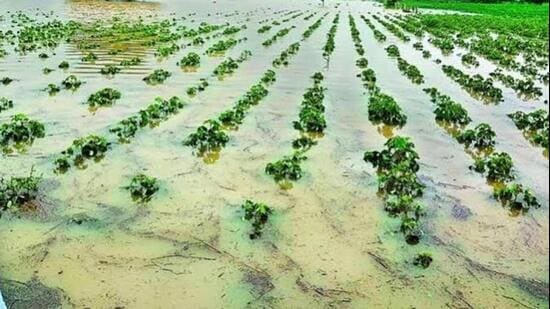
The downpour has particularly affected ready-to-harvest paddy, besides pulses, oilseeds and millets in several districts. Strong winds have flattened mature crops in fields while prolonged waterlogging has increased the risk of grain deterioration, rotting and sprouting.
Paddy is the principal Kharif crop in Uttar Pradesh, accounting for more than 60% of the state’s total cultivated area. In 2025, the state led the country in rice production, producing 209.31 lakh tonnes, or 14.04% of India’s total output. Excessive rainfall this year, particularly as the crop approached harvest, has raised concerns over productivity and overall output.
“Paddy, being the main Kharif crop in UP, is likely to be affected the most. Ready-to-harvest paddy has been flattened in many fields and the standing crop also runs the risk of rotting because of prolonged exposure to water,” Pankaj Tripathi, former director (agriculture), said.
He said pulses, oilseeds and millets, including bajra cultivated prominently in the Bundelkhand region, could have suffered extensive damage as these crops are less water-intensive.
{{/usCountry}}He said pulses, oilseeds and millets, including bajra cultivated prominently in the Bundelkhand region, could have suffered extensive damage as these crops are less water-intensive.
{{/usCountry}}“The bigger concern is that the Rabi season, particularly wheat sowing, may get delayed as fields will take time to dry and become suitable for sowing,” Tripathi pointed out.
Field reports from several districts, including Lucknow and adjoining areas, indicate extensive lodging and waterlogging.
Bharatiya Kisan Union (BKU) leader and Lucknow district president Alok Verma said losses in many paddy fields in the state, including Lucknow and adjoining districts like Barabanki, Sitapur and Amethi, could be as high as 70% with prolonged waterlogging and flattened crops raising the risk of the yet-to-mature grain rotting.
In Ghazipur, farmers reported mature paddy and bajra crops collapsing onto the ground, making harvesting difficult and increasing the risk of crop deterioration.
Low-lying agricultural fields in districts including Balrampur have also reported water accumulation, posing risks of root damage, discolouration and deterioration of standing crops. Farmers are additionally facing difficulties in securing dry fodder as crop residue remains submerged.
Several districts in western UP have been having similar rains since Friday night, wreaking havoc on crops. “We are ruined as the paddy crop that was ready to be cultivated has been flattened in waterlogged fields,” Mahesh Rajpoot, a farmer of Lakhimpur village in Kasganj district, said.
Director (agriculture) TM Tripathi acknowledged the possibility of crop losses but said it was too early to assess their extent or identify the worst-affected districts.
“We do fear crop losses in most parts of the state due to extensive rain. But it is not possible to tell the nature and extent of losses or the districts most affected. We have ordered field officers to send their inputs,” he said.
The India Meteorological Department (IMD) has warned of heavy to extremely heavy rainfall in parts of the state, with strong winds further increasing the threat to mature crops.
Meanwhile, the BKU has demanded an immediate special crop-loss survey, insisting that individual farmers should be treated as the unit for compensation rather than a village, nyaya panchayat or area average. It has sought physical verification of individual fields and compensation proportionate to the actual loss suffered.
“We demand immediate field surveys, timely settlement of crop-insurance claims, special relief for farmers suffering severe or complete losses and direct transfer of compensation to farmers’ bank accounts,” Verma said.