From learning about Indian culture via the internet, e-resources and web streaming platforms followed by understanding the importance of Hindi, students from across the globe have enrolled at Lucknow University. In the backdrop of Hindi Diwas on Monday, Hindustan Times spoke to a few such students who chose the LU route to learn Hindi.
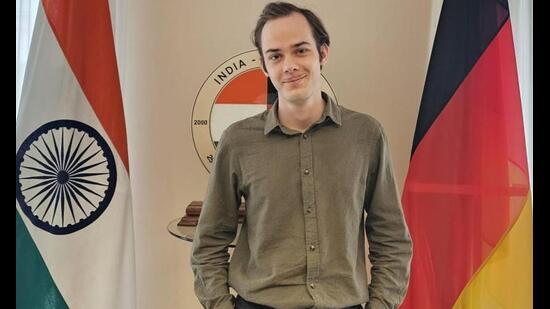
From self-taught German linguists inspired by classical music to Polish scholars navigating spiritual traditions, a growing cohort of foreign students is choosing Lucknow to bridge the gap between textbook grammar and living tradition. Their presence underscores a fundamental shift in how global students approach Indology: moving beyond distant academic observation towards total linguistic and everyday immersion.
Odemar Bühn , 21, of Germany is pursuing his first semester of BA in Linguistics, Sanskrit, and Philosophy. He began learning about Indian culture and Hindi around five years ago through a digital doorway.
“Driven by an early curiosity sparked by Indian classical music, I began dissecting the language independently using online resources, radio broadcasts, and cinema. My independent study evolved into a serious academic journey that ultimately brought me straight to the heart of the Hindi-speaking belt. Mastering the language is not merely an academic exercise, but a mandatory key to unlocking the philosophical depth of the region,” Bühn says.
Iwo Zawadzki, a 25-year-old Indology student from Poland, took an indirect route to the heartland.
{{/usCountry}}Iwo Zawadzki, a 25-year-old Indology student from Poland, took an indirect route to the heartland.
{{/usCountry}}“I was initially drawn to South Indian culture and Dravidian languages at age of 17 after meeting members of the Indian diaspora on a web-streaming platform. I spent two years studying Tamil at a University in Poland and travelling across Tamil Nadu, Kerala, and Mumbai. However, the structured, comprehensive Hindi curriculum available at Lucknow University provided the ideal foundation to refine his overall grasp of Indian linguistics,” Zawadzki shares.
“Having already authored a BA thesis examining cultural identity in Jhumpa Lahiri’s ‘The Namesake’, I found myself unexpectedly captivated by the complexities of Hindi grammar,” he says, adding he is using his time in Lucknow to prepare for advanced studies in endangered languages and comparative linguistics.
Anna Nowicka, 45, from Poland learnt about the language and the culture of India through the International Centre for Krishna Consciousness (ISKCON). She is a second-year MA student of Hindi and Modern Indian Languages.
“I spent a year at Kendriya Hindi Sansthan in Agra to learn Hindi. Even some of my friends in the Yoga communities back in Poland helped me learn about the country’s rich culture. My initial visit to India in 2010 made it clear that cultural appreciation remained superficial without linguistic fluency,” Nowicka says.
She adds that driven by a determination to understand the nuances of everyday life, she identified Lucknow as the destination to consolidate her language skills due to the region’s rich oral traditions and academic institutions.