
 E-Paper



Keeping up with UP: Bugle sounded for high-stakes assembly polls in 2027
It’s not difficult to assess the situation in Uttar Pradesh, where most major castes are openly aligned to political parties.


Why did chief minister Yogi Adityanath raise the red flag after the deletion of 28.9 million voters from the draft electoral list published by the Election Commission?
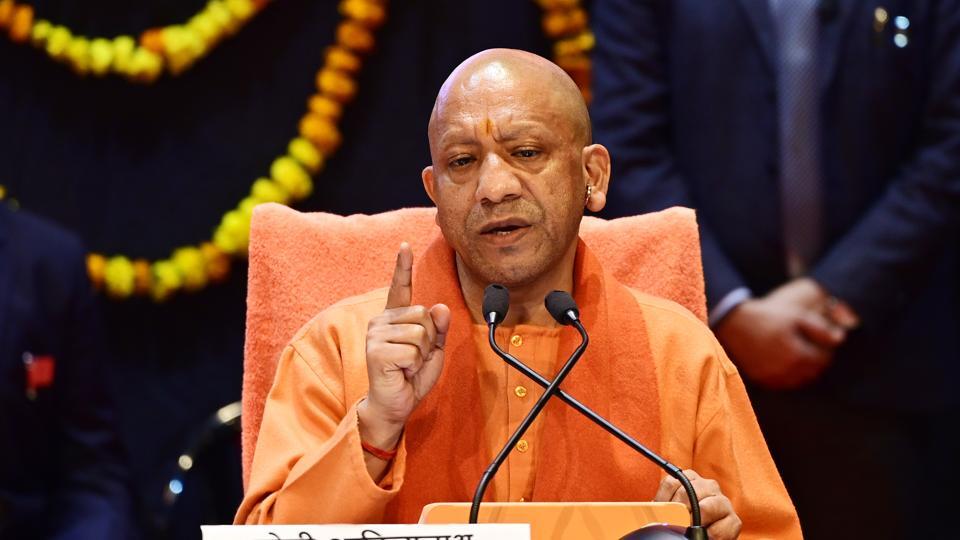
Though the CM claimed that 80 to 90 per cent of the names missing from the draft list were BJP supporters, his assertion reveals that nothing can escape the leadership’s alertness.
It’s not difficult to assess the situation in Uttar Pradesh (UP) where most major castes are openly aligned to political parties. For instance, the upper caste bloc of Brahmins, Rajputs and Vaishyas will not desert the BJP even if there are the occasional rumblings of rebellion.
The subcastes of OBCs and Dalits are also aligned – Yadavs with the Samajwadi Party (SP), Lodhs with the BJP and Kurmis as well as the Pasis (Scheduled Castes) are divided as they support different parties in different regions of the state. Muslims will largely go with the SP, Sikhs with the BJP and the Christians’ first choice remains the Congress.
According to some party leaders, the CM’s statement was aimed at activating the party functionaries as it was followed by yet another clarion call to enrol 200 voters per booth. There are over 1,74,351 booths in the state.
The Opposition, mainly the SP and the Congress, has accused the Election Commission of manipulating the list by deliberately removing PDA or Pichda, Dalit, Alpsankhyak voters. Mayawati too has asked her cadres to remain vigilant.
The last SIR was done in 2003 without any commotion or fuss by the stakeholders. No party will leave any stone unturned until the polls in a state where victories in over one-fourth of 403 assembly seats had come with slender margins in 2022. This is why every vote matters: as many as 120 of the 403 assembly seats were won by less than 10,000 votes in what had turned out to be a direct contest between the BJP and the SP in the 2022 assembly polls. These included 16 seats where the margin was below 500 and another 42 seats where it was below 5000 votes.
Obviously, every vote counts as, in a replay of 2022 polls, the election in all probability is set to be a tough direct contest between the BJP and SP-Congress alliance. The BSP is also getting active after a decade-long political hibernation but is largely seen as a spoilsport. However, it still remains the first choice of Jatavs amongst the Dalits.
Several castes and communities have proactively filled forms in rural areas. According to the BJP leaders, minorities have ensured their names are added though many Muslims allege deletion of their names. However, their complaint is not reflected in the draft list of Muslim dominated districts.
Interestingly, the majority of the constituencies in a couple of districts had witnessed close competition ending in slim margins in 2022 polls. Some examples: in five constituencies of Bijnor, the margin of votes was between 203 and 6065 votes, in three constituencies of Firozabad, the margins were between 836 and 9328, in four seats of Bareilly district the range was 2921 to 9409 and so on. The BJP was a winner in a majority of the seats closely followed by the SP.
This could possibly explain the reason, which compelled CM to ask workers to enrol 200 voters from every booth, which generally has 850-1000 votes. This is not going to be easy as the political parties have already done booth-level mapping and any addition would be challenged
Four-time former Congress MLA from Mathura Pradeep Mathur said they were keeping a watch on new enrolments at the booth level and would launch a protest if they notice any discrepancy.
In fact, the prospective candidates are also keeping a watch at the booth level with their agents spread out in the constituency. While Akhilesh Yadav is said to have decided candidates for about 125 assembly constituencies, the BJP could make large-scale changes in the current flock.
Does the onus lie with the BJP leadership? The new state BJP president Pankaj Chaudhary was quick to tell the chief minister that the party can only assist in SIR, which is purely a government exercise. In other words, it is the responsibility of the government, and not the party. This is not the first time when the BJP organisation has asserted its limited role. After the 2024 Lok Sabha results, there was a war of words between CM and his deputy CM Keshav Maurya who had flagged the supremacy of the organisation.
A senior BJP leader said voter registration is a regular process and the party will get in touch with people whose names were struck off, mostly because they prefer to vote in their native village and not the city they work in UP.
The 2027 UP assembly election is going to be a critical battle with the chief minister Adityanath seeking a third term and SP chief Akhilesh Yadav attempting to make a spirited comeback bid after two defeats in 2017 and 2022.
Undoubtedly, the battle for the 2027 assembly elections has begun with their leaders – from state to booth level – out in the field to ensure their supporters are enrolled.
The draft electoral list removed 28.9 million votes and more may get deleted after the mapping process is complete. Already, a decision has been taken to issue notices to 10.4 million voters as their names could not be matched with the voters’ list from the last SIR in 2003. The final list will be out on March 6. The draft electoral rolls lists 125.5 million voters.
As for large scale deletion from urban areas, the BJP leadership is not worried as the party has penetrated the rural pockets also. And the reason for more deletions in urban areas are two-fold – one, the voters selecting their home village and second, lack of interest in elections.


