
 E-Paper



FCRA bill may impact Christian groups, Nagaland CM tells Amit Shah
Nagaland CM Rio requested the Centre to reconsider the FCRA amendments, highlighting potential negative effects on Christian groups and humanitarian efforts.

 Prefer HTon Google


Nagaland chief minister Neiphiu Rio wrote to Union home minister Amit Shah expressing concerns over proposed amendments to the Foreign Contribution (Regulation) Act (FCRA), becoming the third CM from the Northeast to flag the controversial proposals.
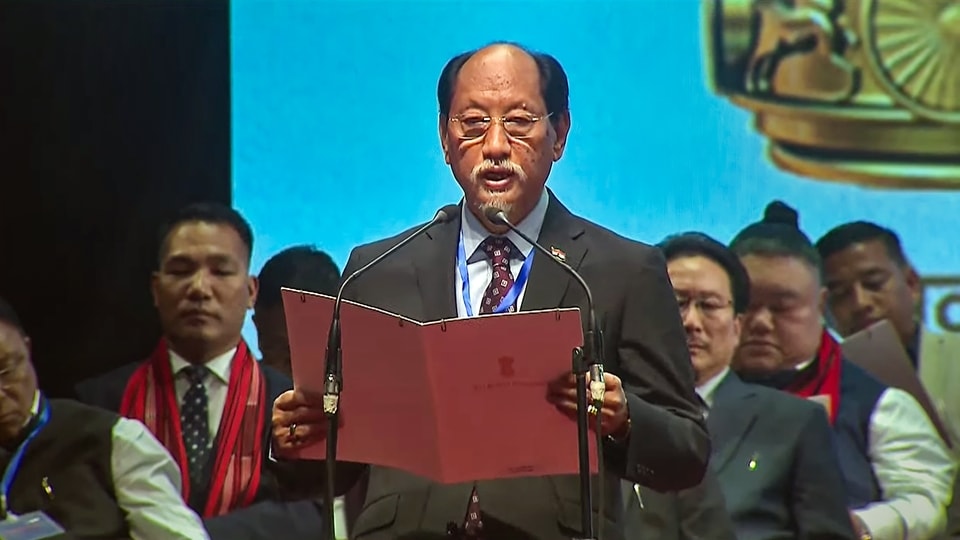
The developments came on a day the Centre said it has not yet received additional suggestions from church representatives who met Shah last week to discuss their concerns about the proposed Foreign Contribution (Regulation) Amendment Bill, 2026.
There is no clarity on whether the government will take up the FCRA bill for discussion in the current session. Mizoram CM Lalduhoma said last week that the bill was likely to be debated on August 12. But the business advisory committee – which met last week and on Monday – did not take up the issue of time allocation for the FCRA bill, triggering speculation that the government might not push for its passage in the current session.
In his three-page letter dated August 9, Rio said he had in-depth discussions with Christian leaders and representatives of the Nagaland Baptist Church Council (NBCC) and the Bishop of Kohima, who conveyed their concerns and challenges being faced by churches and Christian organisations in carrying out various activities and humanitarian services.
“The proposed amendments, if implemented in their present form, are likely to further compound these challenges and could adversely impact a number of ongoing welfare, educational, healthcare and social-service programmes in the State. The difficulties are particularly acute for smaller institutions working at the grassroots level, many of which operate with limited resources while serving people in remote, underserved and economically disadvantaged communities,” he said in an X post on Monday.
Rio requested the Centre to consider referring the legislation to a joint parliamentary committee – a demand first made by Lalduhoma after he met Shah last week. Meghalaya CM Conrad Sangma also met Shah with a delegation of Church leaders last month.
Nagaland is 87.93% Christian, Meghalaya is 74% Christian, and Mizoram is 87% Christian.
As part of the government’s outreach to build consensus on the bill, the home minister has already assured the FCRA laws will not be implemented retrospectively. “The government has already assured that the provisions of the bill will not adversely impact any faith or community…it will not be implemented retrospectively. Some groups had said they will send in their additional concerns and suggestions but have not done it so far…” said a senior minister.
Also Read | Maharashtra CM Fadnavis says FCRA bill aims to curb anti-national activities, not target any religion
Shah holds meetings to build consensus
Shah held detailed meetings with several delegations, including church representatives, to build consensus on the FCRA bill, which was introduced during the budget session in March.
Asked whether the government was confident that the outreach will alleviate concerns, the minister quoted above said, “…If there is political intention, then there will be no consensus. We have asked them for suggestions and we are yet to receive those even though reminders have also been sent.”
FCRA Bill may not be taken up this session
Though Lalduhoma said last week that the bill was likely to be debated on August 12, the business advisory committee, which met last week and on Monday, did not take up the issue of time allocation for the FCRA bill, triggering speculation that the Centre might not push for its passage in this session.
The bill was introduced in the Lok Sabha in the previous session but was not brought for passing after protests by the Opposition and controversy in then poll-bound Kerala. The bill had evoked sharp reactions from Opposition leaders, particularly Kerala lawmakers, as Christian groups alleged they might be targeted under the new law.
The bill provides for the cessation of the FCRA certificate of an organisation upon expiry, non-renewal or refusal of renewal by the government. The amendments also establish a designated authority for “a comprehensive framework for vesting, supervision, management and disposal of foreign contribution and assets, including provisional and permanent vesting.” A provision stated that the government can appoint a “designated authority” to take over, manage, or sell assets created from foreign funds by an non-governmental organisation whose licence under FCRA was cancelled, suspended, or simply not renewed.
Last Thursday, Lalduhoma – accompanied by a delegation of senior Christian leaders, including representatives from the Council of Churches in Mizoram (CCM) and the Mizoram Kohhran Hruaitute Committee (MKHC) – met Shah and submitted a memorandum about the bill. “We raised six issues with him. Out of those, we were assured that this bill will not have retrospective effect. As for the remaining points we raised, he said he would respond to them in writing and send us his comments. We will have a clear picture only after we receive that reply…,” Lalduhoma said after the meeting.
Opposition seeks JPC review, withdrawal of Bill
Dravida Munnetra Kazhagam’s Rajya Sabha MP P Wilson – who is also the Chairman of the Joint Action Forum on Minorities – also met Shah with a delegation of religious heads representing all denominations on the same day.
He said the delegation requested withdrawal of the bill in its present form. “In the alternative, we said the bill should be referred to a Joint Parliamentary Committee for comprehensive stakeholder consultation and a detailed examination of its constitutional, legal and practical implications. And the third demand was to repeal Section 15 of the Foreign Contribution (Regulation) Act, 2010, so that no provision permitting the vesting of foreign contribution or charitable assets survives in any form,” Wilson said.
The delegation said the proposed amendments would fundamentally alter the existing regulatory framework by introducing provisions on the automatic cessation of registration, the vesting of charitable assets, the government’s management of institutions, and the permanent transfer of assets. “We said these provisions would have far-reaching consequences for educational institutions, hospitals, orphanages, homes for the elderly, healthcare facilities and other charitable institutions serving vulnerable communities across the country.”
Also Read | 'Our internal matter': India rebuffs US lawmakers’ criticism of FCRA bill
Meghalaya CM urges protection of minority rights
Sangma had also urged the Union government to “safeguard” the rights of the minorities, according to a person aware of the details. “The CM urged the government to safeguard the constitutional rights of minority institutions while preserving the objectives of transparency and regulatory oversight. He submitted copies of amendments made by churches from Meghalaya,” said the person quoted above.


