King George’s Medical University has proposed a new referral policy to the state government aimed at reducing delays in treatment and mortality among critically ill patients referred to its Trauma Centre without prior notification or medical summaries.
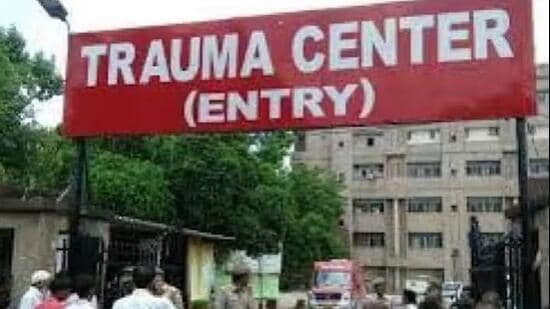
According to KGMU spokesperson Prof KK Singh, the Trauma Centre receives around 500 patients daily, of whom nearly 40% arrive in critical condition and require ventilator support or other forms of life support. The five-storey centre has 490 beds, including ICU beds and ventilators, placing considerable pressure on the facility amid the high daily influx of critically ill patients.
Dr Premraj Singh, chief medical superintendent, and Dr Amiya Agarwal, medical superintendent of the Trauma Centre, said the proposed policy would help reduce delays in treatment and the unnecessary burden on KGMU, while also sparing patients the ordeal of being shuttled between hospitals.
They said doctors would have access to a patient’s medical details before the patient arrives, enabling treatment to begin without delay and potentially helping reduce mortality. The university has submitted the proposal to the state government for implementation.
Under the proposed policy, an ‘Inter-Hospital Transfer Requisition Form’ would have to accompany every referred patient. It would contain basic patient details, provisional diagnosis and vital signs, including blood pressure, respiratory rate and oxygen saturation, along with information on ventilator, intubation or inotropic support. The referring hospital would also have to state the reason for referral, details of the referring and receiving doctors, consultant approval and confirmation of bed or ventilator availability at the receiving hospital.
{{/usCountry}}Under the proposed policy, an ‘Inter-Hospital Transfer Requisition Form’ would have to accompany every referred patient. It would contain basic patient details, provisional diagnosis and vital signs, including blood pressure, respiratory rate and oxygen saturation, along with information on ventilator, intubation or inotropic support. The referring hospital would also have to state the reason for referral, details of the referring and receiving doctors, consultant approval and confirmation of bed or ventilator availability at the receiving hospital.
{{/usCountry}}The form would also record the date and time of referral, the contact person at the receiving hospital and confirmation that the patient’s family had been counselled about the possible non-availability of a bed or ventilator at the destination hospital.
Under the proposed referral system, any hospital or institution seeking to refer a patient would first have to verify bed availability with a higher-level centre, such as Ram Manohar Lohia Institute of Medical Sciences (RMLIMS), Sanjay Gandhi Post Graduate Institute of Medical Sciences (SGPGI) or KGMU, through telephone or official channels.
Referring hospitals would also have to send a detailed ‘Patient Summary Form’ with the patient, containing information on their vital signs, ongoing treatment and medical reports generated so far.
According to KGMU officials, hundreds of critically ill patients arrive at the Trauma Centre every day from across the state, with most referred from district hospitals or other medical institutions. The influx also includes patients with less severe conditions.
Officials said the sudden arrival of critically ill patients puts considerable pressure on the Trauma Centre, while the non-availability of ventilators or ICU beds can further delay treatment and put patients’ lives at risk. The proposed referral system is intended to ensure that receiving hospitals are informed in advance and can prepare for the patient’s arrival.