E-Paper



Mounting losses: PCL hints at entry of pvt players to curb deficit in high-loss regions
The need for radical changes in the UPPCL was the key takeaway from a review meeting of the RDSS, at Shakti Bhawan, in Lucknow, on Monday.

 Prefer HTon Google


More than a decade after the Uttar Pradesh government tried to bring private players into power distribution, the idea is back on the table.
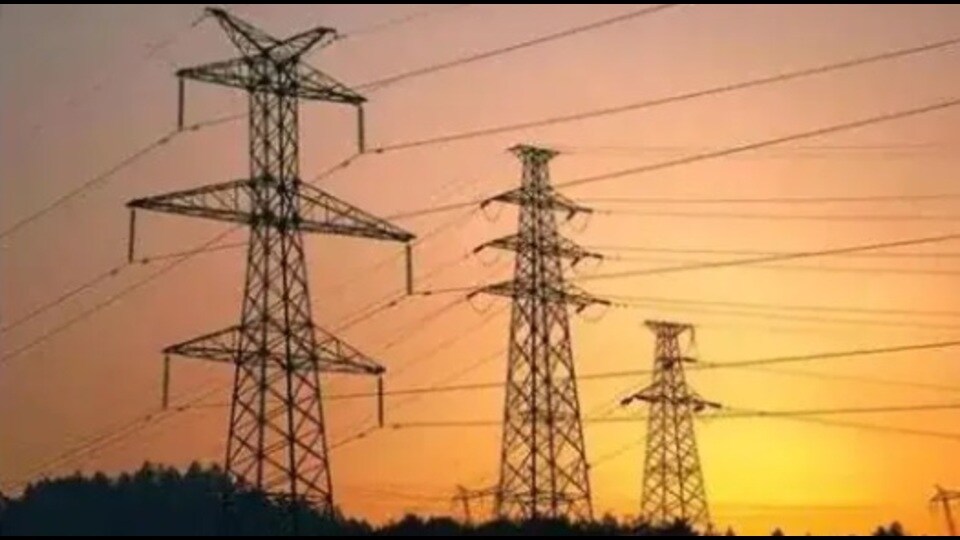
Faced with mounting losses, the need for radical changes in the UP Power Corporation Ltd (UPPCL) was a key takeaway from a review meeting of the RDSS (Revamped Distribution Sector Scheme), at Shakti Bhawan, on Monday.
A decade ago, the Akhilesh Yadav-led Samajwadi Party government had proposed privatising power distribution in about a dozen big cities of the state. However, the idea could not see the light of day faced as it was by bitter opposition from employee unions.
Again, the move may not go down well with the employee unions and consumer bodies that have already started raising questions over the effectiveness of the measures being planned by the management.
In the meeting, chaired by UPPCL chairman Ashish Kumar Goel and managing director Pankaj Kumar, it was pointed out that despite extensive efforts like revenue drives, vigilance raids, disconnections, and legal actions, the corporation’s financial health has continued to deteriorate.
UPPCL director, finance and commercial, SK Narang said, “We have to carry out structural reforms to overcome the current situation of mounting losses. We are discussing models that we can employ for the high-loss areas.” He also said that consultations with stakeholders had also begun for a consensus.
“We assure employees that their service conditions will not be affected in any manner under any model we adopt after considering all the aspects,” he said.
He also clarified that management was looking for partnership with private players and not privatisation as such.
The meeting was attended by top officials, including managing directors, directors, and chief engineers of all state distribution corporations, underscoring the gravity of the issue.
“This year alone, the state government had to provide ₹46,130 crore in financial support, with future projections indicating a need for ₹50,000-65,000 crore annually,” officials pointed out, warning that relying on subsidies was not a sustainable solution.
Acknowledging the failure of traditional measures, officials proposed introducing a public-private partnership (PPP) model in high-loss areas. This would involve bringing private expertise into distribution management while ensuring government oversight to protect the interests of consumers, farmers, and employees.
“Under this model, it was explained, private-sector professionals could manage operations, with a government representative as chairperson to safeguard public interests. Employees and contract workers would have their benefits, including pensions, protected, and skilled manpower could be added to enhance efficiency.
Sources said that the UPPCL was mulling to hand over the Puvvnl (Varanasi) and the DVVNL (Agra) DICOMs to private players under PPP model. The losses are the highest in these two companies.
Officials emphasised that such structural reforms should be applied selectively to areas where all other measures have failed to curb losses. The Odisha power sector’s Tata Power model was suggested as a benchmark for study and possible adoption.
“The discussions reflected a growing consensus that incremental efforts will not suffice to address the deepening crisis. Officials highlighted the need for “drastic decisions” to prevent the situation from worsening further,” a senior official privy to the meeting said, requesting anonymity.
With losses exceeding revenue even for electricity procurement, the corporation’s financial burden is now threatening to derail operations. “The government cannot continue to bear this indefinitely,” warned officials, signaling a shift toward significant structural adjustments in the power distribution system.
UP Rajya Vidyut Upbhokta Parishad chairman Awdhesh Kumar Verma, on the other hand, said the UPPCL suddenly emphasising the financial losses of power companies spoke volumes of its intentions.
“The corporation is trying to justify privatisation and aligning with large private entities under the guise of addressing deficits,” he alleged. He claimed the public-private partnership model in the power sector was tried during the Samajwadi Party (SP) government in 2013, but the efforts came a cropper.
Strongly opposing the ‘privatisation’ move UP Rajya Vidyut Abhiyanta Sangh general secretary Jitendra Gurjar said, “Privatisation neither benefits consumers nor employees and violates prior agreements made in April 2018 and October 2020, which ruled out privatisation.”
He blamed mismanagement for the corporation’s losses and demanded transparency in identifying the causes and corrective steps taken. “With proper consultation and planning, losses can be reduced significantly within a year,” he claimed.