E-Paper



Suspended Bareilly city magistrate welcomes Supreme Court observations, stay on UGC regulations
Suspended Bareilly city magistrate Alankar Agnihotri said provisions meant to address caste-based discrimination should not be turned into tools of harassment

 Prefer HTon Google


Suspended Bareilly city magistrate Alankar Agnihotri on Thursday cautioned that the alleged misuse of caste discrimination provisions in higher education could have serious social repercussions.
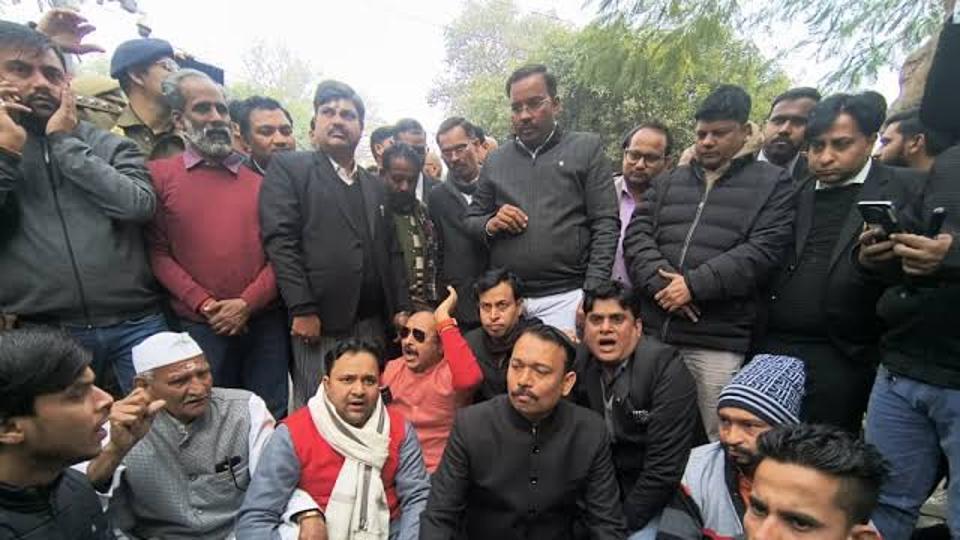
He made the remark while reacting to the Supreme Court’s decision to stay the University Grants Commission’s (UGC) Regulations, 2026.
“I welcome the Supreme Court observations adverse to the UGC regulations and pausing its implementation for now,” he said.
The Supreme Court on Thursday stayed the implementation of the University Grants Commission (Promotion of Equity in Higher Education Institutions) Regulations, 2026, amid a nationwide debate.
Terming the issue a matter of national concern, Agnihotri said provisions meant to address caste-based discrimination should not be turned into tools of harassment. He argued that such misuse, if allowed to continue, could deepen social fault lines and pose an internal threat to the country.
“Caste-based discrimination should never be used as a tool. It must remain within proper legal and social discourse,” he said, alleging that merit is increasingly being overlooked. Warning of broader consequences, he said prolonged confrontation between social groups could weaken the country internally.
“If two groups keep fighting, the nation suffers. Such situations can create internal unrest, making the country vulnerable from within,” he said.
On whether existing mechanisms should be rolled back, Agnihotri said a complete withdrawal was unnecessary. According to him, administrative committees are capable of addressing complaints if the framework is implemented responsibly.
He also accused authorities of failing to address internal safeguards, alleging that negligence by those responsible had contributed to rising tensions. Referring to legal remedies, Agnihotri said aggrieved officials and individuals should approach the judiciary. He also thanked citizens from across communities for supporting him, claiming that people from all religious and social backgrounds were standing with him.
Questioning the effectiveness of existing laws, Agnihotri cited the Scheduled Castes and Scheduled Tribes (Prevention of Atrocities) Act, alleging that its misuse had already created social resentment.
The 2019-batch PCS officer Alankar Agnihotri publicly announced his resignation after hoisting the national flag at the Collectorate on Republic Day. Following the resignation, Agnihotri became increasingly vocal, targeting the central and state governments over various issues, including implementation of the UGC regulations.
Late on January 26 night, the Uttar Pradesh government suspended Agnihotri and attached him to the Shamli Collectorate office.