
 E-Paper



Pune traffic police to prioritise decongestion, pause roadside e-challan enforcement in pilot
As part of the pilot, traffic personnel will not routinely stand on roads to stop vehicles and issue e-challans

 Prefer HTon Google


The Pune traffic police will temporarily shift focus from routine roadside enforcement to decongestion of roads and reduction of commuting time, police commissioner Amitesh Kumar said on Tuesday. As part of the pilot, traffic personnel will not routinely stand on roads to stop vehicles and issue e-challans. The decision was announced at the first meeting of the newly-formed traffic advisory committee held at the Pune police Commissionerate on Tuesday.
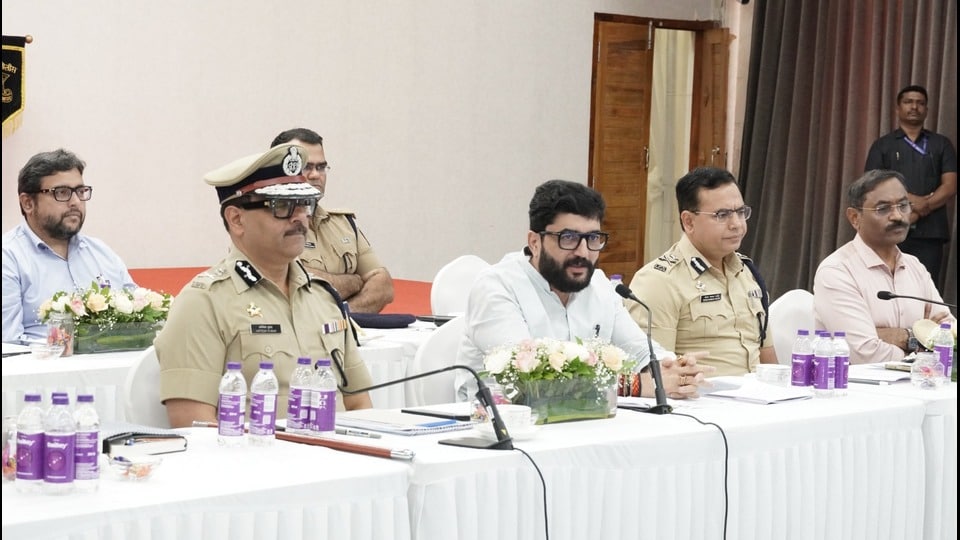
Addressing the media after the meeting, Kumar said that the traffic police have issued a circular directing personnel not to routinely stand on roads to stop vehicles and issue e-challans during the pilot phase. Instead, enforcement will be increasingly carried out through CCTV cameras, the traffic control room and other technology-based systems. Complaints and violation reports submitted by citizens through the Pune traffic police (PTP) app will also be used to identify offenders and initiate action. However, Kumar clarified that the move does not mean traffic violators will be allowed to go unchecked. “De-prioritising enforcement does not mean that violators are being given a free hand,” he said.
Meanwhile, action against drunk driving will continue. The traffic police will also use the control room and technology to pursue motorists with accumulated unpaid challans and take action against violations involving fancy number plates and tinted glasses. Traffic personnel posted at major junctions will focus instead on traffic movement, and prepare improvement plans for their respective areas. The officers will submit area-wise decongestion plans to senior officers within 15 days, identifying bottlenecks and measures to improve traffic flow. The police will assess the initiative on an experimental basis and decide whether or not to continue or expand it after examining the results. Also present at the meeting were union minister of state for civil aviation Murlidhar Mohol, elected representatives, community leaders, NGOs, business representatives and other stakeholders
Local committees to tackle bottlenecks
The city-level traffic advisory committee will establish similar committees at the police chowky level, with a representative of the main committee associated with each local committee. These committees will include local stakeholders and officials from the Pune Municipal Corporation, and will identify and address traffic-related problems in their respective areas. Issues such as unauthorised or obstructive corner parking, footpath encroachments, congestion caused by hawkers, signal synchronisation, free-left turns and poor road conditions will be taken up by local committees. “The committees will also be expected to take ownership of local problems. For instance, if potholes or other road-related issues are causing traffic obstruction, the concerned committee/s will coordinate with the civic authorities for prompt resolution,” Kumar said.
Mohol said that the PMC has an important role in addressing road-related problems, traffic planning, encroachments and other civic issues contributing to congestion. He emphasised the need for immediate repair of potholes, saying damaged roads affect both traffic flow and road safety. “Clear instructions have been issued to the civic administration to ensure that potholes are repaired promptly,” he said.
The meeting discussed Pune’s existing traffic problems as well as measures that can be incorporated into the city’s development plans for the next 25 to 50 years. Officials led a detailed presentation on various measures being undertaken by the police and other government agencies to improve traffic management.
The city-level committee will review the progress after two months and assess the impact of the new strategy, including whether congestion and commuting times have reduced and what further measures are required.
Mohol on metro line 3
Mohol said that chief minister Devendra Fadnavis had met Prime Minister Narendra Modi in Delhi on Monday and invited him to inaugurate Pune Metro’s Hinjewadi-Shivajinagar corridor at the earliest. “Some minor works are still pending. Once these are completed, the chief minister will again meet the Prime Minister in Delhi and invite him for the inauguration,” Mohol said.
Overall, this marks a shift in the traffic police’s approach, with on-road manpower to be primarily deployed to keep traffic moving, while technology and the control room to be increasingly used for enforcement.


