“Are you learning the language of deaf people? Where will you find a job? It’s just waving hands.” These were the questions sign language interpreters had to bypass before learning Sign Language to become the voice for the voiceless.
On International Day of Sign Languages (September 23), when Hindustan Times interacted with the sign language interpreters their stories converged on one point: they were judged, questioned, and misunderstood for choosing a career no one around them understood. They unanimously echoed Robert Frost’s famous words about taking the road less traveled: “Two roads diverged in a wood, and I—I took the one less traveled by, and that has made all the difference.”
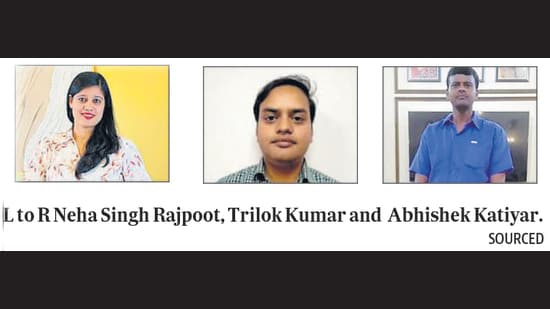
Neha Singh Rajpoot was inspired by a visually impaired Hindi teacher in Class 11 and pursued a diploma in deaf-blindness. An internship at a Delhi deaf school led her to the Indian Sign Language Research and Training Centre (ISLRTC). Despite initial family prejudice, support from her late father enabled her to educate society about persons with disabilities and the true value of sign language.
“I discovered interpretation was not just teaching, but bridging communication gaps for the deaf and deaf-blind,” said Rajpoot.
{{/usCountry}}“I discovered interpretation was not just teaching, but bridging communication gaps for the deaf and deaf-blind,” said Rajpoot.
{{/usCountry}}Trilok Kumar Savita entered the field almost accidentally while pursuing a B.Ed at Dr Shakuntala Mishra National Rehabilitation University, but his perspective transformed through campus interactions and teaching at a specialized school in Lucknow.
While choosing a non-traditional career path often invites skepticism, Savita recalls receiving unwavering encouragement from his immediate family. “The neighbors and local community members who once struggled to understand the field now view my work with respect, often seeking my help to bridge communication gaps with speech- and hearing-impaired individuals,” said Savita.
Abhishek Katiyar was motivated by deaf individuals in his Farrukhabad neighborhood and an advertisement for a sign language course, which led him to discover ISLRTC in Delhi. Despite skepticism from relatives, his journey proved that learning sign language does much more than build an unconventional career—it transforms isolated communities into vibrant exchanges of human connection.
“Choosing this path meant stepping away from conventional career expectations. Family members initially questioned the decision. Despite skepticism from relatives who struggled to see the professional scope, I remained steadfast, driven by empathy and a desire to forge a distinct path. When I returned to my village after the course I interacted with local deaf residents which made me understand that learning sign language does more than build a career—it bridges human connections,” said Katiyar.