E-Paper



U.P. records low wheat procurement by govt agencies for 3rd year in a row
Govt agencies purchase only 9.31 LMT of wheat against target of 60 LMT in marketing year 2024-25. This is substantially higher than 2.19 LMT procured in 2023-24 and 3.16 LMT in 2022-23

 Prefer HTon Google


Uttar Pradesh has recorded one of the lowest wheat procurements by government agencies for the third consecutive year with the farmers mostly preferring to sell their crop to private agencies for a price higher than the minimum support price (MSP) offered by the authorities.
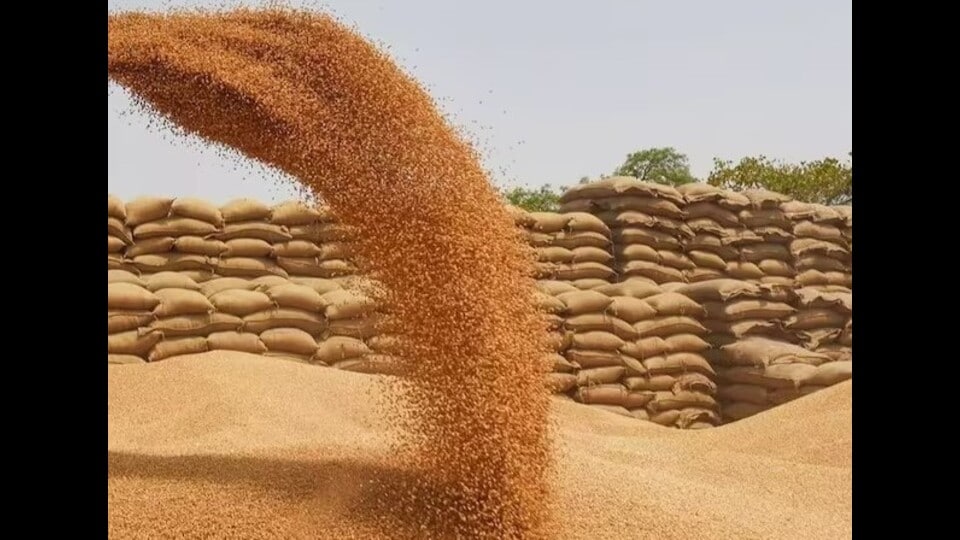
Despite all the efforts to woo farmers, the government agencies together could purchase only 9.31 lakh metric tons (LMTs) of wheat against the target of 60 LMT in the marketing year 2024-25 though this was substantially higher than 2.19 LMT procured in 2023-24 and 3.16 LMT of wheat purchased in 2022-23.
The state broke all previous records in 2021-22 when it purchased 56.41 LMT wheat from more than 13 lakh farmers at the MSP.
The government data show only 1,80,083 of the 4,19,767 farmers registered with the department of food and civil supplies turned up at the government centres to sell their wheat this year even as the government set up a record 6,488 wheat procurement centres across the state. Most of the centres, however, had little business to do in the absence of customers (farmers).
Commissioner, food and civil supplies, Sourabh Babu said, “This is true the wheat purchase in the state remains low this year as well for the third year in a row. The primary reason again is the gap between the MSP and the market price.”
He said all efforts were made to contact farmers to persuade them to sell their wheat to the government agencies at MSP and a bigger number of procurement centres were also established for the convenience of farmers.
“Most farmers preferred to sell their wheat to private agencies that offered them the price as high as ₹2,400 per quintal which was much higher than the MSP fixed at ₹2,275 per quintal,” Sourabh Babu said. “But this is good that farmers got a higher price,” he added.
Officials in the know of things pointed to the Russia-Ukraine war as a critical factor driving the spike in global wheat prices. The conflict has disrupted supply chains and reduced wheat exports from two of the world’s largest producers, pushing international prices to unprecedented levels.
“This geopolitical instability has trickled down to the domestic market, creating an environment where farmers are incentivized to seek higher returns outside of government channels,” said an official requesting anonymity.
Corruption at the government purchase centres, delays in payments to farmers and difficulties and cost involved in transporting produce to the government centres also are also cited as reasons that always discouraged farmers from selling their produce to the government agencies, according to those in the know of things.