Even as smart prepaid electricity meters are promoted nationally as a guarantee of uninterrupted cash flow for power distribution utilities and a solution to chronic bill defaults, nearly 30 lakh or 80% of the prepaid consumers in Uttar Pradesh are currently drawing electricity despite having exhausted their meter balance, according to UP Power Corporation Ltd’s (UPPCL) internal data accessed by HT. The situation exposes serious gaps in enforcement of the prepaid metering system.
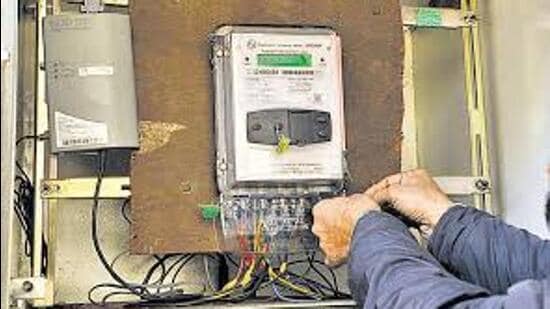
UPPCL internal data reveals that of the total 37,43,613 prepaid consumers around 29,89,516 consumers across Uttar Pradesh, as in the last week of December, were operating on negative balance, with unpaid dues amounting to ₹879 crore even as the corporation is hesitating in snapping supply meters not charged.
The prepaid system is designed to automatically disconnect electricity supply once the balance reaches zero. The continuation of supply despite negative balances points to either technical limitations or deliberate relaxation of enforcement norms.
In UP, there are 49,55,557 consumers using smart meters and more than 37.47 lakh of these meters have been converted to prepayment mode. There are around 3.5 crore total power connections in the state, but agricultural ones will be replaced with smart prepaid meters as mandated by the national policy. The UPPCL has decided to issue all new meters in smart prepayment mode only.
“The prepaid metering programme was introduced to ensure advance payment and financial discipline, thereby reducing arrears that have long burdened state-run discoms,” a senior energy department official said. “However, the scale of negative balances suggests that, in practice, the system is replicating the weaknesses of the post-paid regime,” he added.
{{/usCountry}}“The prepaid metering programme was introduced to ensure advance payment and financial discipline, thereby reducing arrears that have long burdened state-run discoms,” a senior energy department official said. “However, the scale of negative balances suggests that, in practice, the system is replicating the weaknesses of the post-paid regime,” he added.
{{/usCountry}}The same data shows that among meter service providers, Genus accounts for the highest number of negative-balance consumers at 6.15 lakh, followed by GMR with nearly 5 lakh consumers. In revenue terms, Paschimanchal Vidyut Vitran Nigam Limited has the highest outstanding amount at ₹180.1 crore, with a large number of prepaid consumers continuing to receive power despite insufficient balance.
The negative balance problem cuts across tariff categories. The largest concentration is in lower slabs, with 14.26 lakh consumers in the ₹0–1,000 range and 12.05 lakh consumers in the ₹1,001–5,000 bracket running on negative credit.
However, higher-paying consumers are also involved, with nearly 2.89 lakh consumers in the ₹5,001–15,000 range and about 39,400 consumers in the ₹15,001–25,000 bracket continuing to draw power without recharge.
A senior UPPCL official admitted that a majority of prepaid consumers not recharging their meters was a big challenge. He said the corporation was avoiding snapping supply keeping convenience of consumers in mind.
The official further said that discoms had been instructed to develop and submit a clear technical and software-based system logic to handle cases where smart prepaid electricity meters slip into negative balance.
“The directive requires an automated mechanism for temporary disconnection of power supply once the balance falls below the permissible limit, with immediate restoration upon recharge. Discoms have been asked to send this proposed system logic to their headquarters for approval and implementation,” he said.
While power supply to prepaid meters can still be disconnected remotely through a central command, officials acknowledge that taking such action on a mass scale is sensitive.
UPPCL has issued warnings that electricity supply to prepaid consumers running on negative balance may be snapped at any time. However, disconnecting power to nearly 30 lakh consumers in one sweep is seen as an unpopular move, leaving authorities struggling to enforce discipline without triggering public backlash.