E-Paper



Uttar Pradesh asked to prepare Yamuna clean-up plan, complete projects by Jan 2028
The status report also records UP’s demand for its rightful share of Yamuna waters, as provided for under the 1994 inter-state agreement on water sharing among the five basin states

 Prefer HTon Google


Uttar Pradesh has been directed to prepare a time-bound action plan and ensure the completion of all sewage treatment and pollution abatement projects on drains flowing towards the Yamuna by January 2028, according to a status report reviewed by the Union home minister last month as part of the Centre’s Yamuna rejuvenation programme.
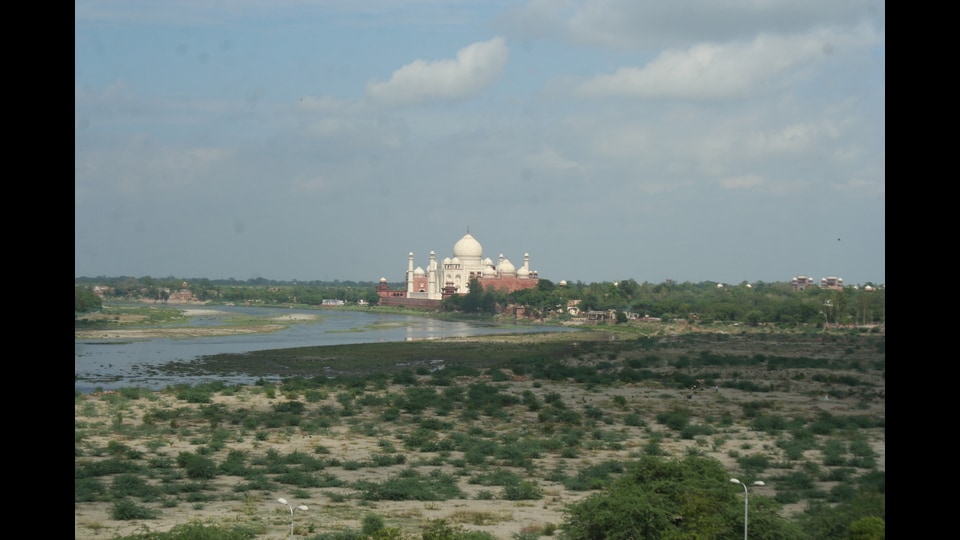
“Similar instructions have been issued to other states concerned, including Delhi and Haryana, with Union home minister Amit Shah and the Union home secretary regularly holding virtual meetings with the chief secretaries on the issue almost every fortnight,” an official in the chief secretary’s office said.
The report, accessed by HT, places Ghaziabad and Loni at the centre of the river clean-up exercise. It says the state’s polluted drains are major contributors to contamination reaching the Yamuna in Delhi, while also recording Uttar Pradesh’s long-pending complaint that it is not receiving its full allocated share of Yamuna waters from the Hathnikund Barrage.
According to the report, 11 review meetings—five chaired by the Union home minister and six by the Union home secretary—have generated 91 action points under the Yamuna rejuvenation programme, of which 44 have been completed and 47 are under implementation.
However, the component dealing with preventing pollution from entering Delhi from Haryana and Uttar Pradesh has made the slowest progress, with only one of the 14 action points completed so far.
Although no drain from Uttar Pradesh falls directly into the Yamuna, five drains—one from Ghaziabad and four from the Loni Nagar Palika Parishad—discharge into Delhi’s Shahdara drain, accounting for an estimated 40-45% of its flow before it finally joins the Yamuna. These include the Sahibabad, Indrapuri, Bantla, Lal Bagh and DLF Ankur Vihar drains.
A joint survey found that the five primary drains receive wastewater from 286 secondary drains, including 232 carrying domestic sewage and 54 carrying industrial effluents, together discharging around 205 million litres per day (MLD). The Sahibabad drain alone contributes 101 MLD.
Laboratory analysis of samples collected in March this year showed pollution levels far exceeding the prescribed standards across all the drains.
To address the problem, the report details a series of infrastructure projects. A 68-MLD sewage treatment plant and associated sewer works are under construction for the Sahibabad drain under AMRUT 2.0 at a cost of ₹546.94 crore. The DLF Ankur Vihar drain is being intercepted under the Loni Sewage Phase-III project, while the Indrapuri, Bantla and Lal Bagh drains are proposed to be connected to a new 140-MLD sewage treatment plant at Sadullahabad, for which the detailed project report has already been submitted to the National Mission for Clean Ganga.
The report also highlights enforcement action against illegal polluting industries in Ghaziabad. A joint task force constituted by the district administration has shut down 244 unauthorised industrial units over the past four months and disconnected their electricity supply.
Regular inspections of authorised industries are being carried out by the Uttar Pradesh Pollution Control Board (UPPCB), while UPSIDA has been designated the nodal agency for surveying industrial effluents and establishing Common Effluent Treatment Plants in the Yamuna’s NCR industrial belt.
Besides highlighting the pollution challenge, the report records Uttar Pradesh’s demand for its rightful share of Yamuna waters. It says that under the 1994 inter-state agreement on Yamuna water sharing among Uttar Pradesh, Haryana, Delhi, Rajasthan and Himachal Pradesh, the state has been receiving less than its allocated share from the Hathnikund Barrage.
At the June 8 review meeting, the Union home minister directed the Prime Minister’s adviser, the Union home secretary and senior officials of the ministries concerned to prepare an integrated action plan covering land availability, funding, execution and maintenance of sewage and effluent treatment infrastructure. Uttar Pradesh and Haryana were specifically asked to draw up time-bound action plans and complete all sewage treatment and pollution abatement projects on every drain by January 2028.
Officials said rejuvenating the Yamuna was a key BJP poll promise during the 2025 Delhi Assembly elections, and the Centre wants to ensure visible improvements in the river before the next Delhi polls.