: Worried over a sudden dip in its revenue collection, Uttar Pradesh has decided to regularise 3,746 brick kilns that do not have the mandatory approval from the state pollution control board (UPPCB) since their location does not fit the environmental norms.
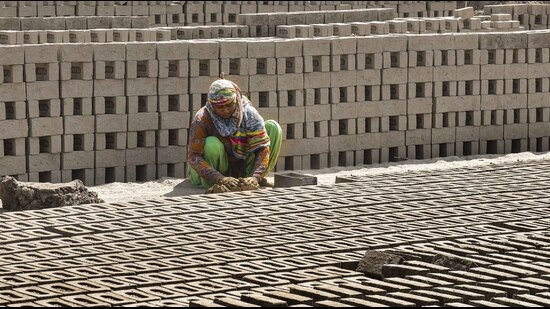
People aware of the matter said owners of all such kilns, which are no longer functioning, were being asked to fulfil the norms and resume operations after registering themselves with the state tax department.
The decision to regularise 3,746 brick kilns was taken after finance minister Suresh Khanna issued directions in this regard to the authorities concerned last week when he found that there was a fall in the revenue from royalty to the mining department and GST payments to the state tax department.
“Chairing a meeting on September 12, the minister enquired about the reasons for the decline in the revenue collection. He was told that brick kilns that used to pay a handsome royalty and GST to the government were shut down following a court order,” a senior state tax department official said.
UPPCB refused to give consent for operation to over 16,000 brick kilns following the HC court order in 2020. “Since then, we started issuing the consent (permission) to those brick kilns that made necessary modifications and complied with the environmental guidelines,” a UPPCB official said.
{{/usCountry}}UPPCB refused to give consent for operation to over 16,000 brick kilns following the HC court order in 2020. “Since then, we started issuing the consent (permission) to those brick kilns that made necessary modifications and complied with the environmental guidelines,” a UPPCB official said.
{{/usCountry}}According to the PCB official, over 3,746 brick kilns were identified whose physical locations are not in line with the fresh guidelines issued by the Central government in February this year. “We have decided to regularise all such kilns by organizing special drives for them,” he added.
To ensure that they remain in the tax net, it will be mandatory for the kilns to register themselves for the GST before the board grants them permission to operate. State tax commissioner Ministhy S has written a letter to the department’s field officials in this regard, asking them to coordinate with the regional UPPCB officials to issue registrations to brick kilns before they are allowed to operate.
“Associations of kiln owners are being asked to encourage the owners to obtain the consent to operate as per the prevailing guidelines and start operations in November-December, failing which even tougher action will be taken if they are found to be operating without permission,” another official said.
He said thousands of other kilns that were closed for environmental issues might also be given fresh permission to operate once they comply with the central government’s guidelines. “The key concern is to improve the revenue collection that comes from brick kilns,” the official pointed out.
The Centre’s notification issued on February 22, 2022 makes it mandatory for the existing brick kilns to turn to eco-friendly zigzag technology or vertical shaft within two years. Presently, most of these factories are using fixed chimney bulls trench kiln (FCBTK) that emit black soot, causing heavy air pollution.
As per the same notification, kilns should be established at a minimum distance of 0.8 km from the habitation and orchards; they should be set up at a minimum distance of one km from an existing brick kiln to avoid clustering.