“The social image of Wajid Ali Shah as portrayed by the English has made people misunderstand him. Shah was an artist, but there is a need to understand at what level he pursued art. This can only be possible by reading about him.” This was shared by author Timsal Masud, who was speaking on the fourth day of five-day Sanatkada Lucknow Festival on Monday.
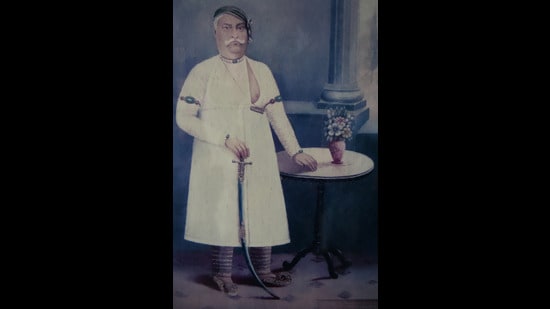
“He was a ‘badshah’ (king or leader). We can only understand how right or wrong he was while pursuing his interests only when we critically analyse the way he has done them. He composed songs, wrote dialogues and directed the play, ‘Kissa Radha Kanhaiya Ka’, but only when a director critically analyses it will he truly understand the work,” said Masud.
He spoke about his grandfather who told him that Wajid Ali Shah’s history must be presented in such a way that a reader could decide for himself about his contributions to Awadh.
“We cannot just announce or give judgement that Awadh under Wajid Ali Shah was ruled well. He did play Sitar and composed shayaris. He was a musician and a prose writer but when we talk about him, we cannot be biased,” noted Masud.
He said that Shah promoted Raas during his times and, instead of relying on any Arabic-Persian classics, he worked on the classical works associated with Awadh when directing ‘Kissa Radha Kanhaiya Ka’ and promoted Krishna as a symbol of love.
{{/usCountry}}He said that Shah promoted Raas during his times and, instead of relying on any Arabic-Persian classics, he worked on the classical works associated with Awadh when directing ‘Kissa Radha Kanhaiya Ka’ and promoted Krishna as a symbol of love.
{{/usCountry}}“The love propagated by him was such that my grandfather, who was a professor of Urdu and Persian, had a picture of Krishna eating makkhan. It was deeply rooted Ganga-Jamuni Tehzeeb promoted by Wajid Ali Shah. Today, we must read about him to understand the true essence of the composite culture,” he added.
The day began with certain tours. Other sessions organised were ‘Lucknow Queerscapes’, ‘Qisson ki Galiyan’ and ‘Yellemma and Other Stories’.