To treat the wastewater entering the sewage treatment plant (STP) in the Jamalpur area, the municipal corporation (MC) has started using poly aluminium chloride to treat the sewage as part of a trial.
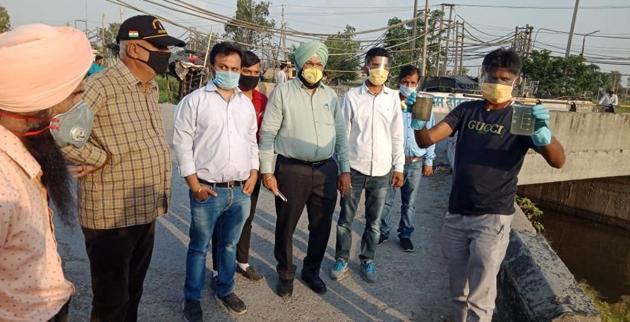
As per MC officials, the trial commenced on April 29 and initial results are encouraging as the black water flowing out of the plant has now diluted and biochemical oxygen demand (BOD) and chemical oxygen demand (COD) levels have improved. BOD is the amount of oxygen consumed by bacteria while decomposing organic matter under aerobic conditions, whereas COD is the amount of oxygen required for the chemical oxidation of total organic matter in water.
Mayor Balkar Singh Sandhu visited the STP to assess the results of the trial on Tuesday and directed the officials of the MC and Punjab Pollution Control Board (PCBB) to conduct sampling of the water treated with poly aluminium chloride.
“The results of the trial are encouraging, but we need to check effects of the chemical on the water coming out of the STP, as this water gets into the Sutlej and it should not affect the aquatic animals,” said the mayor.
He added, “Both MC and PPCB have been directed to collect samples and a final decision on whether this chemical will be used to treat the wastewater or not, will be taken after sample reports are received.”
{{/usCountry}}He added, “Both MC and PPCB have been directed to collect samples and a final decision on whether this chemical will be used to treat the wastewater or not, will be taken after sample reports are received.”
{{/usCountry}}MC superintending engineer (SE) Rajinder Singh said, “Till now, results of the samples are good and the black water, which earlier used to come out of the plant, has diluted. As directed by the mayor, samples are being collected.”
An MC official, requesting anonymity, said, “Due to the lockdown, industrial waste is not getting into the STP and the trial might give different results when the dyeing units restart operations. The industry is accused of dumping untreated waste into the MC sewer lines, which affects the working of the STP and is a major reason behind Buddha Nullah pollution.”