MUMBAI: As the week-long Bandra Fair, held in honour of the Feast of the Nativity of Mother Mary on September 8, draws to a close on Sunday, the annual festival appears to have lost some of its traditional sheen and enthusiasm this year, with several stalls lying vacant and long-standing vendors and residents blaming steeply higher stall costs, lower footfall and a lottery-based allotment system for the change.
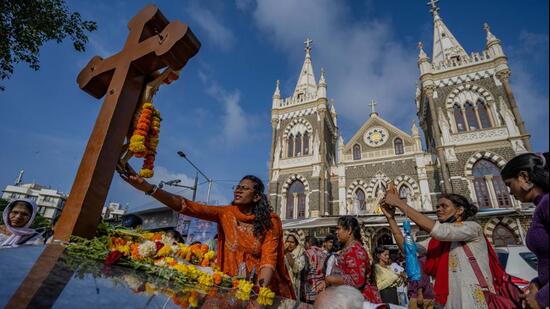
The fair, one of Mumbai’s oldest, is believed to be more than 300 years old. The event has traditionally drawn visitors of different faiths, with older estimates putting its footfall at around more than 100,000 visitors a day.
However, this year, several stalls remained vacant, while traditional sellers of Goan delicacies alleged that they were increasingly being edged out of a fair with which their families have been associated for generations. Vendors said the change was particularly visible in the disappearance of familiar stalls selling Goan sweets and food such as bebinca, dodol, kadio-bodios, sausages, chorizo and sorpotel, which have long been part of the fair’s distinctive culinary character.
Rupesh Gomes, an original stall owner whose family has a receipt dating back to 1947, said he lost out in the lottery despite his long association with the fair. He said around 1,300 applications were received for the available stalls, while 130 stalls were put up for open bidding and 20 reserved for the Missionaries of Charity.
“The tradition has died as outsiders who don’t know how to run stalls have been allotted stalls. This is a traditional fair that has been held for over a century. More than 20 stalls are vacant because of the hike in prices. Original stall owners such as Pinto, Diwakar and Carvalho are no longer making and selling Goan delicacies. There is only one stall left. Other stall owners are paying through their noses. Linking Road has come to Bandra Fair and traditional sellers have lost out,” Gomes said.
{{/usCountry}}“The tradition has died as outsiders who don’t know how to run stalls have been allotted stalls. This is a traditional fair that has been held for over a century. More than 20 stalls are vacant because of the hike in prices. Original stall owners such as Pinto, Diwakar and Carvalho are no longer making and selling Goan delicacies. There is only one stall left. Other stall owners are paying through their noses. Linking Road has come to Bandra Fair and traditional sellers have lost out,” Gomes said.
{{/usCountry}}According to Gomes, traditional Goan fare such as sausages, chorizo, sorpotel, bebinca, dodol and kadio-bodios has increasingly been replaced by pickles and other products that are not traditionally associated with the fair.
He alleged that the online lottery system had also enabled people with no connection to the fair to secure stalls and subsequently sublet them.
“A person sitting in Bahrain won a stall in the online lottery and sublet it to a complete outsider. Subletting to outsiders who do not know about the fair is ruining the tradition. It is hurting traditional sellers who have been selling here for generations. It is now a commercial fair,” he said.
Vendors said the cost of a 10ft by 10ft stall, which was earlier around ₹10,000, has now risen to nearly ₹90,000 to ₹1 lakh for the September 13-20 fair. They said the sharp increase, without corresponding civic facilities, had made it difficult for small and traditional sellers to recover their costs.
The issue of rising stall costs and changes in allotment has been a point of contention in recent years as well. In 2024, long-time vendors had similarly complained that rising rates and newer methods of allotment were making it difficult for traditional participants to return to the fair, with several stalls left vacant.
Gomes also said the fair was attracting fewer visitors this year.
“Both Catholics and non-Catholics visit the fair in honour of Our Lady, but the footfall has reduced this year,” he said.
For Polly D’Souza, described as the only remaining stall owner selling Goan delicacies at the fair, keeping the tradition alive has come at a steep cost. D’Souza said he paid ₹1.5 lakh for his stall and was still making losses.
“There are around 150 stalls and at least 25 are vacant. This year there are fewer customers. I have been selling here for 40 years, right from my grandfather’s time. I brought Goan sweets and delicacies such as bebinca and dodol from Mapusa. The police are shutting the stalls at 9pm, which has resulted in losses. This fair isn’t like before,” D’Souza said.
The Goan food tradition has long been part of the fair’s appeal. Older accounts of the Bandra Fair describe stalls selling kadio-bodios, guava cheese, dodol and other regional sweets, alongside religious articles and other food.
Local residents around Mount Mary Church, who did not wish to be named, said the fair had visibly lost some of its old vibrancy this year. They attributed the lower footfall partly to the fair coinciding with Ganpati celebrations. “The fair coincided with Ganpati and hence the footfall was reduced. This is the first year the crowd has been sparse. The stalls were allotted online and there is a new management this year. They are not even respecting the old church officials. They have ruined the traditions. Many locals did not get stalls,” one of the residents said.
Stay updated with all the Breaking News and Latest News from Mumbai. Click here for comprehensive coverage of top Cities including Bengaluru, Delhi, Hyderabad, and more across India along with Stay informed on the latest happenings in World News.
Stay updated with all the Breaking News and Latest News from Mumbai. Click here for comprehensive coverage of top Cities including Bengaluru, Delhi, Hyderabad, and more across India along with Stay informed on the latest happenings in World News.